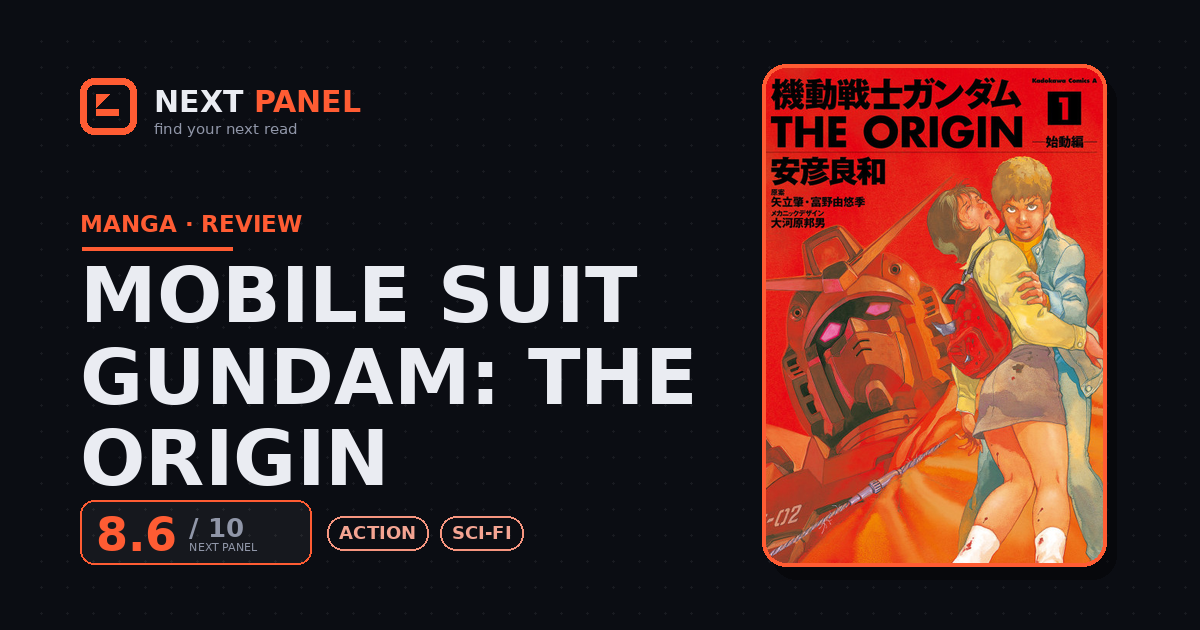
Is Mobile Suit Gundam: The Origin Worth Reading? Review & Where to Read
Quick Answer
Worth reading if you want the deepest, most human version of the original Gundam story and don't mind a slow, politics-heavy start.
Quick Verdict
“Worth it for the definitive take on the original war, patience required for the setup-heavy opening volumes.”
Best for: Readers who want deep political backstory behind the war, painterly character art, and the most complete version of the original Gundam story.
Not for: Readers who want to jump straight into mobile suit action, a self-contained story with no outside context, and a budget-friendly digital format.
- Type
- Manga
- Genres
- Sci-Fi, Action
- Status
- Completed
- Author
- Yoshikazu Yasuhiko
- Publisher
- Kodansha
- Platform
- Kodansha
| Quick facts | |
|---|---|
| Format | Manga, 112 chapters, 24 volumes |
| Run | 2001–2014 · completed |
| Community score | AniList 8.3 |
| Where to read | Kodansha — official |
Overview
"Mobile Suit Gundam: The Origin" is Yoshikazu Yasuhiko's own retelling of the story he helped create as the original character designer on the 1979 anime. Same war, same characters, but told with three decades of hindsight and a lot more room to breathe. It follows Amuro Ray, a withdrawn teenage tech nerd who gets shoved into the cockpit of an experimental war machine during a colony attack, and Char Aznable, the masked Zeon ace everyone assumes is a genius soldier but who's actually running a decades-long revenge plot against the family that killed his father. The anime told this as a fairly straightforward "civilian becomes soldier" story. The manga slows down, digs into the politics on both sides, and spends real time on characters the TV series only sketched in.
What it does well
The scope is the whole point. Yasuhiko doesn't just animate the plot beats you remember, he builds out the assassination, the coup, and the family betrayals that put the war machine in motion in the first place, and gives Char and his sister an entire tragic childhood that recontextualizes almost everything they do later. Garma Zabi, a fairly flat antagonist in the original show, gets an actual arc and a fiancée whose grief becomes one of the manga's harder gut-punches. The art carries a lot of this. Yasuhiko draws faces like a guy who's been perfecting the same cast for thirty years, and the hardcover color sections are genuinely beautiful. It also doesn't flinch from the cost of the war: colonies get dropped on cities, kids die, and the Federation looks about as morally compromised as Zeon does. That's rare for a franchise built to sell toy robots.
Where it falls short
This is not a gentle on-ramp. There's a real wall of faction names, colony numbers, and political maneuvering in the early volumes before the mobile suit fights start landing regularly, and if you've never seen the original anime, some of the shorthand assumes context you don't have yet. A few structural choices, extra scenes, slightly reworked character beats, will also rub longtime fans of the TV series the wrong way if they're precious about "canon." And practically speaking, the English release is print-only hardcover omnibuses at around $30 a volume across 12 volumes, which is a real cost and format barrier next to a series you could otherwise just read digitally in an afternoon.
Verdict
If you want the most human, most political version of the original Gundam story, told by the person who designed it the first time, this is that book. It rewards patience with a war story that actually feels like a war instead of a toy commercial, but it wants you to sit through the setup to get there.
Strengths & Weaknesses
Strengths
- Massively expands the political backstory behind the original war
- Gives secondary characters like Garma Zabi and Sayla real arcs
- Gorgeous, expressive art from the franchise's original character designer
- Treats the human cost of war seriously instead of glorifying it
Weaknesses
- Dense opening volumes front-load politics over action
- Assumes some familiarity with the wider Gundam setting
- English release is print-only and pricier than typical manga
- A few canon tweaks may bother diehard fans of the original anime
Similar Titles
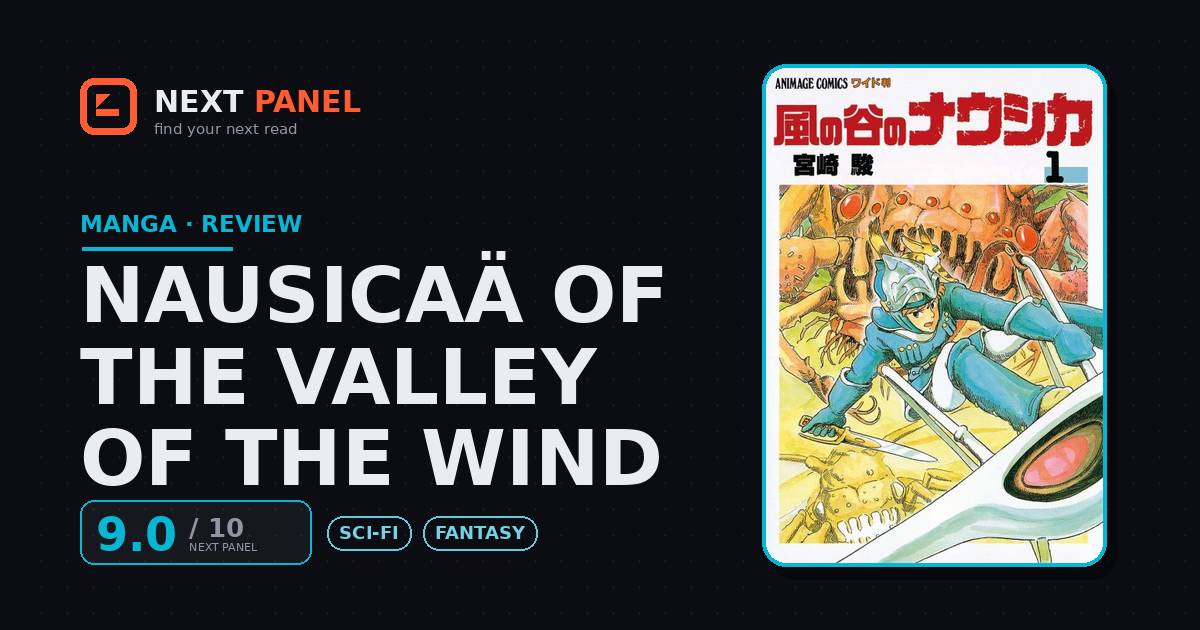
Nausicaä of the Valley of the Wind
Another classic war epic where giant war machines sit on top of real political tragedy
Same generation of sprawling, politically-minded Japanese sci-fi epic
Where to Read Officially
| Platform | Format | Pricing | Region notes | Link |
|---|---|---|---|---|
| Kodansha | Print volumes | Paid | Region availability varies | Open |
Frequently Asked Questions
Do I need to watch the original 1979 anime first?
No, but it helps. The Origin retells the same war from scratch and adds a ton of backstory the anime never had, so it works as a starting point, it just throws a lot of names and factions at you early on.
Is this a full remake of the original series?
It's the same core story, Amuro, Char, the One Year War, but restructured with new scenes, deeper character backstory, and some changes to pacing and a few plot beats.
Is there a digital version available in English?
As of this review, the official English release from Kodansha is print-only hardcover omnibus volumes, no digital option.
How long is the series?
12 volumes, and it's complete, Yasuhiko finished the full run.