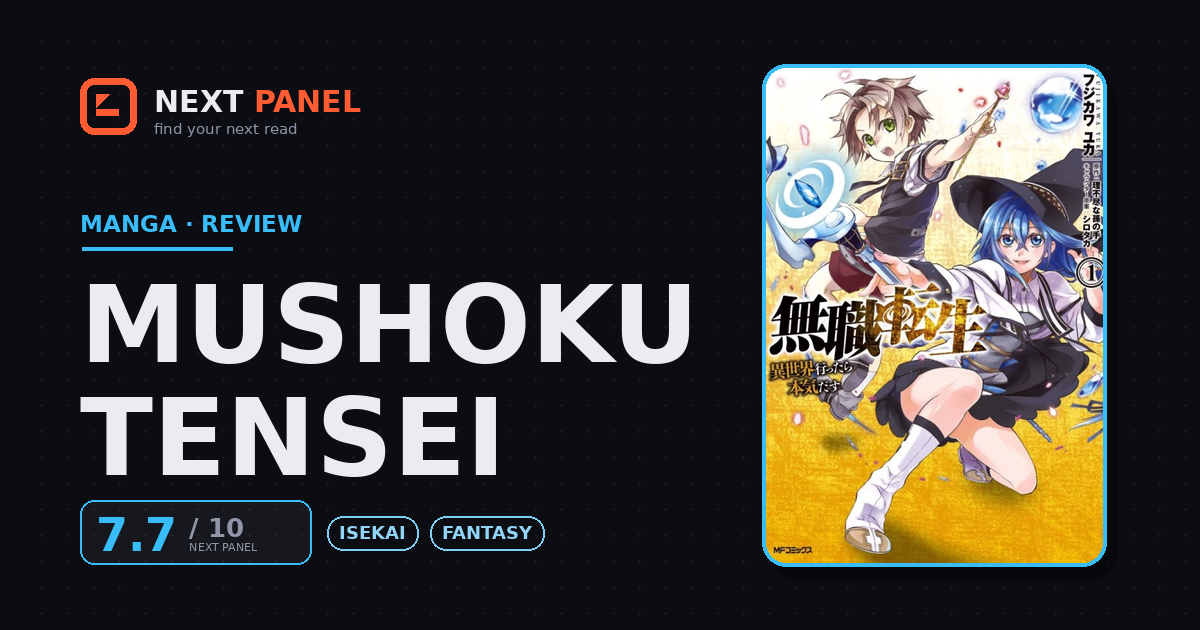
Is Mushoku Tensei Worth Reading? Review & Where to Read
Quick Answer
Worth reading if you want one of the genre-defining reincarnation isekai stories with real long-term character growth, though the protagonist's lecherous streak, especially early on, is a real and frequently raised concern.
Quick Verdict
“Worth it as one of the most influential isekai manga of the last decade. The protagonist's early-volumes perviness is a well-documented, genuine sticking point. Go in informed, not surprised.”
Best for: Readers who want a genre-defining, long-running reincarnation isekai with real character growth from infancy onward, and who can look past a lecherous protagonist, especially in earlier volumes.
Not for: Readers for whom a consistently lecherous protagonist is a dealbreaker. This is also a serious, 24-plus-volume ongoing commitment, not a short read.
- Type
- Manga
- Genres
- Fantasy, Action, Isekai
- Status
- Ongoing
- Author
- Rifujin na Magonote
- Artist
- Fujikawa Yuka
- Publisher
- Media Factory (Seven Seas in English)
- Platform
- Seven Seas
| Quick facts | |
|---|---|
| Format | Manga, 23+ volumes (ongoing) |
| Run | 2014–present · ongoing |
| Community score | AniList 7.8 · MangaUpdates 7.7 |
| Where to read | Seven Seas — official |
Overview
Rudeus Greyrat is a genius. He can read before he can walk, grasp magical theory before other kids learn to tie their shoes, and unsettle every adult around him with a maturity that shouldn't belong to an infant. That's because he isn't really one: he's a thirty-four-year-old shut-in who died pathetically in his old life and woke up as a newborn in a world of swords and magic, memories fully intact, and a second chance he's determined not to waste this time.
What it does well
The premise sounds like dozens of other "reborn with adult memories" isekai stories, but this is widely credited as one of the series that helped define the modern genre in the first place, and the execution shows why. Rudeus's head start doesn't just make him strong, it makes him believably competent at things a normal child couldn't be: reading social situations, grasping magic theory, navigating his own family's dynamics. The manga tracks his growth from infancy through adolescence with a level of patience and detail that gives the power fantasy real emotional weight instead of rushing past it. Fujikawa Yuka's art carries a genuinely long, genuinely epic story well, handling quiet domestic scenes and large-scale magical combat with equal confidence. It's also one of the most influential and commercially successful isekai franchises of the last decade, credited by plenty of the genre's other major names as a direct inspiration, and backed by acclaimed, high-budget anime seasons that introduced it to a much wider audience.
Where it falls short
This one needs a direct heads-up. Rudeus's second-life maturity comes packaged with the sleazy, entitled attitude of the middle-aged otaku he used to be, and especially in earlier volumes, that plays out as open perviness toward the women and girls around him, sometimes framed as comedy rather than critiqued. It's one of the most consistently raised criticisms of the entire franchise, not a minor nitpick, and if a lecherous protagonist is a dealbreaker for you regardless of how the character arc eventually addresses it, this is worth knowing before you start rather than after. Setting that aside, it's also a serious, ongoing time commitment at 24-plus volumes and still releasing, with a pace that means you'll be waiting on new English volumes the same as everyone else. And structurally, an early-life slow-burn coming-of-age isekai isn't going to move at the speed of a faster power-fantasy series. Patience is part of the design here.
Verdict
If a genre-defining reincarnation isekai with real long-term character growth and genuinely influential worldbuilding sounds appealing, this earns its reputation as one of the format's most important entries. Just go in with clear eyes about the protagonist's rough edges, especially early on, since that's a real and frequently discussed part of the reading experience, not a minor footnote.
Strengths & Weaknesses
Strengths
- Genre-defining reincarnation premise executed with real patience, tracking Rudeus's growth from infancy through adolescence rather than skipping straight to competence
- Fujikawa Yuka's art handles both quiet domestic scenes and large-scale magical combat with equal confidence across a genuinely long run
- Widely credited as a direct influence on much of the isekai genre that followed it
- Backed by acclaimed, high-budget anime seasons that introduced the story to a much wider audience
Weaknesses
- The protagonist's second-life maturity comes packaged with a genuinely lecherous streak, especially in earlier volumes, sometimes framed as comedy rather than critiqued
- This is one of the most consistently raised criticisms of the franchise, worth knowing about before starting rather than discovering partway through
- A serious, ongoing commitment at 24-plus volumes and still releasing, with the English release still catching up to the original
- An early-life slow-burn structure moves at a patient pace rather than a fast power-fantasy clip
Similar Titles
That Time I Got Reincarnated as a Slime
Same foundational reborn-with-adult-memories isekai structure, in a much lighter, less controversial tone
Same genre-defining reincarnation-isekai pedigree and dual manga/anime success, in a darker power-fantasy register instead of a coming-of-age one
Where to Read Officially
| Platform | Format | Pricing | Region notes | Link |
|---|---|---|---|---|
| Seven Seas | Print & digital volumes | Paid | Region availability varies | Open |
Frequently Asked Questions
Is there an official English translation?
Yes, it's licensed in English by Seven Seas, with volumes releasing regularly (23 as of this review).
Is the series finished?
No, it's ongoing, both in the original Japanese release and in Seven Seas' English translation.
Is the protagonist actually a bad person?
It's a real, well-documented criticism of the series, especially in earlier volumes, so it's worth going in aware of it rather than being surprised partway through.
Is this connected to the Mushoku Tensei anime?
Yes, this manga adapts the same original light novel as the popular anime. The manga, novel, and anime each tell the story at a different pace and level of detail.