Is Rave Master Worth Reading? Review & Where to Read
Quick Answer
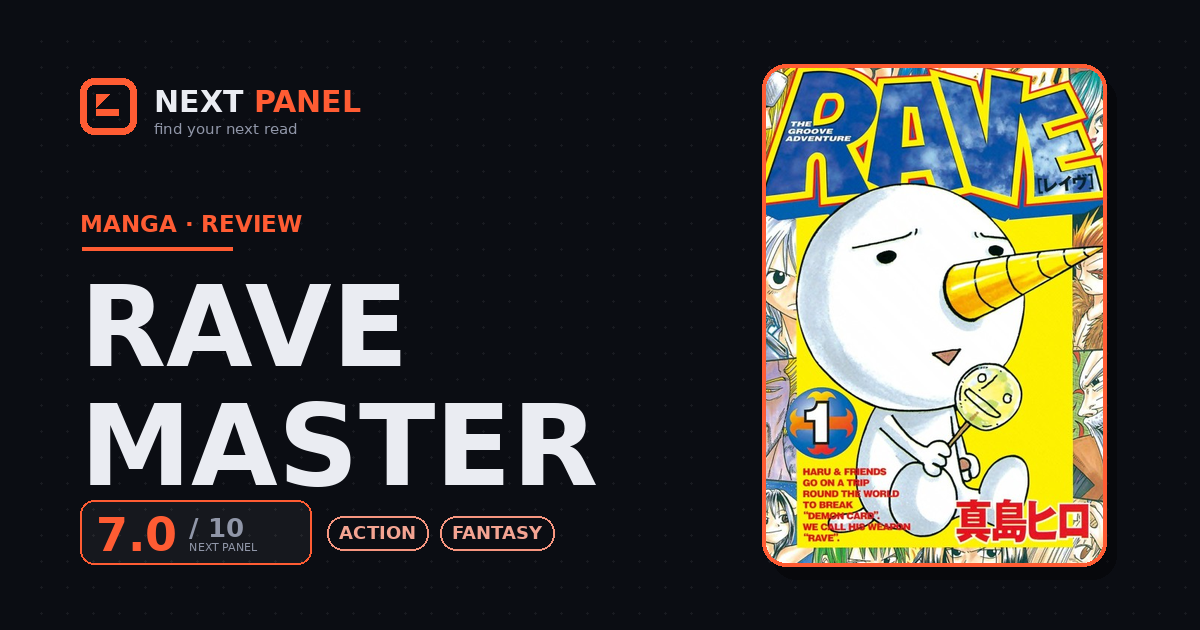
Yes, with caveats — Rave Master is a fun, fast-moving shonen adventure with one of Mashima's best villain arcs, but the final stretch is visibly rushed and the earliest volumes are rougher than what comes later.
Quick Verdict
“Mashima's other magnum opus has a better villain than most of Fairy Tail and a finale that needed twice the room it got.”
Best for: Shonen fans who love Fairy Tail's mix of goofy comedy and big power-up fights and want to see where that style started.
Not for: Readers who want a tight, fully-realized ending and consistent art quality from the first volume on.
- Type
- Manga
- Genres
- Fantasy, Action
- Status
- Completed
- This review
- Minor Spoilers
- Author
- Hiro Mashima
- Publisher
- Kodansha
- Platform
- Kodansha (digital)
| Quick facts | |
|---|---|
| Format | Manga (shōnen), 298 chapters, 35 volumes |
| Run | 1999–2005 · completed |
| Community score | AniList 7.5 · MangaUpdates 8.2 |
| Content | Violence |
| Where to read | Kodansha (digital) — official |
Overview
Before Fairy Tail, there was Rave Master. Hiro Mashima's first major series ran from 1999 to 2005, and if you've read Fairy Tail, the DNA is obvious right away: an easygoing hero with an oversized weapon, a female lead who swaps outfits mid-fight, a rotating cast of one-note but likable comic relief, and stakes that swing wildly between slapstick and genuinely brutal violence. Haru Glory inherits the title of Rave Master from his missing father and sets out with Plue, a shape-shifting dog-fox thing, to collect the five Rave Stones before the villainous Demon Card can gather the matching Dark Bring shards and remake the world in ash. Along the way he picks up Elie, an amnesiac girl with a mysterious past, and a rotating crew of allies who each get their own arc, flashback, and eventual power-up.
What it does well
Mashima's art was still finding its footing here, but the fight choreography is already confident — big, clean, exaggerated poses that read well even in cheap black-and-white printing, and a knack for giving every named character a silhouette you can pick out of a crowd scene. The worldbuilding is more interesting than it gets credit for: the Rave Stone/Dark Bring split gives the setting an actual thematic backbone, light against dark, instead of just being an excuse for a scavenger hunt, and the two major arcs built around Sinclaire give the story its best villain — a former ally turned deeply sympathetic antagonist whose motivations hold up better than most shonen turncoats. The character writing leans hard on archetypes, but it commits to them: Musica's vanity, Let's blade obsession, Elie's amnesia mystery all pay off with real emotional beats instead of just running gags. And when the story wants to be funny, it's genuinely funny — the comic timing here is sharper and looser than early Fairy Tail, probably because Mashima wasn't yet juggling forty side characters at once.
Where it falls short
The latter half is where the cracks show. Mashima has said in interviews he wishes he'd had more time with the ending, and it's obvious on the page — the final arc rushes through what should have been multiple arcs' worth of reveals and closure, side characters get shortchanged, and a plot-critical time skip lands with less impact than it should because the groundwork wasn't fully laid. The last-act resolution in particular reads more like an outline than a finished chapter. Some of the humor hasn't aged well either — a handful of gags lean on cheap fanservice that feels tacked on rather than character-driven, and the earliest volumes are rougher than everything that comes after, both artistically and structurally, which can make the first few chapters a harder sell than they should be.
Verdict
Rave Master is a genuinely fun, fast shonen adventure with a better central villain arc than a lot of series twice its length, and it's worth reading on those terms alone. Just go in knowing the ending needed more room than Mashima got to give it, and that the first handful of volumes are the weakest thing about the whole run, not the strongest.
Strengths & Weaknesses
Strengths
- The Rave Stone/Dark Bring split gives the world an actual thematic spine instead of just being a checklist for the plot to work through.
- Sinclaire's arc produces the strongest villain in the series — a former ally whose reasons for turning make sense instead of collapsing into generic evil.
- Confident, exaggerated fight choreography reads clearly even in the cheaper black-and-white printing of the early volumes.
- The comedy timing is sharper and looser here than in Mashima's later work, since the cast is smaller and easier to juggle.
Weaknesses
- The final arc rushes through reveals and character send-offs that needed more room, and it shows — the ending reads more like an outline than a finished story.
- A handful of jokes lean on fanservice that feels tacked on rather than earned by the characters involved.
- The earliest volumes are noticeably rougher, both in art and pacing, than everything that follows.
Similar Titles
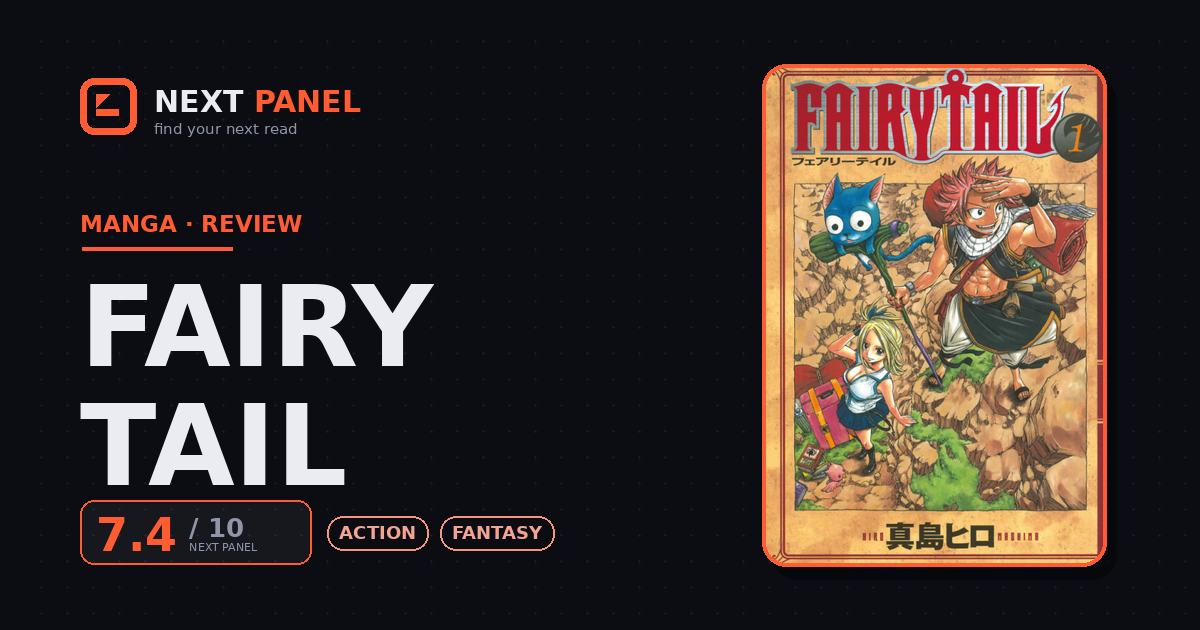
Mashima's later, longer-running series with the same tone and a similar hero archetype.
Same breezy found-family adventure spirit, on a much longer scale.
Similar underdog energy and a simple, satisfying power-fantasy structure.
Where to Read Officially
| Platform | Format | Pricing | Region notes | Link |
|---|---|---|---|---|
| Kodansha (digital) | Digital volumes | Paid | Region availability varies | Open |
Frequently Asked Questions
Is Rave Master finished?
Yes. It ran in Weekly Shōnen Magazine from 1999 to 2005 and wrapped at 35 volumes / 296 chapters.
Do I need to read Rave Master before Fairy Tail?
No — they're unrelated stories by the same creator, aside from one small crossover cameo, so you can read either one first.
Where can I read Rave Master officially in English?
Kodansha publishes all 35 volumes digitally through its own storefront and standard ebook retailers.