Is Shangri-La Frontier Worth Reading? Review & Where to Read
Quick Answer
Yes, if you're a gamer or you love a good boss fight. It follows a veteran player who dives into a top-tier VR game and takes on monsters most people can't beat, and its battles are a real highlight. Just know it can get heavy on stats and game mechanics.
Quick Verdict
“Few manga capture the thrill of beating an impossible boss like this one does. It buries you in game mechanics at times, but the fights and the hero's sheer gamer energy make it worth it.”
Best for: Readers who love video games, MMOs, and battles built around figuring out a tough boss.
Not for: Readers who want simple, low-mechanics stories, a small cast, and a plot that stays unpredictable.
- Type
- Manga
- Genres
- Fantasy, Action
- Status
- Ongoing
- This review
- Minor Spoilers
- Author
- Katarina
- Artist
- Ryosuke Fuji
- Publisher
- Kodansha
- Platform
- Kodansha
| Quick facts | |
|---|---|
| Format | Manga (shōnen), 27 volumes |
| Run | 2020–present · ongoing |
| Community score | AniList 8.1 · MangaUpdates 7.8 |
| Where to read | Kodansha — official |
Overview
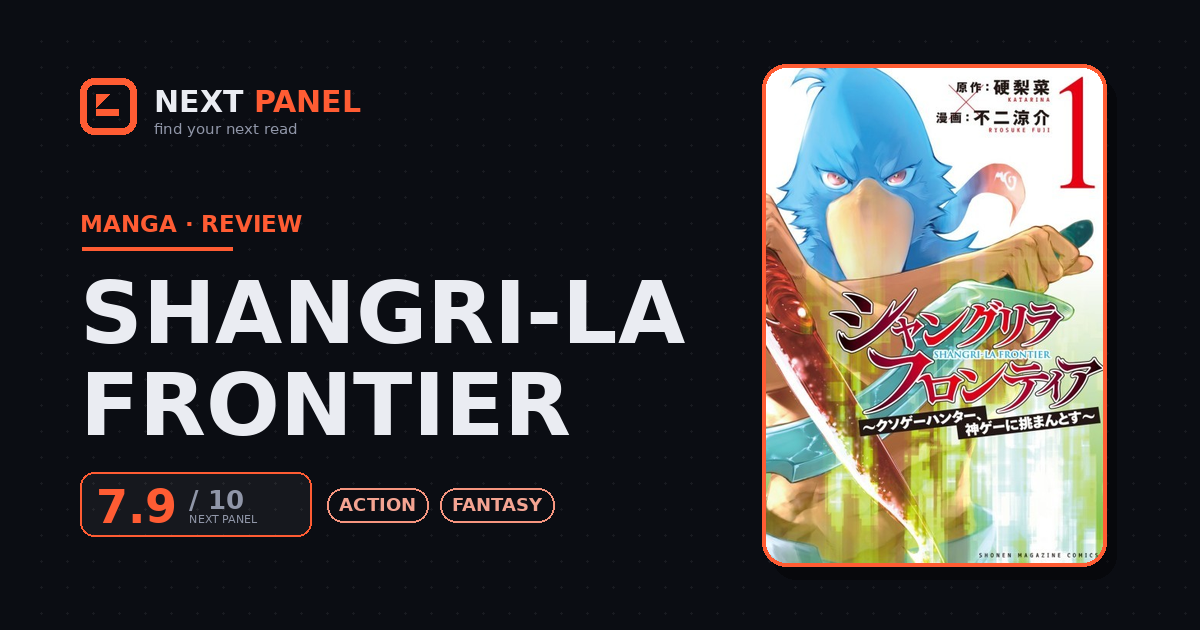
Shangri-La Frontier is a gaming manga, drawn by Ryosuke Fuji from Katarina's web novel, and it is built for people who love watching a great player cook. The hero, Rakuro Hizutome, is a "kusoge hunter" who specializes in beating terrible, broken games for fun. When he finally picks up a genuinely great VR game called Shangri-La Frontier, all that experience with garbage turns him into a monster of a player. Under the name Sunraku, in shorts and a bird mask, he skips the tutorial and dives straight into a huge, gorgeous world full of bosses most players cannot touch.
That is the pitch, and the manga runs with it. This is not a trapped-in-a-game death story. Sunraku logs in and out like a normal gamer, so the stakes are about mastery, discovery, and beating impossible fights rather than survival. It runs in Weekly Shōnen Magazine, won the Kodansha Manga Award, spun off a popular anime, and Kodansha publishes it in English.
What it does well
The boss fights are the main event, and they are fantastic. Sunraku takes on huge, brutal enemies, from a wolf that one-shots him for hours to a birdman knight and worse things later, and the manga turns each fight into a real puzzle of reading patterns, exploiting gaps, and grinding until it clicks. Ryosuke Fuji draws these battles with big, clear, high-energy art that makes the wins feel earned. If you like the feeling of finally beating a boss you have died to fifty times, this bottles it.
Sunraku is a fun lead too. He is not an overpowered chosen one; he is just experienced, stubborn, and a little unhinged, and he wins by being smart and refusing to quit. His delight in the game is infectious, and the manga is genuinely funny about how gamers actually think.
The world-building is another strong point. Shangri-La Frontier feels like a real, huge MMO, with hidden quests, unique monsters, weird NPCs who have their own lives, and a sense that there is always something strange over the next hill. It rewards the same curiosity its hero has.
Where it falls short
It can drown you in game mechanics. Stats, skills, item effects, and long strategy breakdowns pile up, and readers who do not care about that stuff will find the detail exhausting. The manga sometimes explains a fight in more depth than you need.
The cast also balloons fast. New players, guilds, and NPCs keep arriving, and it is easy to lose track of who is who. And like a lot of gaming stories, it can get repetitive: find a boss, struggle, adapt, win, repeat. The formula is satisfying but rarely surprising once you learn its rhythm.
Verdict
If you have ever lost a weekend to an MMO or cheered yourself hoarse beating a hard boss, this is made for you. It is a smart, hype, endlessly energetic gaming manga carried by great fights and a lead who is a blast to follow, as long as heavy game-mechanic detail does not put you off. For fans of the genre, it is one of the best around.
Strengths & Weaknesses
Strengths
- The boss fights are the highlight: each one is a real puzzle of reading patterns and exploiting gaps, and the wins feel genuinely earned.
- Ryosuke Fuji's art is big, clear, and high-energy, which keeps the huge battles easy to follow and exciting.
- Sunraku is a great lead, winning through smarts and stubbornness rather than being an untouchable chosen one.
- The game world feels like a real, sprawling MMO, full of hidden quests, strange monsters, and NPCs with their own lives.
Weaknesses
- It can drown you in game mechanics, with stats, skills, and long strategy breakdowns that not everyone will want.
- The cast grows quickly, and it's easy to lose track of the many players, guilds, and NPCs.
- The structure gets repetitive: find a boss, struggle, adapt, and win, over and over, so it rarely surprises once you learn its rhythm.
Similar Titles
Another hugely popular power fantasy about a gamer-style hero leveling up and crushing monsters.
The go-to VR-game story, though it plays its trapped-in-a-game stakes far more seriously.
For more game-world adventure led by a smart, overpowered player figuring out the rules.
Where to Read Officially
| Platform | Format | Pricing | Region notes | Link |
|---|---|---|---|---|
| Kodansha | Print & digital volumes | Paid | Region availability varies | Open |
Frequently Asked Questions
Is Shangri-La Frontier an isekai where he's trapped in the game?
No. Sunraku logs in and out like a normal player, so the story is about mastering a great game, not surviving a death trap.
Do I need to read the web novel first?
No. The manga adapts Katarina's web novel and works fine on its own.
Can I read it in English officially?
Yes. Kodansha publishes it in English in print and digital, so you can buy the volumes officially.