Is Shigurui: Death Frenzy Worth Reading? Review & Where to Read
Quick Answer
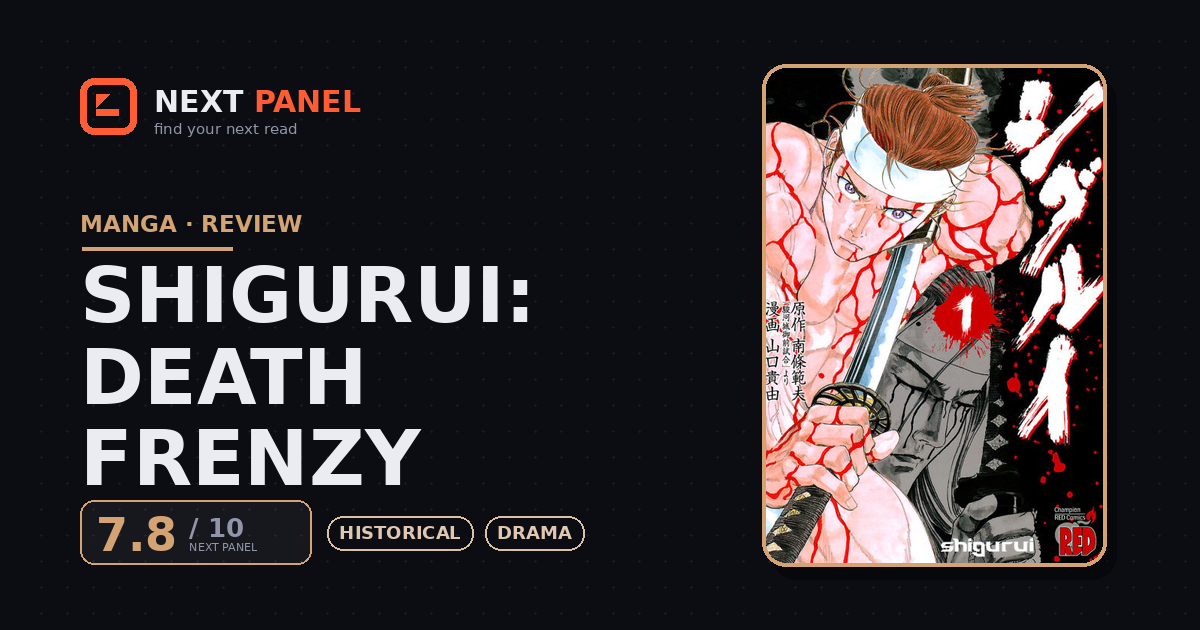
If you want jaw-dropping art and can stomach extreme gore, Shigurui is one of the most striking samurai manga ever drawn. It's a slow, suffocating Edo-period tragedy — gorgeous and brutal in equal measure — but the glacial pace and abrupt ending keep it from greatness.
Quick Verdict
“Some of the most stunning, stomach-turning art ever put in a manga, wrapped around a slow Edo-era tragedy that ends before it resolves.”
Best for: Readers who want gorgeous, grotesque samurai tragedy and care more about mood and craft than plot.
Not for: Readers who want fast action, a clean resolution, and a story that goes easy on the gore.
- Type
- Manga
- Genres
- Drama, Historical
- Status
- Completed
- This review
- Minor Spoilers
- Author
- Takayuki Yamaguchi
- Publisher
- Akita Shoten
| Quick facts | |
|---|---|
| Format | Manga (seinen), 84 chapters, 15 volumes |
| Run | completed |
| Community score | MAL 8.1 · MangaUpdates 7.9 |
| Content | Extreme graphic violence, gore, sexual content |
Overview
Shigurui opens on a scene that hangs over everything after it: a feudal lord in 1629 has ordered a tournament fought with real swords instead of wooden ones, and the first match pits a one-armed swordsman against a blind one. Then the manga rewinds. Most of its fifteen volumes are the long, grim story of how these two ruined men — Fujiki Gennosuke and Irako Seigen — arrived at that moment, told through the dojo that made and broke them. Adapted by Takayuki Yamaguchi from a novel by Norio Nanjo, it's a samurai tragedy obsessed with obsession itself: the madness of devoting a life entirely to the sword.
What it does well
The first thing everyone talks about is the art, and the reputation is earned. Yamaguchi draws at a level that's genuinely rare — anatomy, muscle, fabric, steel, all rendered with obsessive precision and total command of the page. A single duel can stretch across pages of held breath and then erupt in a few unforgettable panels. The body horror is grotesque, but it's grotesque on purpose and beautifully executed, which is exactly why it lands.
That craft serves a suffocating sense of place. The Edo of Shigurui is cruel, rigid, and pitiless, governed by codes that chew people up. Yamaguchi makes you feel the cold of the dojo, the weight of social hierarchy, the way violence is both ritual and routine. It's immersive in a way that's genuinely uncomfortable, and that discomfort is the point.
Crucially, the violence is framed as tragedy, not entertainment. There's no triumphant action-hero rush here. The duels are awful, and the manga treats them that way, so each one carries real weight. Gennosuke and Seigen are both vivid and both broken — shaped by cruelty into instruments of it — and the inevitability of their collision gives the whole story a doomed gravity. You aren't waiting to see who wins so much as watching two lives curdle.
Where it falls short
The same qualities that make Shigurui distinctive also limit it. The pacing is extraordinarily slow; it savors dread and detail and feels no urgency to move, which tests patience even when the art is dazzling. The content is the bigger barrier: the gore, abuse, and sexual cruelty are extreme and frequent, and they will be a brick wall for a lot of readers, not a flaw exactly but a serious filter on who can enjoy it. And the ending is a real letdown — the manga stops around the framing duel without delivering the resolution all that buildup seems to promise, so the story can feel less like it concludes than like it simply runs out.
Verdict
Shigurui is a showcase for one of the most accomplished artists in manga, attached to a bleak, hypnotic Edo-era tragedy. The glacial pace, extreme content, and abrupt ending keep it from the very top tier, and it's emphatically not for everyone. But if you want samurai fiction as dread-soaked art object — beautiful, brutal, and unlike anything else — there's little that matches it. Go in knowing exactly what you're signing up for.
Strengths & Weaknesses
Strengths
- The art is staggering — Yamaguchi renders bodies, armor, and violence with a detail and control few artists ever reach.
- The Edo-period atmosphere is suffocatingly real, thick with cruelty, ritual, and dread.
- It treats its central duel as tragedy rather than spectacle, so the violence carries weight instead of cheap thrill.
- Both swordsmen are vivid, broken figures whose downfall feels inevitable from the first page.
Weaknesses
- The pacing is glacial, lingering on dread and detail at the expense of momentum.
- The gore and sexual cruelty are extreme and near-constant, and they'll be a hard wall for many readers.
- It ends abruptly, leaving the framing duel unresolved, so the story can feel like it simply stops.
Similar Titles
Another beautifully drawn, bloody Edo-era samurai story with a darker streak.
Gorgeous historical swordsman drama with real philosophical weight.
If you want masterful, grotesque art married to relentless dread and tragedy.
Frequently Asked Questions
Is there an official English release?
Not for the manga. The anime adaptation was licensed in English, but the manga itself has never had an official English edition. We'll update this page if one appears.
How graphic is it?
Extremely. Shigurui is famous for both the beauty and the brutality of its art — dismemberment, gore, and sexual cruelty are frequent and unsparing.
Does it have a proper ending?
Not really. The manga stops near the duel that frames the story without fully resolving it, which leaves some readers unsatisfied. It's based on a novel by Norio Nanjo.