Is Slam Dunk Worth Reading? Review & Where to Read
Quick Answer
Yes, almost without qualification. Slam Dunk is one of the greatest sports manga ever, with incredible game art, real laughs, and a fantastic lead. The only catch is an ending that stops short of the full tournament.
Quick Verdict
“One of the greatest sports manga ever — funny, gorgeously drawn, and emotionally huge; the only real catch is an ending that stops short of the championship.”
Best for: Readers who want a funny, heartfelt sports story with some of the best game art in manga.
Not for: Readers who want a fully resolved ending, or a serious tone from the very first chapter.
- Type
- Manga
- Genres
- Comedy, Sports
- Status
- Completed
- This review
- Minor Spoilers
- Author
- Takehiko Inoue
- Publisher
- VIZ Media
- Platform
- VIZ
| Quick facts | |
|---|---|
| Format | Manga (shōnen), 276 chapters, 31 volumes |
| Run | 1990–1996 · completed |
| Community score | AniList 9.0 · MAL 9.1 · MangaUpdates 9.0 |
| Where to read | VIZ — official |
Overview
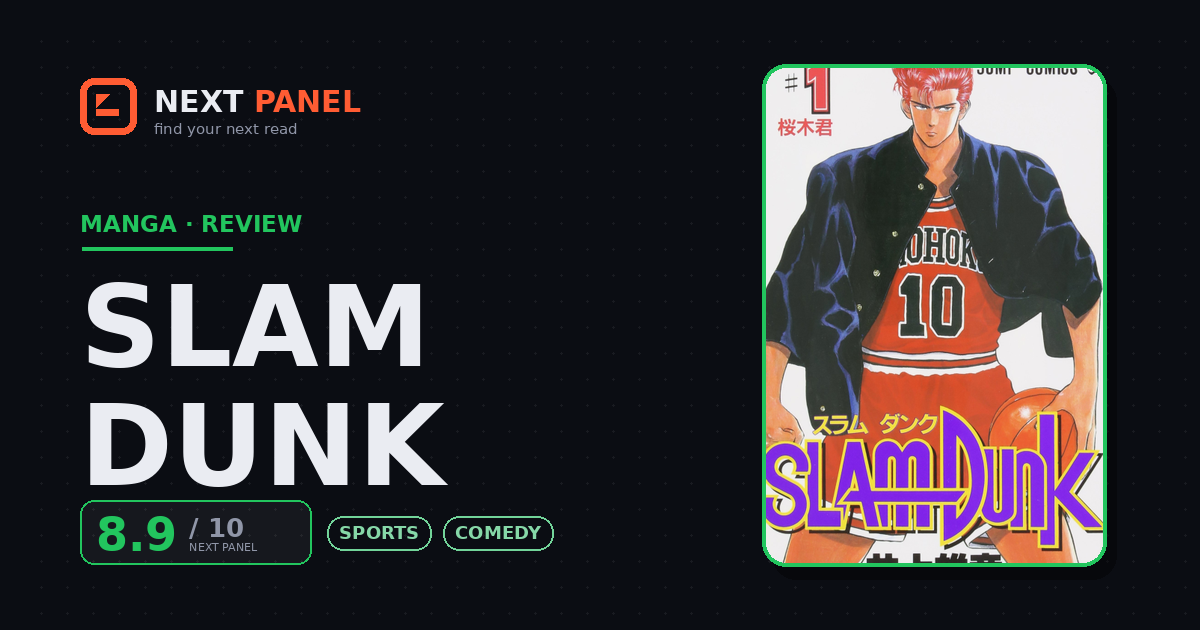
Slam Dunk is widely considered one of the best sports manga ever made, and it earns the reputation. Hanamichi Sakuragi is a hot-tempered delinquent with a shock of red hair who joins his high school basketball team for the worst possible reason: to impress a girl. He's never played, he's all raw athleticism and ego, and he slowly, almost against his will, falls in love with the game. From there it's the Shohoku team's climb toward the national stage, told with huge heart, sharp comedy, and some of the best-drawn basketball you'll ever see. Takehiko Inoue, who later did Vagabond, is the reason it became a classic.
What it does well
The basketball is the star. Inoue draws motion, weight, and tension better than almost anyone, and by the later games the art is genuinely breathtaking, so you can feel the squeak of the floor and the exhaustion in the players. Even if you don't care about basketball, the matches are gripping, because every possession is built around character and stakes, not just spectacle.
It's also really funny. Hanamichi is a fantastic lead, loud and arrogant and constantly humbled, and the early comedy lands hard. That humor never fully disappears, so even the most intense games keep moments of levity that hold the cast together. The supporting players each get real arcs, and Inoue makes you care about the whole team, not just the hero.
The growth is the heart of it. Hanamichi going from a guy faking it to impress a crush into someone who genuinely loves the sport is one of the most satisfying arcs in the genre. The emotional payoffs in the big games, especially the legendary final stretch, hit because the series earned them over hundreds of chapters.
Where it falls short
The big, well-known flaw is the ending. The manga stops after its climactic game without covering the rest of the national tournament, so it ends on a high but leaves the larger goal unresolved. For a story built around chasing a championship, that abruptness genuinely frustrates some readers.
The early volumes are also very gag-heavy and rougher in art before the series finds its serious stride, so the opening can feel like a different, sillier book than what it becomes. And as a 90s manga, a few elements feel dated. None of this undoes the whole, but it's worth knowing the comedy-heavy start and the cut-short finish going in.
Verdict
Slam Dunk is close to essential, especially if you like sports stories, and a strong pick even if you don't. The art, the humor, and Hanamichi's arc add up to a genuine classic, and the best games are as exciting as the medium gets. The only real catches are a slow, silly start and an ending that stops short of the finish line. Go in for the journey rather than a tidy championship bow, and it's one of the most rewarding manga you can read.
Strengths & Weaknesses
Strengths
- Inoue draws basketball better than almost anyone — the later games have breathtaking motion, weight, and tension.
- It's genuinely funny, with Hanamichi a loud, arrogant, constantly-humbled lead who anchors the comedy.
- The whole team gets real arcs, so you care about the supporting cast as much as the hero.
- Hanamichi's growth from faking it to truly loving the sport is one of the most satisfying arcs in the genre.
Weaknesses
- The ending stops after the big game without covering the rest of the national tournament, which frustrates some readers.
- The early volumes are very gag-heavy and rougher in art before the series finds its serious stride.
- As a 90s manga, a few elements feel dated.
Similar Titles
Another top-tier sports manga that makes every match thrilling through great characters.
Another beloved underdog sports manga about falling in love with the grind.
Inoue's later masterpiece — a very different, meditative samurai epic from the same artist.
Where to Read Officially
| Platform | Format | Pricing | Region notes | Link |
|---|---|---|---|---|
| VIZ | Print & digital volumes | Paid | Region availability varies | Open |
Frequently Asked Questions
Do I need to like basketball to enjoy Slam Dunk?
No. The games are built around characters and stakes, so they're gripping even if you've never followed basketball. Plenty of fans came in cold.
Is Slam Dunk finished?
Yes, the manga is complete in 31 volumes. Just know it ends after its climactic game rather than covering the entire national tournament.
Should I read the manga or watch The First Slam Dunk movie?
Both are great. The manga is the complete experience; the 2022 film adapts one game beautifully and works as a companion. If you like the manga, the movie is a treat.