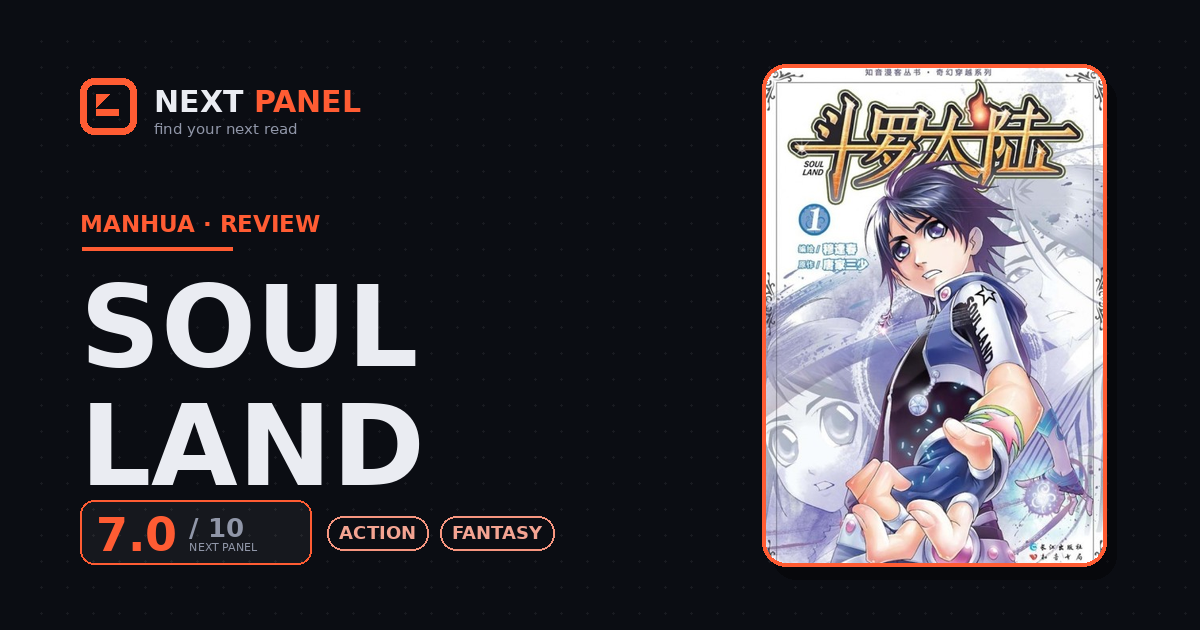
Is Soul Land Worth Reading? Review & Where to Read
Quick Answer
With caveats. Soul Land is one of the most popular cultivation stories out there, and the manhua delivers the core appeal — a hero leveling up, flashy spirit-soul battles, tournaments, and a big escalating world. But it's very long, the pacing is slow and repetitive, and the art is uneven. If xianxia power-fantasy is your comfort zone, it's a solid pick; if not, it won't convert you.
Quick Verdict
“Classic cultivation comfort food — endless training, tournaments, and power-ups — pulled off on a bigger, more polished scale than most, if you don't mind the grind.”
Best for: Readers who love long cultivation and xianxia power-fantasies with steady level-ups and tournament fights.
Not for: Readers who want tight pacing, grounded stakes, or a short, self-contained story.
- Type
- Manhua
- Genres
- Fantasy, Action
- Status
- Ongoing
- This review
- Minor Spoilers
- Author
- Tang Jia San Shao
- Artist
- Mu Fengchun
- Publisher
- Zhiyin Comics
- Platform
- Availability varies
| Quick facts | |
|---|---|
| Format | Manhua, 619 chapters |
| Run | 2011–present · ongoing |
| Community score | AniList 7.3 · MAL 7.8 · MangaUpdates 6.4 |
| Content | Fantasy violence |
Overview
Soul Land — Douluo Dalu in the original Chinese — started as a massively popular web novel by Tang Jia San Shao and has since sprawled into a franchise of animation, games, and this long-running manhua. The story is classic cultivation fantasy: Tang San, a gifted disciple of a secret martial sect, is reborn into a world where everyone awakens a "martial soul" at age six and trains it to greater and greater power by absorbing spirit rings from defeated beasts. He sets out to grow strong, gathers a tight-knit group of fellow prodigies, and climbs through a world of academies, tournaments, and escalating threats. This review is about the manhua adaptation — just note that official English access to the comic is patchy, while the novel (on Webnovel) and the animated series are the easier legal routes.
What it does well
As cultivation power-fantasy, it hits the core pleasures reliably. The "martial soul" system is a fun spin on the genre — your soul might be a weapon, a beast, even a blade of grass — and the spirit-ring progression gives every fight a clear sense of stakes and growth. There's a steady drip of level-ups, new techniques, and bigger opponents, exactly the dopamine loop this genre runs on, and Soul Land delivers it dependably.
It's also more good-natured than a lot of xianxia. Tang San is competent and driven but not a cruel murder-machine, and the heart of the series is the bond between his group of young soul masters, the "Shrek Seven Devils." That camaraderie, plus a sincere streak of loyalty and sacrifice, gives the spectacle some warmth and makes it an easier entry point into cultivation than grimmer, more ruthless rivals.
When the big set-piece battles land, the manhua goes all-in on the spectacle — flashy soul powers, dramatic reveals, huge spirit beasts — and for fans of the genre, that's the draw.
Where it falls short
It's long, and it's slow. This is a sprawling, still-running adaptation that moves at a cultivation-genre crawl — lots of training, power explanations, and tournament arcs that blur together. If you're not already sold on the format, the repetition and pacing will wear on you fast.
The art is uneven, too, as these big serialized manhua often are: gorgeous splash pages and key fights, but flatter, more rushed stretches in between. And the story leans hard on genre formula — the chosen-one hero, the steady stat-climb, the rivals who exist to be surpassed — so don't expect it to subvert much. It does the standard moves well rather than doing new ones.
Verdict
Soul Land is comfort food for cultivation fans: a likable hero, a clever power system, and an endless climb up the power ladder, all on a big, popular scale. It's not trying to reinvent the genre, and its length, pacing, and patchy art are real costs. But if xianxia escalation is what you're after — and you can sort out where to actually read the comic — it's one of the friendlier, more foundational places to start. Everyone else can probably skip it.
Strengths & Weaknesses
Strengths
- The 'martial soul' system is a fun genre spin, and the spirit-ring progression gives every fight clear stakes and a sense of growth.
- It's more good-natured than most xianxia — the hero isn't cruel, and the bond among his young soul-master group gives the spectacle warmth.
- It reliably delivers the cultivation dopamine loop: steady level-ups, new techniques, and bigger opponents.
- When the big set-piece battles hit, the manhua goes all-in on flashy soul powers and spectacle.
Weaknesses
- It's long and slow, moving at a cultivation crawl — training, power explanations, and tournament arcs that blur together.
- The art is uneven: great splash pages and key fights, but flatter, rushed stretches in between.
- It leans hard on genre formula — chosen-one hero, endless stat-climb, disposable rivals — and rarely subverts anything.
Similar Titles
Another hugely popular cultivation manhua with a reborn prodigy hero.
Foundational xianxia adaptation with the same level-up-and-tournament rhythm.
If you want the pure cultivation grind taken to its extreme, this is it.
Frequently Asked Questions
Is Soul Land finished?
The original novel is complete, but the manhua adaptation is long-running and ongoing, and the franchise continues with several sequel series (Soul Land II, III, IV).
Where can I read it in English?
It's patchy for the comic. The novel is on Webnovel in English and the animated series is widely available, but the manhua's official English access varies by region and platform.
Do I need to read the novel first?
No. The manhua tells the same story; novel readers will notice cuts and changes, but you can start with the comic.