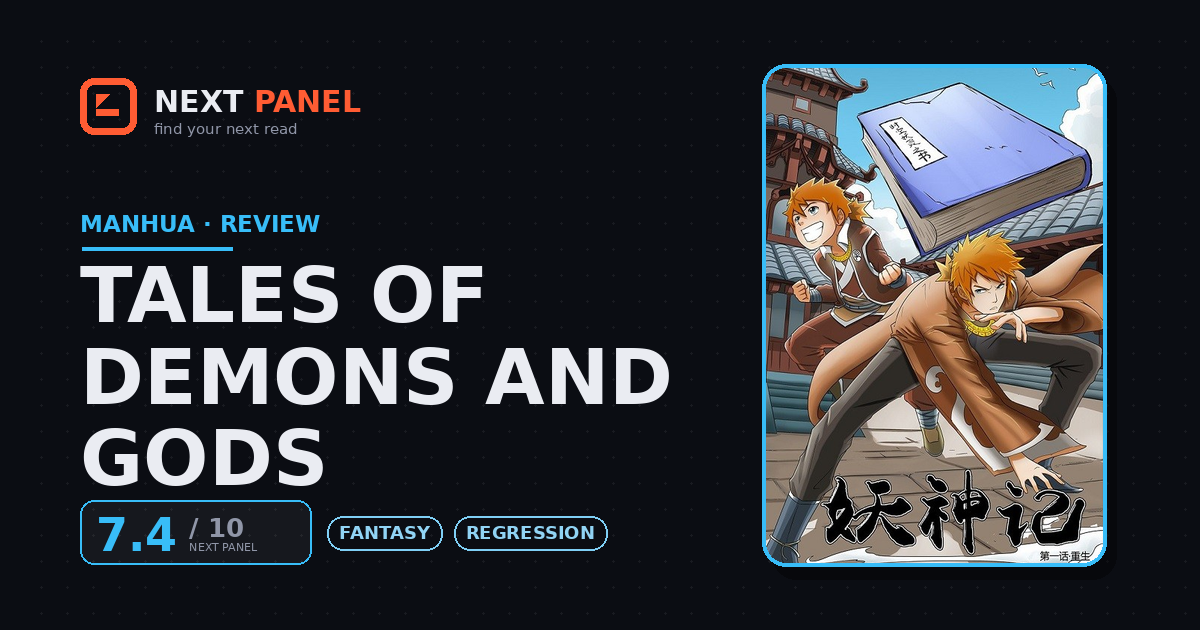
Is Tales of Demons and Gods Worth Reading? Review & Where to Read
Quick Answer
Yes, more than most cultivation manhua. Tales of Demons and Gods stands out thanks to its regression hook — Nie Li dies and wakes up in his teenage body with a lifetime of future knowledge, so he's a clever, proactive hero working to save the people he lost. It's still a long, ongoing grind with the usual power-creep, but the smarter setup and real stakes put it a notch above its peers.
Quick Verdict
“The second-chance hook makes Nie Li a hero who plans three steps ahead — more fun than the usual cultivation grind, even if all that foreknowledge drains the suspense.”
Best for: Readers who want cultivation power-fantasy with a smart, proactive hero and a second-chance, fix-the-future hook.
Not for: Readers who want a short, finished story or genuine suspense about the hero's fate.
- Type
- Manhua
- Genres
- Regression, Fantasy
- Status
- Ongoing
- This review
- Minor Spoilers
- Author
- Mad Snail
- Platform
- Availability varies
| Quick facts | |
|---|---|
| Format | Manhua, 517 chapters |
| Run | 2015–present · ongoing |
| Community score | AniList 7.7 · MangaUpdates 7.9 |
| Content | Fantasy violence |
Overview
Tales of Demons and Gods opens with a death. Nie Li, the strongest Demon Spiritist of his age, falls in a losing war against monstrous Sage Emperors — and then wakes up. He's thirteen again, back in his hometown of Glory City, years before everything went wrong, with every memory of his future life intact. So he does the obvious thing: he uses what he knows to grow strong fast, gather the friends he lost the first time, and head off the catastrophe he's already lived through. It's a cultivation fantasy by Mad Snail — the same author as Star Martial God Technique — but the time-loop premise sets it apart from the pack right away.
What it does well
The regression hook is the whole reason it works. Most cultivation heroes are blank underdogs climbing a ladder; Nie Li is a veteran in a kid's body, which makes him proactive and clever instead of just lucky. He cherry-picks the best techniques, sidesteps traps he remembers, and builds his power and his alliances on purpose. Watching a hero who actually has a plan is a refreshing change from the genre's usual stumble-into-strength formula.
It also has real emotional fuel. Nie Li isn't just chasing power for its own sake — he's trying to save a city he watched fall and protect specific people he failed before, and that grounding gives the stakes a weight pure grind-fests lack. There's a sincerity to his second-chance mission that makes you root for him.
And it delivers the genre staples competently: a clear power system, steady progression, flashy demon-spirit battles, and the satisfying beats of a hero proving himself to doubters. The art is solid full-color manhua work, clean and readable, with the big set-piece fights the format demands.
Where it falls short
The flip side of foreknowledge is that it drains tension. Nie Li so rarely faces something he didn't see coming that you're often watching a plan execute rather than a struggle unfold. When the hero already knows the answers, the suspense takes a hit.
It's also still a long, long cultivation grind. The same caveats that hit the genre hit here: power levels keep inflating, arcs repeat the train-fight-advance rhythm, and the ever-growing cast and harem-adjacent elements pad things out. And like its siblings, it's ongoing with a slow adaptation, so you're signing up for an unfinished story that updates at a crawl.
Verdict
Tales of Demons and Gods is one of the better cultivation manhua, mostly because its regression hook gives it a smarter hero and a real reason to care. It doesn't escape the genre's core problems — it's long, repetitive, and unfinished, and the foreknowledge dulls the tension — but it's more thoughtful and heartfelt than most of its shelf-mates. If you want cultivation with an actual brain and some heart behind it, start here.
Strengths & Weaknesses
Strengths
- The regression hook makes Nie Li proactive and clever — a veteran in a kid's body who plans ahead instead of just stumbling into strength.
- It has real emotional fuel: he's trying to save a city he watched fall and protect people he failed before, which gives the stakes weight.
- It delivers the genre staples well — clear power system, steady progression, flashy demon-spirit battles, satisfying proving-himself beats.
- The art is solid, clean full-color manhua work that handles the big set-piece fights the format needs.
Weaknesses
- Foreknowledge drains tension — Nie Li rarely meets something he didn't see coming, so you often watch a plan execute rather than a struggle.
- It's still a long cultivation grind, with inflating power levels and the repetitive train-fight-advance rhythm.
- The growing cast and harem-adjacent elements pad it out, and it's ongoing with a slow adaptation, so it's unfinished and crawls.
Similar Titles
Mad Snail's other big cultivation manhua — grindier and thinner on story than this one.
A genre cousin with a similar academy-and-tournament structure and friendlier tone.
Reincarnation power-fantasy that, like this, leans on a reborn hero's foreknowledge and emotional stakes.
Frequently Asked Questions
Is Tales of Demons and Gods finished?
No. Both the novel and the manhua are ongoing and long-running, and the comic updates on a slow, irregular schedule.
What makes it different from other cultivation stories?
The regression hook. Nie Li starts with the memories of an entire future life, so he plans ahead and works to prevent disasters he's already seen — far more proactive than the usual underdog climb.
Where can I read it in English?
It's patchy for the comic. The novel is available on Webnovel in English, while official English access to the manhua varies by platform and region.