Is Tekkonkinkreet Worth Reading? Review & Where to Read
Quick Answer
Worth reading if you want a short, visually singular story about a fierce bond between two street kids, backed by real award recognition and a well-regarded film adaptation.
Quick Verdict
“Worth it as a genuine modern classic, tightly told in just three volumes. The art style and heavy tone need to click for you personally, so it's not for everyone.”
Best for: Readers who want a short, visually distinctive, emotionally heavy story about a fierce, fraying bond between two street kids.
Not for: Readers who want conventional, clean manga art, or who prefer a gentler tone than genuinely brutal, sustained violence involving child protagonists.
- Type
- Manga
- Genres
- Drama, Action, Supernatural
- Status
- Completed
- Author
- Taiyo Matsumoto
- Publisher
- Shogakukan
- Platform
- VIZ
| Quick facts | |
|---|---|
| Format | Manga, 33 chapters, 3 volumes |
| Run | 1993–1994 · completed |
| Community score | AniList 7.8 · MangaUpdates 7.7 |
| Where to read | VIZ — official |
Overview
Black and White are two orphaned boys who've claimed Treasure Town's rooftops and back alleys as their own. White is gentle and strange, seeing the world through a lens nobody else shares. Black is sharp, violent, and fiercely protective of his only real family. When a yakuza-backed development syndicate moves in to remake the city in its own image, the boys who call themselves its "cats" find their entire world, and their bond with each other, under direct threat.
What it does well
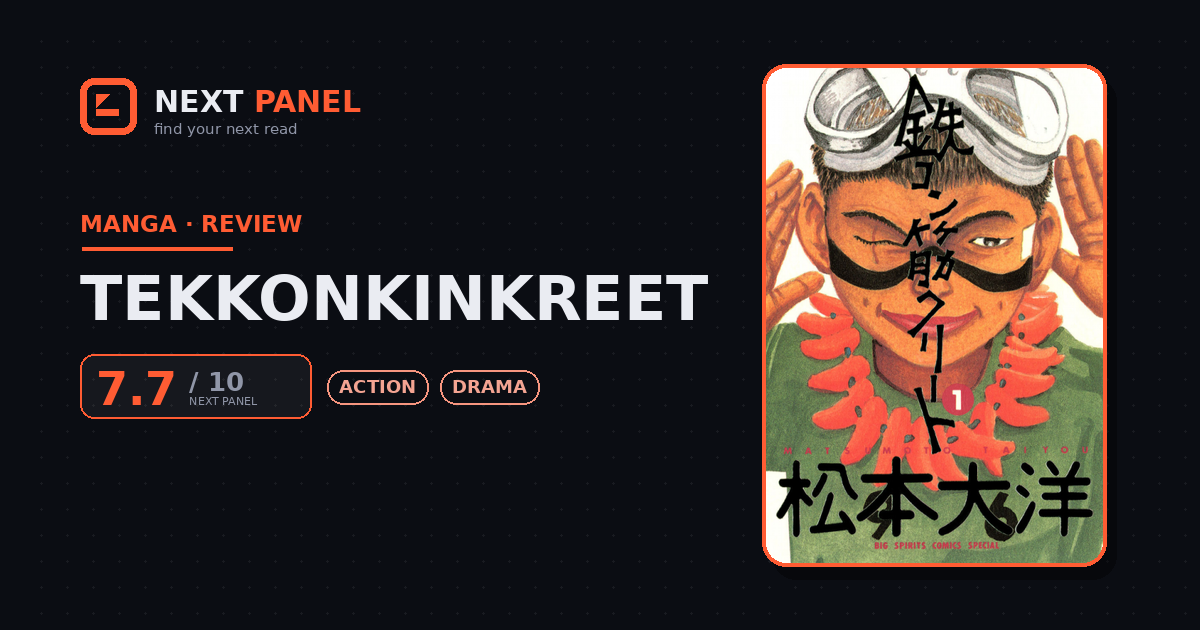
This is a genuinely singular work. Taiyo Matsumoto's scratchy, kinetic, almost feral art style turns Treasure Town into a real character in its own right, equal parts grimy urban decay and dreamlike wonder, and the visual language does as much storytelling as the script does. Black and White's relationship is the emotional core of the whole book, and it's handled with real tenderness underneath the violence: White's genuine innocence and Black's increasingly fraying grip on his own humanity play off each other in ways that hit much harder than a typical buddy-crime story. At just three volumes, it's tightly, deliberately paced, a complete, focused work rather than a sprawling epic, and every chapter earns its place. And the recognition backs up the reputation: a Japan Media Arts Festival Excellence Award for the original, an award for the English edition, and a well-regarded 2006 animated film adaptation that introduced it to an even wider audience.
Where it falls short
The atypical, sketchy art style that gives the book its identity can be a genuine barrier if you go in expecting cleaner, more conventional manga art. Some readers bounce off the visual language before the story gets a chance to land. The tone is heavy and often genuinely brutal, child protagonists in real, sustained danger, mob violence played completely straight, so this isn't a comfortable or easy read despite its short length. And because the story moves fast and stays tightly focused on Black and White specifically, side characters and worldbuilding details get comparatively little room to breathe.
Verdict
If a short, visually distinctive story about a fierce, fraying bond between two street kids sounds appealing, this earns its status as a genuine modern classic in three tight volumes. Just know the art style and tone need to click for you specifically, since this isn't a comfortable read.
Strengths & Weaknesses
Strengths
- Taiyo Matsumoto's scratchy, kinetic art style turns Treasure Town into a real character, equal parts grimy decay and dreamlike wonder
- Black and White's relationship is handled with real tenderness underneath the violence, hitting harder than a typical buddy-crime story
- Tightly, deliberately paced at just three volumes, a complete, focused work rather than a sprawling epic
- Real award recognition, including a Japan Media Arts Festival Excellence Award, plus a well-regarded 2006 animated film adaptation
Weaknesses
- The atypical, sketchy art style can be a genuine barrier for readers expecting cleaner, more conventional manga art
- The tone is heavy and often genuinely brutal, with child protagonists in sustained, real danger
- Side characters and worldbuilding details get comparatively little room to breathe given the tight focus on the two leads
- A short, intense read rather than a comfortable or easy one, despite its brief length
Similar Titles
Same era-defining, visually singular seinen classic with a distinctive urban setting
Same commitment to an atypical, distinctive art style and gritty urban energy
Where to Read Officially
| Platform | Format | Pricing | Region notes | Link |
|---|---|---|---|---|
| VIZ | Print & digital (30th Anniversary omnibus edition) | Paid | Region availability varies | Open |
Frequently Asked Questions
Is there an official English translation?
Yes, it's licensed in English by VIZ, currently collected in a single 30th Anniversary omnibus edition.
Is this a good starting point for Taiyo Matsumoto's work?
Yes, it's his best-known work in English and a strong introduction to his distinctive art style, alongside titles like Cats of the Louvre.
Is the series finished?
Yes, it's complete at 3 volumes.
Is this connected to the 2006 animated film?
Yes, the film adapts this manga and is well-regarded in its own right, directed by Michael Arias.