Is The Fable Worth Reading? Review & Where to Read
Quick Answer
Yes, if deadpan is your kind of funny. The joke — a perfect killer treating 'be normal' as a mission brief — carries an absurd distance, and the rare action bursts are some of the best-choreographed in seinen. It moves slowly and on purpose, so binge readers do better than weekly ones.
Quick Verdict
“Anyone who's wished John Wick would get a day job belongs here — come for the silences as much as the gunfights.”
Best for: Readers who like slow-burn crime stories where the comedy is dry, the violence is rare, and both are executed with total control.
Not for: Readers who want constant action, expressive art, or a plot that hurries.
- Type
- Manga
- Genres
- Action, Comedy
- Status
- Completed
- This review
- Minor Spoilers
- Author
- Katsuhisa Minami
- Publisher
- Kodansha
- Platform
- Kodansha
| Quick facts | |
|---|---|
| Format | Manga (seinen), 240 chapters, 22 volumes |
| Run | 2014–2019 · completed |
| Community score | AniList 8.4 · MangaUpdates 8.5 |
| Content | Violence, organized crime, sexual content |
| Where to read | Kodansha — official |
Overview
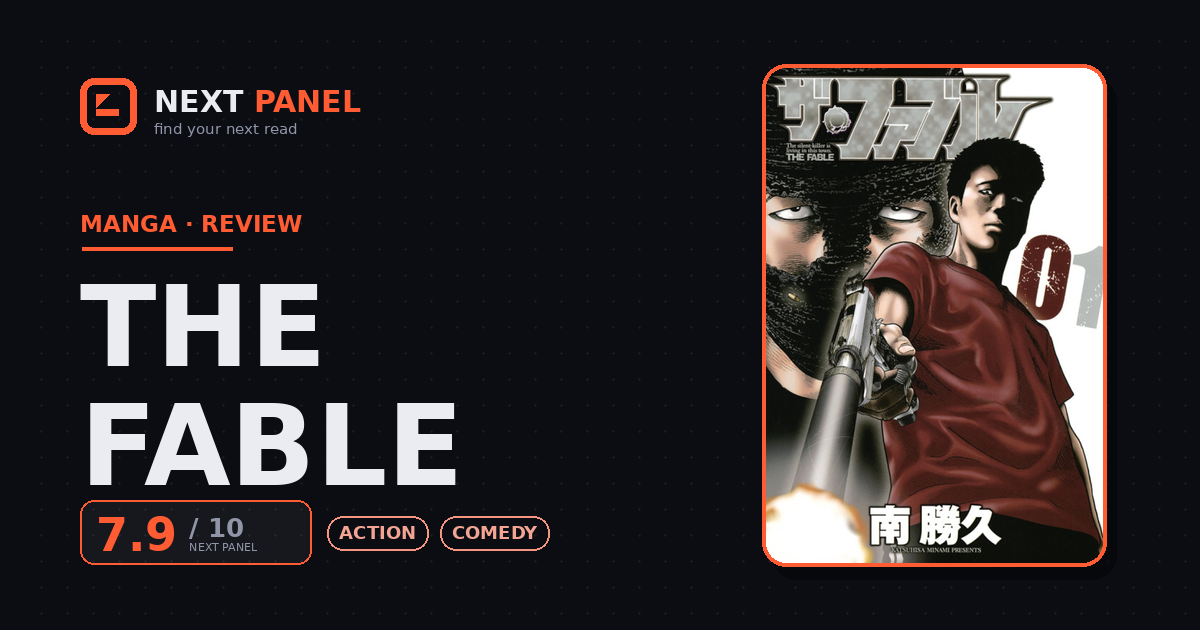
Akira Sato is a hitman so efficient the underworld talks about him like a folk tale — the Fable, six seconds per kill, no misses. After one job too many makes him famous, his boss hands him the hardest contract of his career: move to Osaka with his partner Yoko, pose as brother and sister, and live as completely ordinary civilians for one year. No jobs. No fighting. And if he kills anyone, the boss kills him.
What follows is a crime story built almost entirely out of restraint. Akira takes the assignment literally — because he takes everything literally — and attacks normalcy like a mission: practice laughing, get a job, feed the parrot, blend in. The problem is that the yakuza family hosting him keeps generating exactly the kind of trouble a legendary killer is built to solve, and the entire series lives in the gap between what Akira could do and what he's allowed to do.
What it does well
The deadpan, first and forever. Minami never lets Akira wink at the reader. He watches a lowbrow TV comedian with the intensity of a man studying sniper wind charts, declares mediocre stir-fry delicious in complete monotone, and applies threat-assessment logic to office small talk. Because he never breaks, the comedy compounds — by the tenth volume, a single flat line of dialogue can be the funniest thing in the book.
Then there's the action, which the series rations like a controlled substance. When Akira finally moves, the choreography is stunning in a way few manga attempt: quiet, precise, spatially coherent, more procedure than spectacle. You always understand exactly what he did, why it worked, and why nobody saw it coming. The no-kill rule sharpens these scenes further — watching him dismantle armed professionals with a pellet gun and environmental tricks is far more interesting than a body count would be.
The world around him holds up its end. The Maguro-gumi yakuza are a middle-management comedy in themselves — men with mortgages and org-chart problems trying to babysit a living weapon — and characters who start as one joke (the volatile ex-con Kojima, the icy lieutenant Ebihara) grow real dimension. Yoko quietly runs her own version of the experiment, testing civilian life through bars and bad men, and her chapters give the premise a second voice.
Where it falls short
Patience is mandatory. The Fable will spend fifty pages on a barbecue or an office errand while it positions dominoes, and if you need visible plot motion every chapter, the middle volumes will test you. The art contributes to the slowness: Minami draws stiff, held expressions and repeats face types, which serves the deadpan but takes real getting used to. And the opposition is uneven — the series saves its best antagonists for the final stretch, so a few earlier arcs simmer without much menace.
Verdict
The Fable is a patient reader's crime comedy — a series confident enough to make stillness the punchline and rarity the selling point of its action. It earns its award-winner reputation through control: of tone, of pacing, of a single joke that somehow never dies. If you want kinetic hitman thrills, Sakamoto Days serves them faster; this is the version for readers who grin at a perfectly held silence. Completed, satisfying, and easy to get in English — start with the first omnibus and see if the monotone gets you.
Strengths & Weaknesses
Strengths
- The central joke never wears out: Akira approaches buying groceries, holding a job, and learning to laugh with the same flat professionalism he brought to contract killing, and the series commits to his deadpan completely.
- When action finally arrives, it's exceptional — quiet, spatial, almost procedural sequences where you understand every step of why the world's best is the best. The scarcity is the point; each burst pays off volumes of calm.
- The supporting cast earns its pages. The local yakuza are written like tired middle managers trying to keep a dangerous guest from voiding the lease, and Yoko's parallel attempt at civilian life gives the premise a second angle.
- The no-kill rule is a great engine: every threat becomes a puzzle Akira has to solve without a body, which keeps fights inventive and stakes strangely wholesome.
Weaknesses
- The pacing is genuinely slow. Arcs spend chapters positioning pieces, and some office-life subplots idle before the story finds a use for them.
- Minami's art is an acquired taste — stiff faces, deliberate panels, and mob characters who can blur together until the story teaches you to tell them apart.
- Antagonist quality varies. The best opponents show up in the latter half; a few early threats are too thin to feel dangerous.
Similar Titles
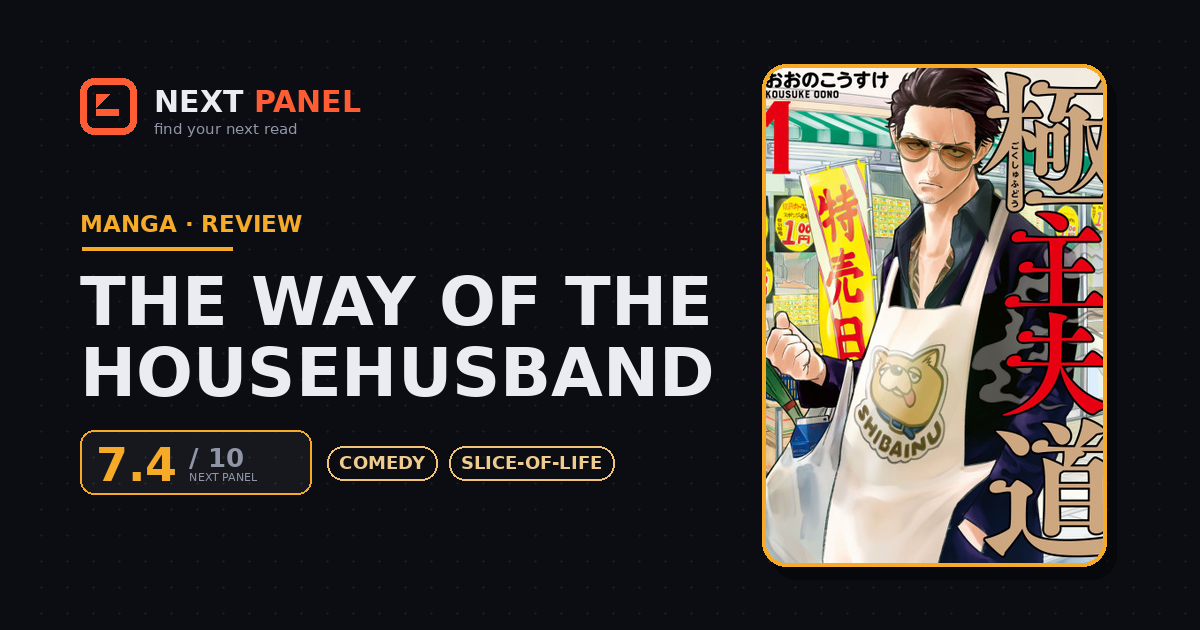
The same joke run at full slapstick speed — an ex-yakuza legend applying killer intensity to domestic life.
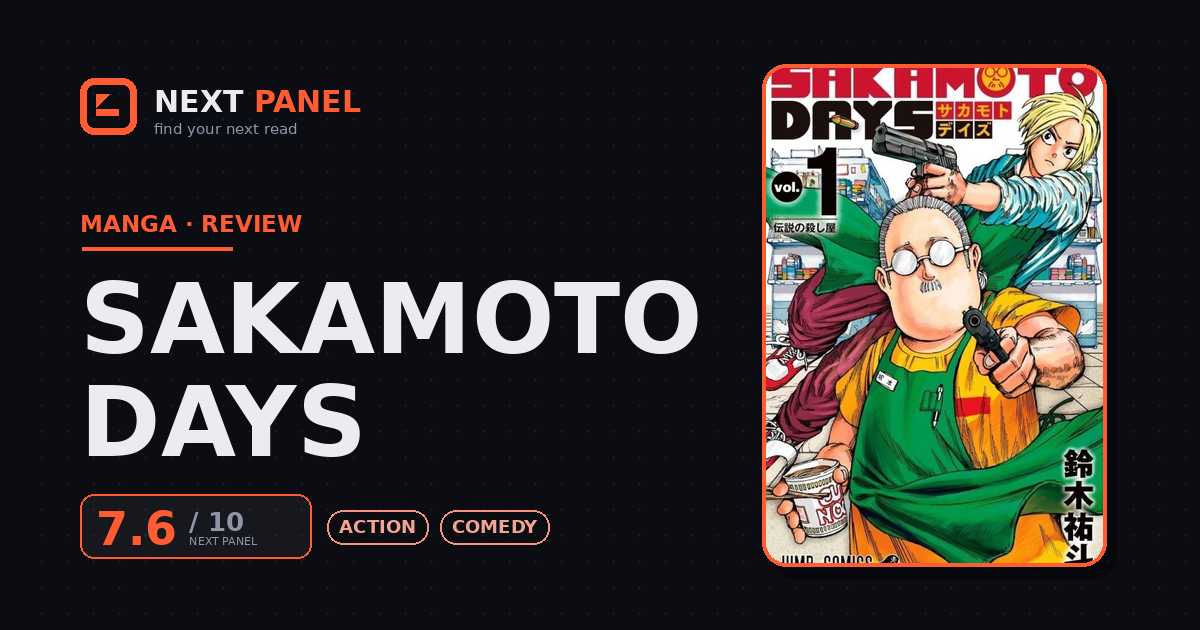
A legendary hitman gone domestic again, but as a bright, fast shōnen action-comedy instead of a slow burn.
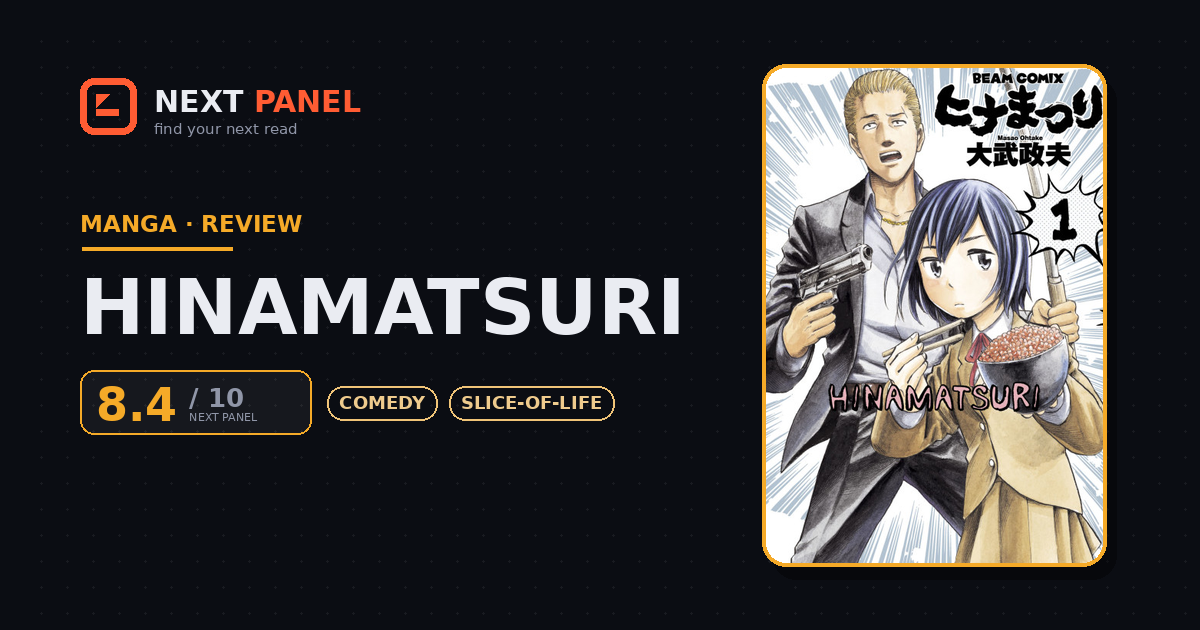
Deadpan yakuza comedy from a different angle, with a telekinetic kid instead of a contract killer.
Where to Read Officially
| Platform | Format | Pricing | Region notes | Link |
|---|---|---|---|---|
| Kodansha | Print omnibus & digital volumes | Paid | Region availability varies | Open |
Frequently Asked Questions
Is The Fable finished?
The original series is complete at 22 volumes, with a proper ending. A sequel series, The Fable: The Second Contact, continues the story afterward.
Where can I read The Fable in English?
Kodansha publishes it in English — digitally and in chunky print omnibus editions that collect two volumes each.
Is it all comedy, or is there real crime drama?
Both. Long stretches play as dry slice-of-life comedy, but the yakuza politics are treated seriously, and the late arcs get legitimately tense.