Is The Horizon Worth Reading? Review & Where to Read
Quick Answer
Yes — and it asks so little of your time that it's one of the easiest recommendations on this site. It's bleak, quiet, and completely in control of what it's doing, with an ending people still argue about. You can read the whole thing officially for free.
Quick Verdict
“Two kids, a ruined world, and barely a wasted panel — the rare short story that earns every award sticker on its cover.”
Best for: Readers who want a short, complete, emotionally heavy story and don't need the world or its war explained.
Not for: Readers who want worldbuilding, action payoffs, or something light before bed.
- Type
- Webtoon
- Genres
- Drama, Thriller
- Status
- Completed
- This review
- Minor Spoilers
- Author
- JH
- Publisher
- Kakao Entertainment
- Platform
- WEBTOON
| Quick facts | |
|---|---|
| Format | Webtoon, 21 chapters, 3 volumes |
| Run | 2016–2016 · completed |
| Community score | AniList 8.5 · MangaUpdates 8.4 |
| Content | War violence, death, child endangerment |
| Where to read | WEBTOON — official |
Overview
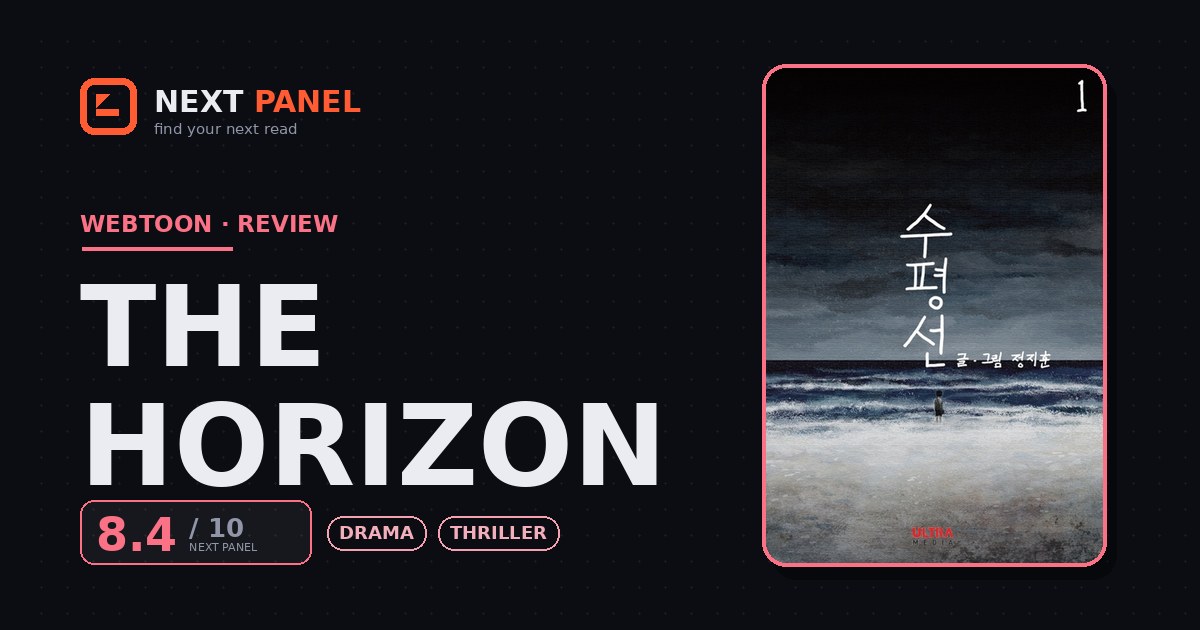
A small boy sits at the edge of a road after a massacre, too shocked to cry properly. A girl about his age walks out of the wreckage carrying a bag that isn't hers. Neither of them has anywhere to go, so they go together — down a highway strewn with abandoned cars, through empty towns, past the machinery of a war that is never named or explained, toward the flat line where the sky meets the ground.
That's the whole premise. The Horizon has no factions to learn, no map, no mythology. The war works like weather: it's simply the condition of the world, and the story keeps its camera at child height, where artillery is just noise on the horizon and the real dangers are the adults left wandering the ruins. JH tells it lean, often wordless, and lets the scroll do the talking.
What it does well
The format, first. This is one of the best arguments anywhere for the vertical scroll as a storytelling tool rather than a delivery mechanism. JH draws tiny, scribbly figures against enormous fields of blank space, and the act of scrolling — down an empty road, down the side of a building, down into darkness — becomes part of the pacing. When color or detail suddenly floods a panel, it hits like a sound in a quiet room.
The restraint is the other weapon. Long passages pass without dialogue, and the series never explains what a scene means or tells you how to feel about it. The children barely speak, so small gestures — sharing food, a hand grabbed in the dark — carry enormous weight. Against that quiet, the encounters with adults structure the story: each stranger on the road is a different answer to the question of what people do when the rules are gone, from tenderness to madness to predation. A couple of those episodes are among the most unsettling things in webtoons, precisely because the story stays calm while showing them.
And it's complete. Short, controlled, finished — a story with a beginning, an argument, and an end, which is rarer in this format than it should be.
Where it falls short
The fable register cuts both ways. The boy and girl are written as innocence itself rather than as two specific kids, and if you connect to stories through personality and banter, there isn't much here to hold. The middle section also stacks cruelty high enough that some readers go numb before the story wants them to — a few dark turns feel like the theme demanding another example rather than the road naturally providing one. And the ending, which swings toward something bigger and more abstract, splits readers cleanly: for some it reframes the whole journey, for others it's a soft answer to hard questions. I mostly think it works, but I understand the eye-rolls.
Verdict
The Horizon is a short, severe, beautifully controlled piece of comics that does more with empty space than most series do with armies. It's not a fun read, and its fable-plain characters and divisive finale keep it just shy of untouchable, but as a one-or-two-evening experience it's about as strong as this medium gets. Read it free, read it in order, and don't look up spoilers — then go find The Boxer and watch the same author swing even bigger.
Strengths & Weaknesses
Strengths
- Ruthless economy. It tells a complete story in a sitting or two, and almost nothing is wasted — every encounter, every stretch of empty road is doing thematic work.
- The art uses absence better than most series use detail: scratchy, expressive linework, tiny figures against huge blank space, and the vertical scroll turned into a real tool for scale and dread.
- It trusts silence. Long wordless passages carry the heaviest moments, and the restraint makes the few spoken lines land much harder.
- The episodic encounters with adults — each one a different face of people under collapse — build a genuinely affecting argument about what survives of us when everything else goes.
Weaknesses
- The children are closer to vessels than characters. That's clearly deliberate — it's a fable — but readers who bond through personality will feel held at arm's length.
- The middle stretch leans so hard on cruelty that it can numb; a couple of the darker beats feel schematic rather than shocking.
- The ending pivots in a way that reads profound to some readers and pat to others. It's the most divisive thing in the series.
Similar Titles
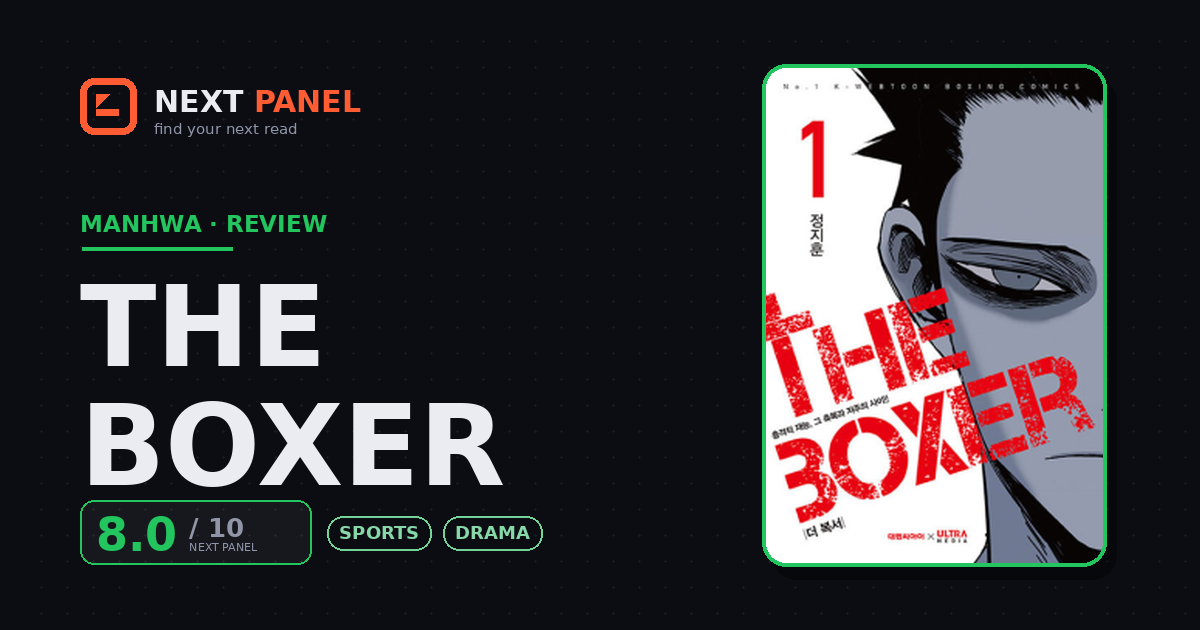
The same author a few years later — bigger, louder, and chasing the same questions about meaning and grace.
Two kids wandering the end of the world, but gentle and melancholy where this is raw.
Another Korean webtoon about what people become under apocalyptic pressure, with monsters doing the pressing.
Where to Read Officially
| Platform | Format | Pricing | Region notes | Link |
|---|---|---|---|---|
| WEBTOON | Free on WEBTOON; print volumes from Ize Press | Free + Paid | Region availability varies | Open |
Frequently Asked Questions
How long is The Horizon?
Short. It's complete at 21 chapters, and most people finish it in one or two sittings. The English print edition runs three volumes.
Where can I read The Horizon in English?
Officially and free on WEBTOON, chapter by chapter. Ize Press also publishes a print edition if you want it on a shelf.
Is it as depressing as people say?
It's heavy — war, death, and cruelty are on the page, and it doesn't flinch. But it's reaching for something past the bleakness, and whether it gets there is the argument the ending starts.