Is The Saga of Tanya the Evil Worth Reading? Review & Where to Read
Quick Answer
Yes, if you want a smart, cynical military fantasy with a genuinely wicked lead. It follows a cold salaryman reincarnated as a little girl who becomes a frighteningly effective soldier, and it takes its war and strategy seriously. Just be ready for heavy exposition and a protagonist you're not supposed to like.
Quick Verdict
“Picture a ruthless salaryman's brain in the body of a sweet little girl, fighting a magical World War I, and you've got the appeal. It leans heavy on exposition, but the premise and the antihero carry it.”
Best for: Readers who love cynical antiheroes and war stories that dig into strategy, logistics, and morally gray politics.
Not for: Readers who want a likable hero, light reading, and action without heavy exposition.
- Type
- Manga
- Genres
- Action, Isekai
- Status
- Ongoing
- This review
- Minor Spoilers
- Author
- Carlo Zen
- Artist
- Chika Tōjō
- Publisher
- Yen Press
- Platform
- Yen Press
| Quick facts | |
|---|---|
| Format | Manga (seinen), 32 volumes |
| Run | 2016–present · ongoing |
| Community score | AniList 8.2 · MangaUpdates 7.9 |
| Where to read | Yen Press — official |
Overview
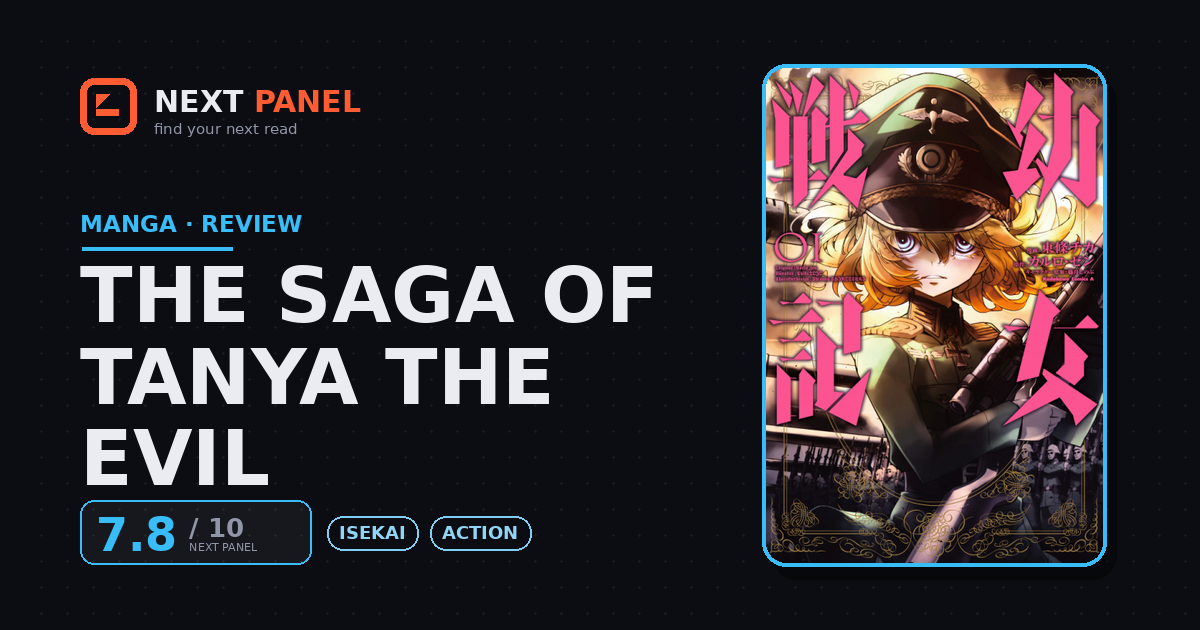
The Saga of Tanya the Evil (Youjo Senki) is a military fantasy with one of the nastiest premises around. A cold, hyper-rational salaryman is killed and reincarnated by a being he mockingly calls "Being X," basically God, who is annoyed by his atheism. The catch: he is reborn as Tanya Degurechaff, a small orphan girl in a world on the edge of a war that looks a lot like World War I, except with battle-mages. To spite Being X and secure a safe, comfortable career, Tanya throws herself into the imperial military and turns out to be terrifyingly good at killing. This manga, drawn by Chika Tōjō, adapts Carlo Zen's light novels.
What makes it click is the gap between how Tanya looks and who she is. She is a blonde little girl with the mind of a ruthless middle manager, coldly optimizing casualties and career moves while everyone around her mistakes her ambition for heroism or madness. It is ongoing, it spun off a popular anime, and Yen Press publishes the manga in English.
What it does well
The premise is more than a gimmick. Tanya's cold, self-interested logic drives the plot, and watching her "safe" choices spiral into bigger battles and a worse reputation is darkly funny. She wants a desk job and keeps accidentally becoming a war hero, and the irony never gets old.
Chika Tōjō's art is a real strength. The magic-assisted aerial combat is fast and clear, the military hardware and uniforms are detailed, and Tanya's face flipping from angelic child to pure menace is a running visual joke that always lands. For an adaptation of a talky light novel, the manga keeps the action legible and punchy.
It is also smarter about war than most fantasy. The story cares about logistics, strategy, and the ugly political math behind campaigns, and it does not pretend the "good guys" are clean. If you like war stories that treat their battles as problems to be solved rather than pure spectacle, there is a lot here.
Where it falls short
It comes from a light novel, and it shows. There is a lot of internal monologue and dense talk about economics, doctrine, and grand strategy, and the manga sometimes stuffs the page with text to keep up. Readers who want pure action may find those stretches heavy.
The huge cast of officers and units can also be hard to track, especially early, and the alt-history politics take some effort to follow. And Tanya is deliberately unlikable. The whole point is that she is a cold, cruel narrator you are not meant to root for cleanly, so if you need a hero to like, this will keep you at arm's length.
Verdict
Come for the wild premise, stay for how seriously it takes it. This is a sharp, cynical war story anchored by one of the most memorable antiheroes in the genre, as long as you do not mind heavy exposition and a lead you are meant to side-eye. If a coldly logical villain protagonist and real military strategy sound fun, it is well worth picking up.
Strengths & Weaknesses
Strengths
- The premise is used for real: Tanya's cold, self-interested logic actually drives the plot, and her attempts to stay safe keep backfiring into bigger battles.
- Chika Tōjō's art keeps the magical aerial combat fast and readable, and Tanya's angel-to-menace face is a running visual gag that always lands.
- It takes war seriously, with attention to strategy, logistics, and dirty politics that most fantasy skips.
- The contrast between Tanya's cute appearance and ruthless mind gives the whole series a sharp, dark sense of humor.
Weaknesses
- As a light-novel adaptation it can get text-heavy, cramming pages with monologue about economics and grand strategy.
- The large cast of officers and the alt-history politics are hard to track, especially in the early volumes.
- Tanya is written to be cold and unlikable on purpose, so readers who want a hero to root for will be kept at a distance.
Similar Titles
Another isekai built around a feared, morally gray protagonist and a lot of scheming.
For the same love of large-scale battles, tactics, and the politics behind a war.
A brutal, serious war story that, like Tanya, refuses to make its violence look clean.
Where to Read Officially
| Platform | Format | Pricing | Region notes | Link |
|---|---|---|---|---|
| Yen Press | Print & digital volumes | Paid | Region availability varies | Open |
Frequently Asked Questions
Do I need to read the light novels first?
No. The manga adapts Carlo Zen's light novels and stands on its own, though the novels go into more detail if you want it.
Is the manga finished?
No. It's ongoing, with more than 30 volumes in Japan and the English release from Yen Press catching up steadily.
Can I read it in English officially?
Yes. Yen Press publishes the manga in English in print and digital, so you can buy the volumes officially.