Is To Love-Ru Worth Reading? Review & Where to Read
Quick Answer
If ecchi harem comedy is the genre you're after, this is one of the more competently made examples, but it's fan-service first and everything else second.
Quick Verdict
“Rito falls into more compromising positions than any human being should survive, and the whole series is built to keep that streak going.”
Best for: Readers who want a classic, unapologetic ecchi harem comedy with an alien-invasion excuse for a plot.
Not for: Readers who want the romance or story to matter more than the fan-service, or a male lead who actually drives events.
- Type
- Manga
- Genres
- Romance, Sci-Fi
- Status
- Completed
- This review
- Minor Spoilers
- Author
- Saki Hasemi
- Artist
- Kentaro Yabuki
- Publisher
- Shueisha
- Platform
- Seven Seas Entertainment
| Quick facts | |
|---|---|
| Format | Manga (shōnen), 162 chapters, 18 volumes |
| Run | 2006–2009 · completed |
| Community score | AniList 7.1 · MangaUpdates 7.6 |
| Content | Frequent nudity and sexual fan service |
| Where to read | Seven Seas Entertainment — official |
Overview
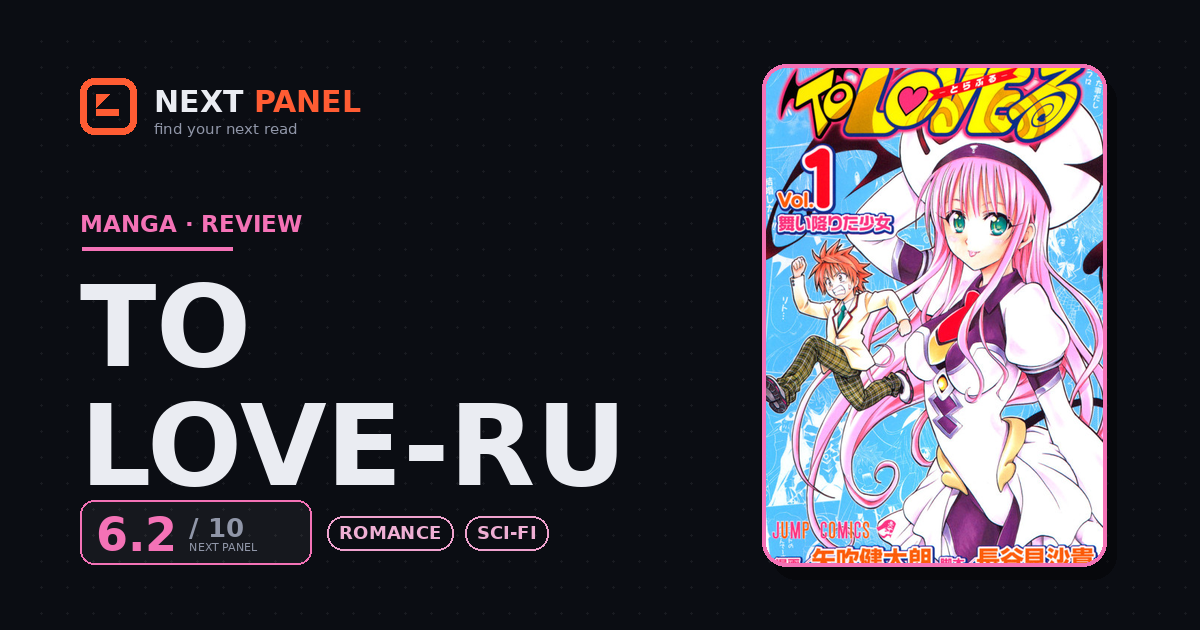
To Love-Ru starts with Lala, an alien princess, crash-landing naked into the bathtub of Rito Yuuki, an ordinary and painfully shy high schooler. To avoid an arranged marriage back home, Lala declares Rito her fiancé, and from there the story spirals into a rotating cast of alien princesses, rival suitors, and increasingly elaborate excuses for Rito to end up in compromising situations with one heroine or another.
It's an ecchi harem comedy through and through — the alien-invasion setup exists mostly to justify a constant stream of new characters and new reasons for slapstick, skin-baring chaos.
What it does well
Kentaro Yabuki's art is a real asset here. Character designs are sharp, action scenes when they happen are dynamic and well-choreographed, and the overall polish is a level above a lot of comparable harem manga from the same era. The slapstick timing behind Rito's constant accidental compromising positions is genuinely well executed as physical comedy — falls, collisions, and mishaps are staged with real comic rhythm rather than just being an excuse to draw fan service.
The alien-invasion premise also keeps the cast growing in interesting directions. New alien species, new rival royalty, and new supporting characters give the story more variety than a typical single-school-setting harem comedy, and several of the side characters (particularly on the antagonist side) get more personality than you'd expect from a series this focused on gags.
Lala herself carries a lot of the story's heart. Her affection for Rito is upbeat and sincere rather than transactional, and that genuine warmth keeps the core relationship from feeling like a cynical excuse for fan service alone.
Where it falls short
The fan service isn't an occasional aside — it's the primary driver of most chapters, and that's simply not going to work for readers who want plot or character growth to be the point. If nudity and sexual comedy as a recurring structural device isn't your thing, no amount of art quality will change that.
Rito is a deeply passive lead. Nearly everything that happens to him is initiated by someone else, and he rarely makes a choice that meaningfully shapes the plot, which limits how invested you can get in him as a character across 18 volumes.
The franchise's later spin-off material (Darkness, Trouble) leans even further into fan service at the expense of the comedy and character beats that made the earlier chapters work, so the law of diminishing returns applies the further you go.
Verdict
To Love-Ru is a well-crafted example of exactly what it's trying to be: a fast, funny, fan-service-heavy harem comedy with sharp art and a genuinely likeable female lead. If that's the genre you're looking for, it delivers; if you want plot or character depth to come first, look elsewhere.
Strengths & Weaknesses
Strengths
- Kentaro Yabuki's art is genuinely sharp and dynamic, giving the comedy and action beats more visual polish than most series in this genre bother with.
- The alien-invasion premise keeps generating new gimmicks and side characters, so the formula has more variety than a typical single-setting harem comedy.
- The slapstick timing on the accidental-compromising-position gags is well executed as physical comedy, not just an excuse for fan service.
- Lala's genuine, upbeat affection for Rito gives the core relationship a warmth that keeps the story from feeling cynical.
Weaknesses
- The fan service isn't a side element — it's the primary engine of most chapters, which will be an immediate dealbreaker for readers who want plot or character development to lead.
- Rito is almost entirely reactive; the plot happens to him rather than because of him, chapter after chapter.
- The later spin-off material leans even harder into fan service at the expense of the comedy and character work that made the earlier volumes work.
Similar Titles
Similar harem-comedy structure and fan-service focus, with a monster-school hook instead of aliens.
A gentler, more character-driven alternative if you want the harem dynamic without as much fan service.
Shares the same artist's dynamic action art in a very different, comedy-forward setting.
Where to Read Officially
| Platform | Format | Pricing | Region notes | Link |
|---|---|---|---|---|
| Seven Seas Entertainment | Print omnibus volumes | Paid | Region availability varies | Open |
Frequently Asked Questions
Is To Love-Ru finished?
The original series is complete at 18 volumes (2006-2009), and it was followed by sequel series Darkness and Trouble.
How much fan service is in it?
A lot — nudity and sexual comedy are constant, defining features rather than occasional gags.
Do I need to read the sequels?
No, the original series has its own arc, though the sequels continue Rito and Lala's story if you want more.