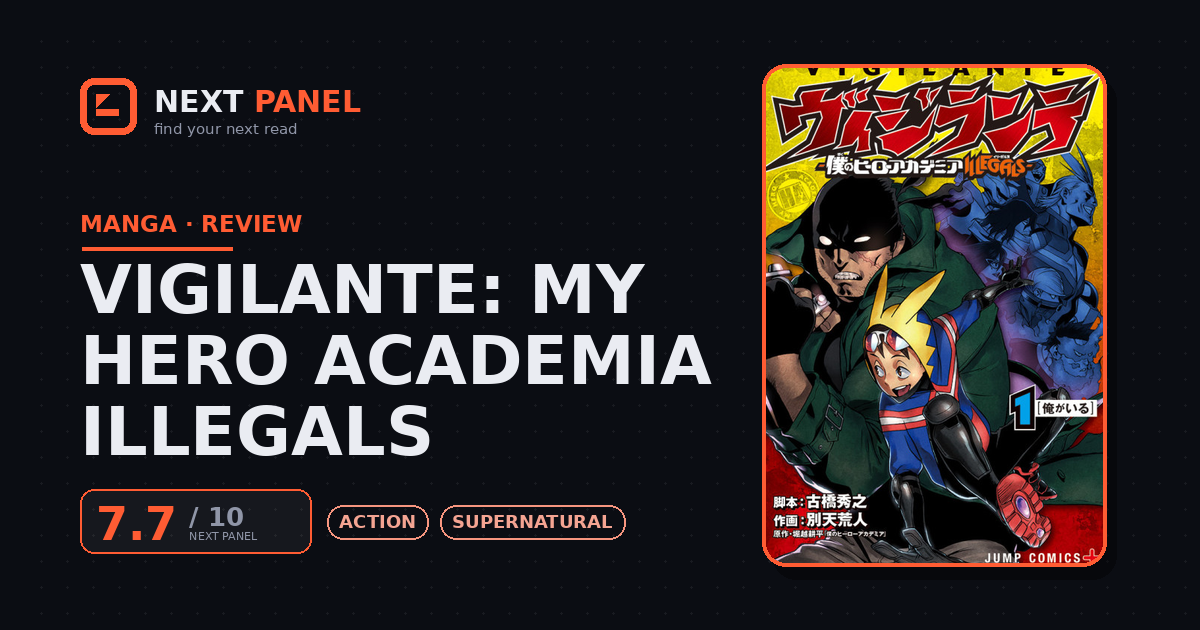
Is Vigilante: My Hero Academia Illegals Worth Reading? Review & Where to Read
Quick Answer
Worth reading if you want a street-level, morally grayer companion to My Hero Academia's licensed-hero system, built around a genuinely underdog lead instead of a chosen one. It's a complete 15-volume story, so you get a real arc, not an open-ended tie-in.
Quick Verdict
“Koichi is the least gifted person in this universe with a Quirk, and watching him become someone worth rooting for anyway is the best argument this spinoff has for existing.”
Best for: My Hero Academia fans who want to see the world's underside — heroism without a license, backing, or a flashy Quirk.
Not for: Readers with zero familiarity with My Hero Academia's Quirk system, since a lot of the appeal depends on that context.
- Type
- Manga
- Genres
- Action, Supernatural
- Status
- Completed
- This review
- Minor Spoilers
- Author
- Hideyuki Furuhashi
- Artist
- Betten Court
- Publisher
- Shueisha
- Platform
- Viz Media
| Quick facts | |
|---|---|
| Format | Manga (shōnen), 15 volumes |
| Run | completed |
| Community score | MangaUpdates 7.5 |
| Content | Violence |
| Where to read | Viz Media — official |
Overview
Koichi Haimawari has a Quirk that lets him roll around at high speed — not fly, not punch through walls, just roll. With no hero license and no real plan, he starts intervening in street-level crime anyway, alongside the grizzled, old-fashioned Knuckleduster and the reckless speedster Pop Step. Operating as a vigilante is illegal in this world's licensed-hero system, and Koichi's motley crew has to do the job in the shadows, right as a dangerous new designer drug called Trigger starts destabilizing the city's criminal underworld — pulling in a young All Might along the way.
What it does well
Koichi is the strongest choice this spinoff makes. He isn't secretly gifted, isn't hiding some untapped power, and doesn't get chosen by fate — he's just a guy with an unremarkable Quirk who keeps showing up anyway, and the story lets his growth be earned in small, specific increments instead of one big power spike. That makes the whole vigilante premise work: this isn't about being the strongest, it's about doing the job nobody licensed is willing to do.
That premise also opens up story territory the mainline series doesn't really touch. Where My Hero Academia is fixated on institutions — schools, licenses, rankings — Vigilantes gets to be about people operating entirely outside that system, for better and worse, and the morally grayer edges of that (what happens when doing good is also illegal) give it a different texture from its parent series. Betten Court's art backs this up with genuinely inventive fight staging, finding real cleverness in weak or unglamorous Quirks instead of treating them as punchlines.
The young All Might sections are a highlight for anyone invested in the wider setting — they're not just cameo fan service, they're used to develop the era and the character in ways that pay off rather than just coasting on recognition.
Where it falls short
Because it's a spinoff running alongside an ongoing mainline story, some of the biggest possible stakes are softened by default — you already know roughly how certain long-term threads resolve before Vigilantes gets there. The earliest arcs also lean on fairly standard villain-of-the-week plotting before the series finds its stronger, more focused rhythm in the later volumes.
It's also not a great cold-open entry point into this world. A meaningful amount of what makes the contrast between licensed heroes and vigilantes land depends on already understanding how Quirks and hero licensing work, which means newcomers to My Hero Academia won't get the full effect.
Verdict
Vigilantes takes the most ordinary person in a world full of superpowers and makes his slow climb to "hero" worth caring about, which is a harder trick than it sounds. It works best as a companion to My Hero Academia rather than a substitute for it, but for fans of that world who want to see its edges, this is a complete, well-earned 15-volume answer to "what does heroism look like without the paperwork?"
Strengths & Weaknesses
Strengths
- Koichi Haimawari is a much more grounded lead than the usual shonen protagonist — an unremarkable Quirk, no formal training, no destiny, just someone who keeps trying to help and slowly earns the right to call himself a hero.
- The unlicensed-vigilante premise opens up morally grayer, street-level stories the mainline series doesn't have room for, about people doing real good outside a system that's obsessed with paperwork and permission.
- Betten Court's art is kinetic and inventive, especially in how it stages weak or unglamorous Quirks as genuinely creative in a fight instead of treating them as jokes.
- The young All Might material gives longtime fans a satisfying look at the era before the main story, earning its nostalgia through real character work rather than just cameo appearances.
Weaknesses
- As a spinoff, some of the biggest long-term stakes are inherently softened — you already know how several threads connecting to the mainline series resolve before you get there.
- The earliest arcs lean on fairly standard villain-of-the-week structure before the story locks into the stronger, more focused plotting of its back half.
- It doesn't work well as a total entry point — a lot of what makes it land depends on already knowing My Hero Academia's Quirk system and world.
Similar Titles
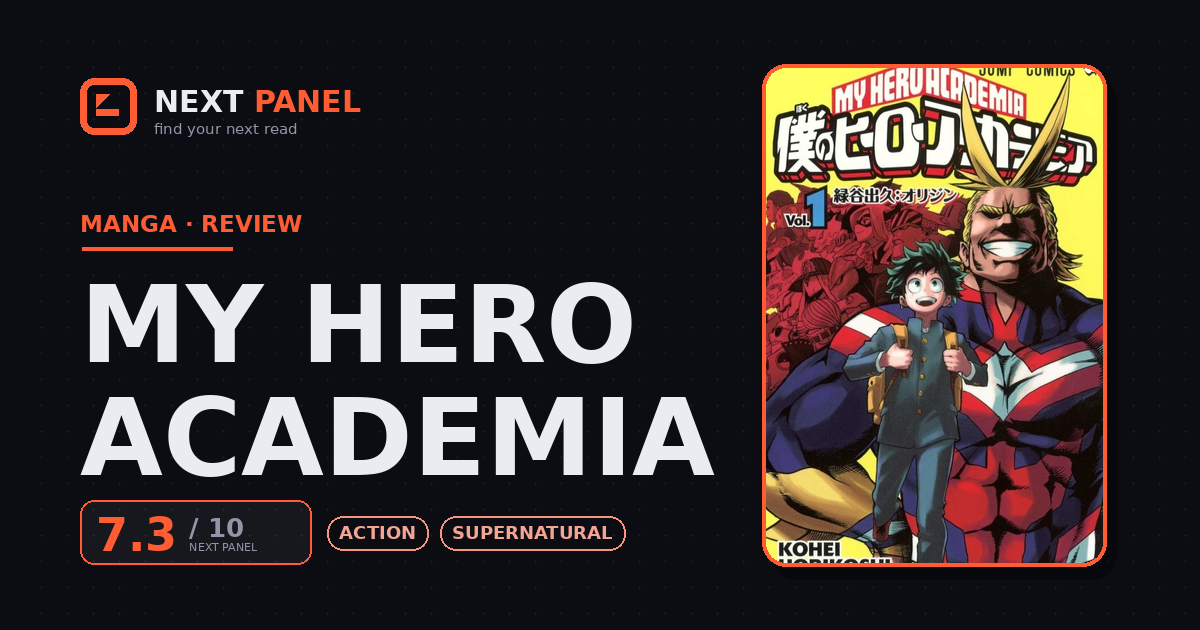
The mainline series this spinoff runs alongside — read either order, but the license-vs-vigilante contrast lands harder if you know the main story's rules.
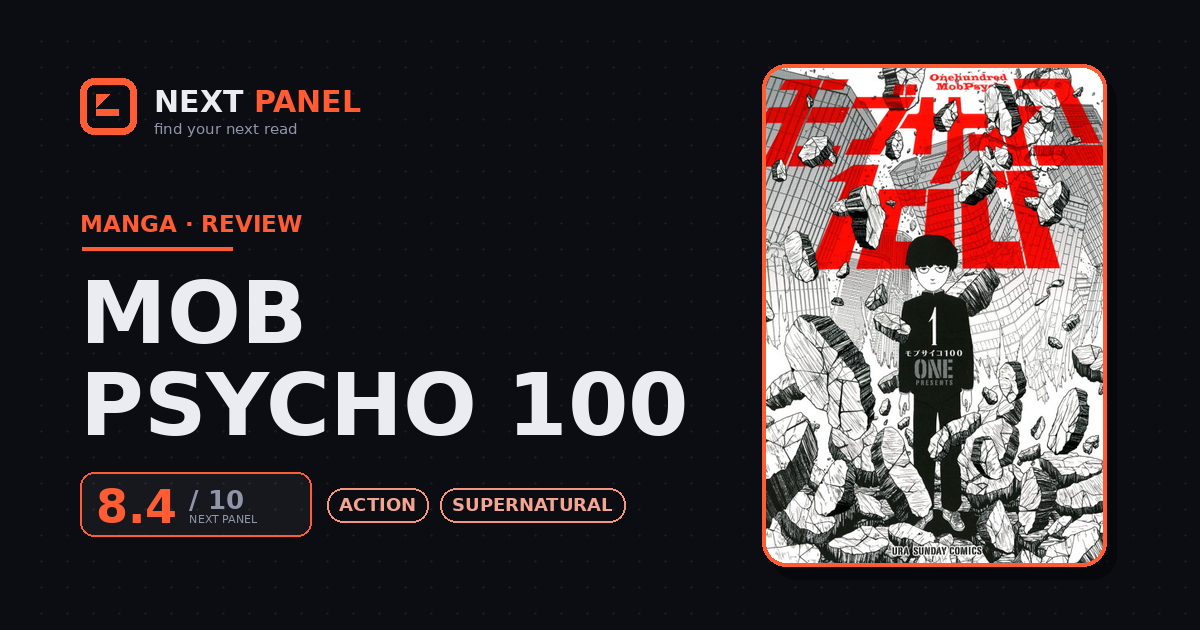
Another take on an underpowered lead finding worth outside a flashy-powers hierarchy.
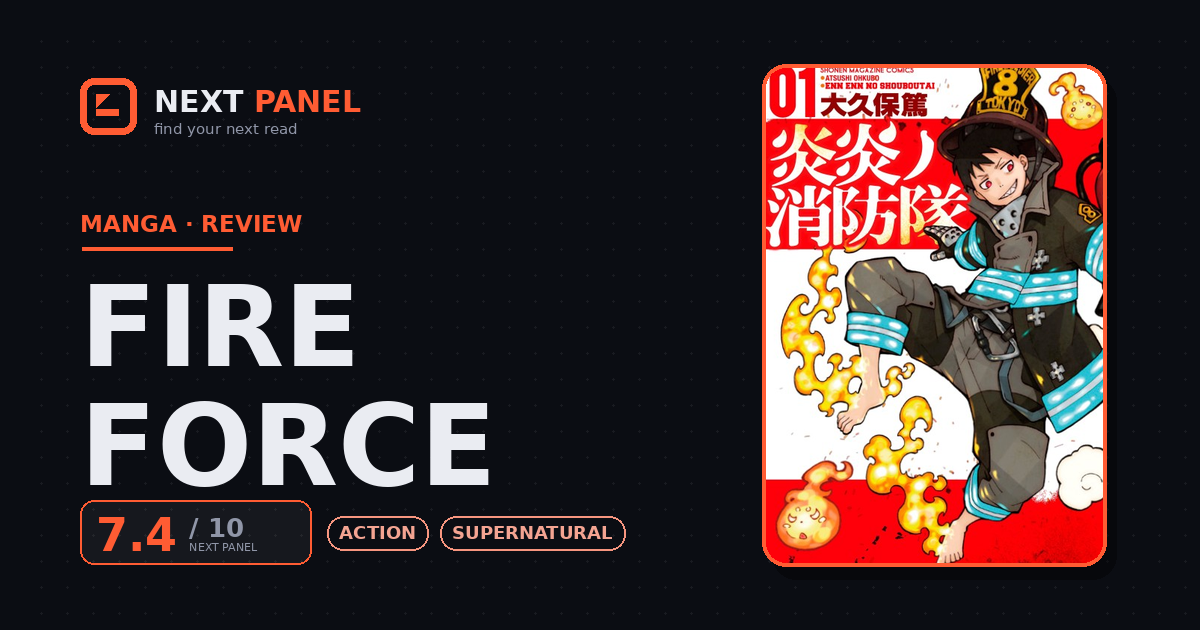
Similar supernatural-powers action with its own distinct organizational politics if you want more in this vein.
Where to Read Officially
| Platform | Format | Pricing | Region notes | Link |
|---|---|---|---|---|
| Viz Media | Digital chapters | Print & digital volumes | Free + Paid | Region availability varies | Open |
Frequently Asked Questions
Do I need to read My Hero Academia before Vigilantes?
Not strictly, but a lot of the appeal comes from seeing the world before hero licensing tightened up and spotting familiar characters younger, so it lands better with at least some MHA background.
Is Vigilantes canon to My Hero Academia?
Yes — it's an official side story overseen by original creator Kohei Horikoshi, not a loose, unofficial spinoff.
Is Vigilantes finished?
Yes, it ran to a complete ending in 2022 across 15 volumes.