Is Welcome to the Ballroom Worth Reading? Review & Where to Read
Quick Answer
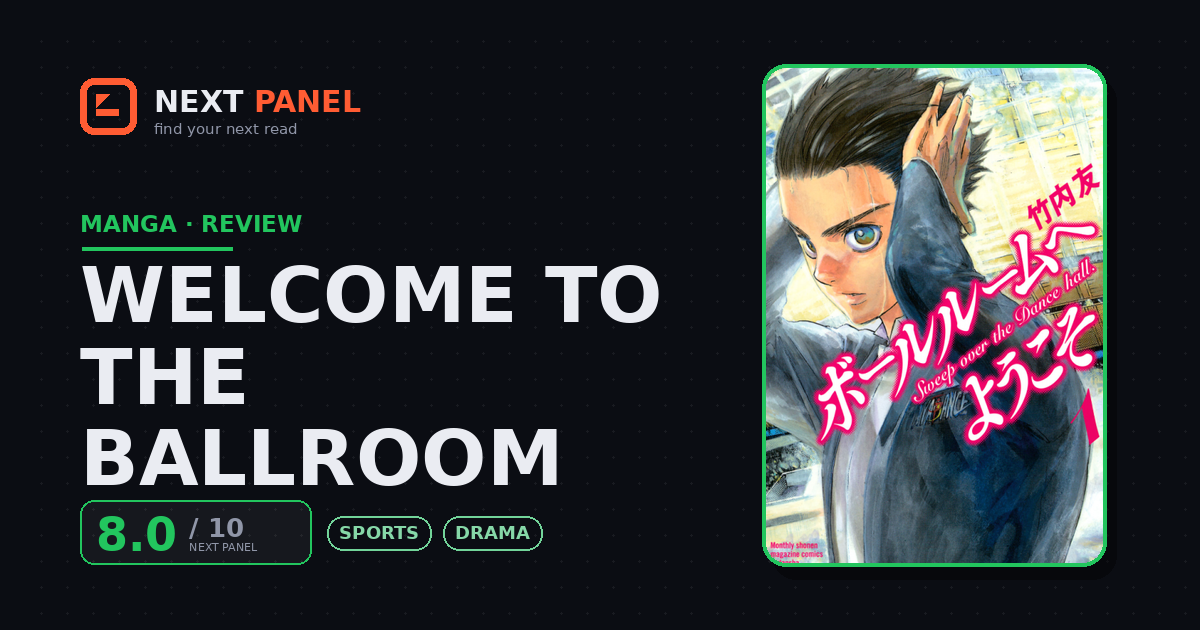
Yes, if you love sports manga — especially for the art. Welcome to the Ballroom turns competitive ballroom dance into a gripping underdog story, and Tomo Takeuchi draws movement better than almost anyone. The big catch: it's on indefinite hiatus for the author's health, so it's unfinished, and the art's proportions can get wonky.
Quick Verdict
“Some of the best-drawn movement in any manga, wrapped around a classic sports underdog story — just know it's stuck on hiatus.”
Best for: Readers who love sports manga and gorgeous art and want a fresh subject in competitive dance.
Not for: Readers who want a finished, regularly-updating story and fast action over technical detail.
- Type
- Manga
- Genres
- Drama, Sports
- Status
- Ongoing
- This review
- Minor Spoilers
- Author
- Tomo Takeuchi
- Publisher
- Kodansha
- Platform
- Kodansha
| Quick facts | |
|---|---|
| Format | Manga (shōnen), 12 volumes |
| Run | 2011–present · ongoing |
| Community score | AniList 8.2 · MAL 8.4 · MangaUpdates 8.7 |
| Where to read | Kodansha — official |
Overview
Welcome to the Ballroom is a sports manga by Tomo Takeuchi, published in English by Kodansha. It follows Tatara Fujita, an aimless, easily-pushed-around middle schooler with no real goals, who stumbles into a dance studio and gets pulled into the world of competitive ballroom dance. Under the wing of a flamboyant, brilliant instructor, Tatara discovers a passion — and a surprising talent — for it, and throws himself into DanceSport: the footwork, the partnerships, the costumes, and the fierce competition. It's a classic "aimless kid finds his thing" sports story, set somewhere most manga never go.
What it does well
The art is the headliner, and it's astonishing. Takeuchi draws movement with an energy and detail few artists can match — the dance sequences genuinely feel like motion on the page, full of speed, tension, and grace. For a subject that lives or dies on conveying physical performance, the manga absolutely nails it, and the big competition spreads are breathtaking.
It also gets the sports-manga fundamentals right. Tatara's growth from a passive nobody into a driven competitor is satisfying in the way the best of the genre is, and the manga digs into the specifics of ballroom — the lead-and-follow dynamic, the role of the partner, the mind games between rivals — with real care. The supporting cast and rivals are strong, and the partnership relationships give it an emotional core beyond just winning.
Crucially, it makes you care about something you'd never expect to. By the time Tatara is sweating over a routine, you're invested in dances you didn't know existed an hour earlier. That's the mark of a great sports story, and it is the main reason the series built such a devoted following.
Where it falls short
The art's one quirk is proportion. In its push for dramatic, elongated movement, figures sometimes look stretched — very long limbs and necks — which throws some readers off, even as the overall effect dazzles. It is a deliberate stylistic choice, but not everyone will warm to it.
The pacing can also drag in the technical stretches, and the dance jargon piles up. But the real catch is its status: the series has been on long, repeated hiatuses due to the author's health, and it's effectively stalled and unfinished. If you need a complete story or steady updates, that's a serious thing to weigh before starting.
Verdict
Welcome to the Ballroom is one of the best-looking sports manga ever made, and well worth it if you love the genre and want a fresh subject drawn with real artistry. Go in knowing two things: the proportions get strange, and the story is stuck on hiatus with no clear ending in sight. For the art and the journey so far, it's still a yes — just a yes with an asterisk.
Strengths & Weaknesses
Strengths
- The art is astonishing — Takeuchi draws dance with a sense of motion and energy few manga can match, and the big competition spreads are breathtaking.
- It nails the sports-manga arc: Tatara's growth from passive nobody to driven competitor is genuinely satisfying.
- It digs into the specifics of ballroom — lead-and-follow, partnerships, rivalries — with real care.
- It makes you care about a subject you'd never expect to, which is the mark of a great sports story.
Weaknesses
- The art's push for dramatic movement sometimes stretches figures into odd proportions — very long limbs and necks — that throw some readers off.
- The pacing drags in technical stretches and the dance jargon piles up.
- The big one: it's been on long, repeated hiatuses for the author's health, so it's effectively stalled and unfinished.
Similar Titles
Another sports story about finding drive and pushing toward a big goal.
The gold-standard sports manga, if you want the same passion with a finished, polished run.
Another gorgeous story about throwing yourself into a niche competitive passion (karuta).
Where to Read Officially
| Platform | Format | Pricing | Region notes | Link |
|---|---|---|---|---|
| Kodansha | Print & digital volumes | Paid | Region availability varies | Open |
Frequently Asked Questions
Is Welcome to the Ballroom finished?
No, and that's the main caveat — it's been on long hiatuses due to the author's health and is currently stalled, with no ending yet.
Do I need to know ballroom dance?
No. The manga teaches you as it goes, and part of the fun is getting drawn into a world you probably knew nothing about.
Where can I read it officially in English?
Kodansha publishes it in English in print and digital volumes.