Is Witch Hat Atelier Worth Reading? Art and Fantasy Review
Quick Answer
This is one of the best modern fantasy manga for readers who love wonder, rules-based magic, delicate illustration, and stories about learning without losing curiosity.
Quick Verdict
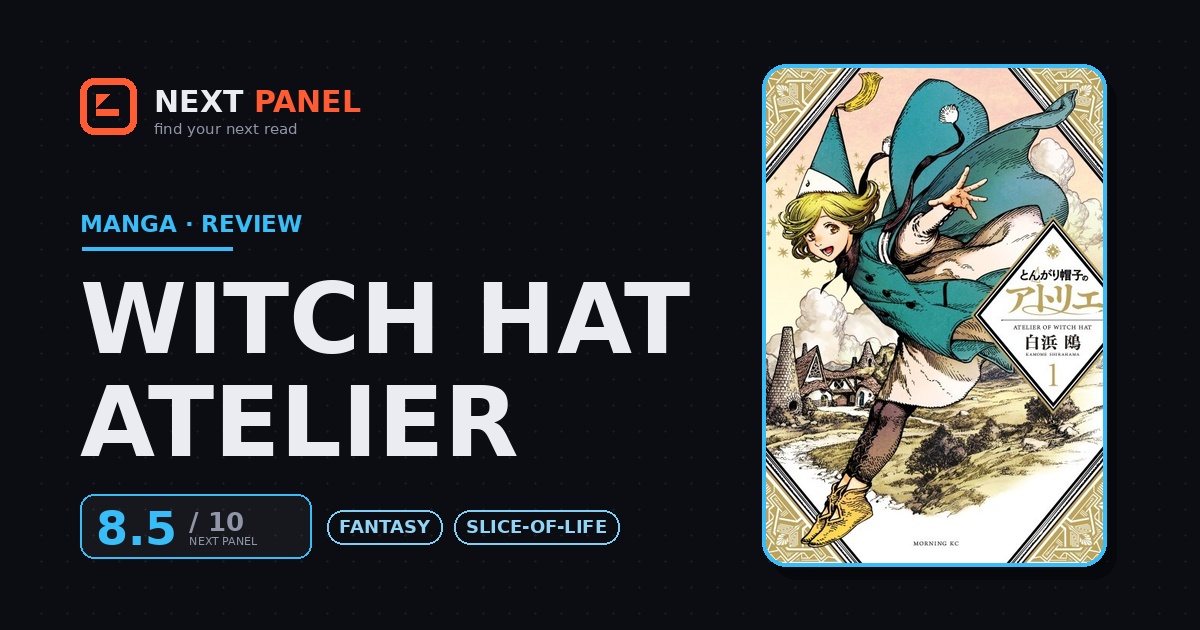
“Shirahama's art turns magic into something handcrafted and tactile; the pacing is gentle, but few fantasy manga are this beautiful or this thoughtful.”
Best for: Readers who love beautiful art, gentle but serious fantasy, and stories about mentorship.
Not for: Readers who want nonstop battles or very fast plot delivery.
- Type
- Manga
- Genres
- Fantasy, Slice of Life
- Status
- Ongoing
- This review
- Minor Spoilers
- Author
- Kamome Shirahama
- Publisher
- Kodansha
- Platform
- Kodansha
| Quick facts | |
|---|---|
| Format | Manga, 15 volumes |
| Run | 2016–present · ongoing |
| Community score | AniList 8.7 · MAL 8.7 · MangaUpdates 8.2 |
| Where to read | Kodansha — official |
Overview
Coco has wanted to be a witch her whole life, in a world that insists witches are simply born that way, magic as an accident of birth, not a skill anyone can learn. Then she witnesses real spellcasting up close and discovers the truth: magic is drawn, a craft anyone with steady hands and the right training could learn. That discovery brings her into Qifrey's atelier, a small workshop of witches who take on apprentices, and turns what looked like a gentle fantasy school setup into a story with real moral weight, because knowledge this powerful can help people just as easily as it can ruin them.
What it does well
Kamome Shirahama's art is the reason this manga gets recommended on sight, and it holds up under scrutiny too. Every spell circle is drawn with the precision of an actual technical diagram, every costume, building, and piece of scenery rendered with a density that makes the world feel handcrafted rather than sketched. It's rare for a manga's linework to double as a plot mechanic, but here it does: since spells are literally drawn, the quality and precision of the art is inseparable from the internal logic of the magic system.
That magic system is the other reason the series stands out. Because casting requires drawing a spell circle correctly, mistakes have consequences, a shaky line can misfire dangerously, and the craft of learning magic gets treated with the same patience and specificity as learning any real skill. It turns spellcasting from a vague power into something with texture, rules, and genuine risk.
Coco herself is a strong entry point into all of this. Her wide-eyed wonder at the world lets the story explain its magic system naturally, through her lessons rather than exposition dumps, while her mistakes, and the real consequences that follow them, keep the story from ever feeling too safe or too cozy. Watching her go from an outsider awed by magic to someone starting to understand its cost is the emotional spine of the series.
Where it falls short
The pacing is deliberately gentle. This is a manga built around mentorship, craft, and slow-burn worldbuilding rather than momentum, and readers who want fast plot delivery or frequent high-stakes confrontations may find some stretches, particularly the earlier training-focused chapters, slower than they'd like.
The series' gentleness can also work against it in a specific way: the sheer beauty of the art and the warmth of the atelier setting can make it easy to undersell how dark some of the underlying ideas actually are. This isn't a grimdark story, but it isn't pure comfort either, and readers expecting only coziness from the tone may be caught off guard by how seriously the story takes its darker implications once they surface.
Verdict
Witch Hat Atelier pairs some of the best linework in modern fantasy manga with a magic system smart enough to justify that level of detail, and Coco's growth from wide-eyed hopeful to someone grappling with real responsibility gives the craft-focused premise genuine emotional stakes. It asks for patience rather than momentum, but for readers who want gorgeous, thoughtful fantasy built around mentorship and the real cost of knowledge, it's very much worth the slower pace.
Strengths & Weaknesses
Strengths
- Shirahama’s art is the first thing people notice, and for good reason.
- The magic system is visual.
- Coco is an excellent beginner’s-eye protagonist.
Weaknesses
- The pacing can be gentle. Readers who only want combat-forward fantasy may need to adjust expectations.
- The beauty of the art can hide the darker ethical questions. This is not grimdark, but it is not empty comfort either.
Similar Titles
Ascendance of a Bookworm
Shares the same patient, detail-obsessed approach to building out a fantasy magic system.
Land of the Lustrous
Another visually inventive fantasy with a strong, distinctive art style.
Where to Read Officially
| Platform | Format | Pricing | Region notes | Link |
|---|---|---|---|---|
| Kodansha (kodansha.us) | Digital & print volumes | Paid | EN; region varies | Open |
Frequently Asked Questions
Is Witch Hat Atelier good for beginners?
Usually yes if the “Best for” section sounds like you. New readers should start with official preview chapters when available, because tone matters more than hype.
Is this review spoiler-free?
It is spoiler-light. It discusses the premise, style, reader fit, and general strengths without explaining major twists or late-arc reveals.
Where should I read it?
Use the official links in the Basic facts section. Availability can vary by country and app, so check the linked platform directly before buying or subscribing.