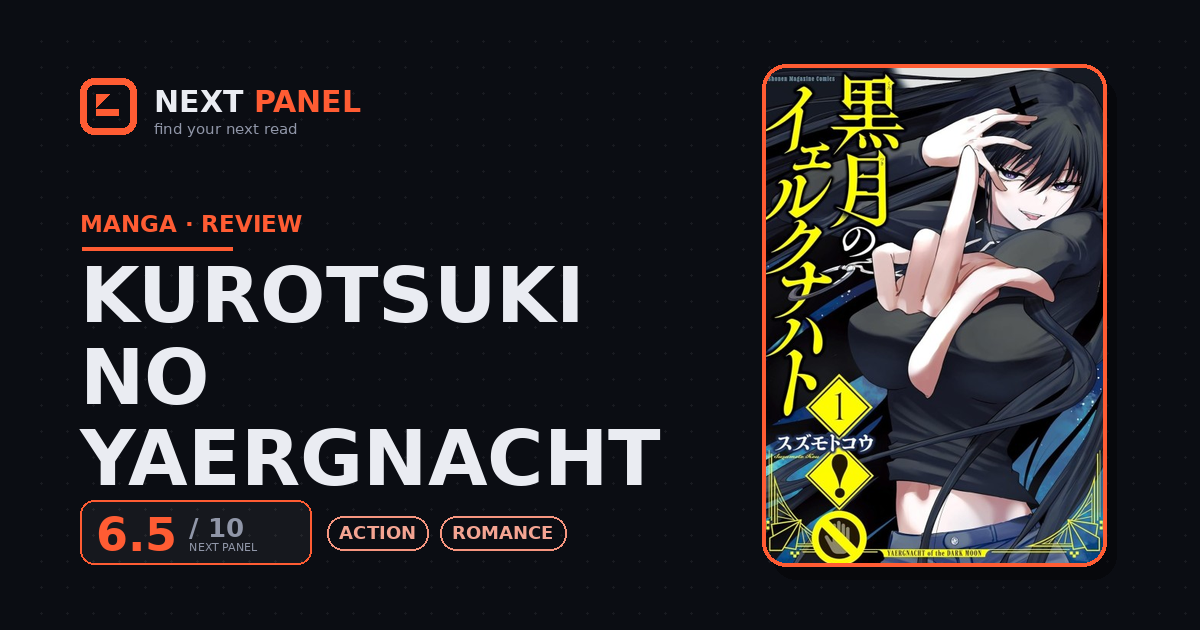
Manga6.5Minor SpoilersOngoing
Is Kurotsuki no Yaergnacht Worth Reading? Review & Where to Read
This marriage-or-die ultimatum turns into a genuinely fun mismatch once it's clear which half of the couple is actually doing the fighting.
Spoiler-light · Honestly rated
Every review labels its spoiler level, separates art from writing, and ends with an official way to read.
We use the whole 1–10 scale and judge each title against the best version of what it is trying to be — a comedy on how funny it is, a thriller on its tension — not against some other genre. As a rough guide: 9+ is all-time great, 8 excellent, 7 a solid recommendation with caveats, 5–6 mixed or average. A 7 is a genuine yes, not a knock. The “Community score” in each review is the crowd rating from AniList, MAL, and MangaUpdates, shown next to ours for comparison.
Recycled power-fantasy bones with a genuinely fun gimmick bolted on: absorb a monster's genes, become that monster's strengths.
This regression revenge story gives its lead a two-decade head start, and that extra runway is what makes the slow burn work.

Twelve years of nightmares finally pay off as a twisted kind of relief once Ujin realizes he can finally get some sleep.
This regression story took away the usual cheat code and kept only the part that matters: knowing what's coming.

The overpowered-hunter genre with the joke turned up — the alien narrator being furious about his own downgrade carries most of the fun.

Familiar revenge-reincarnation bones, but the livestreaming twist bolted onto them actually works.
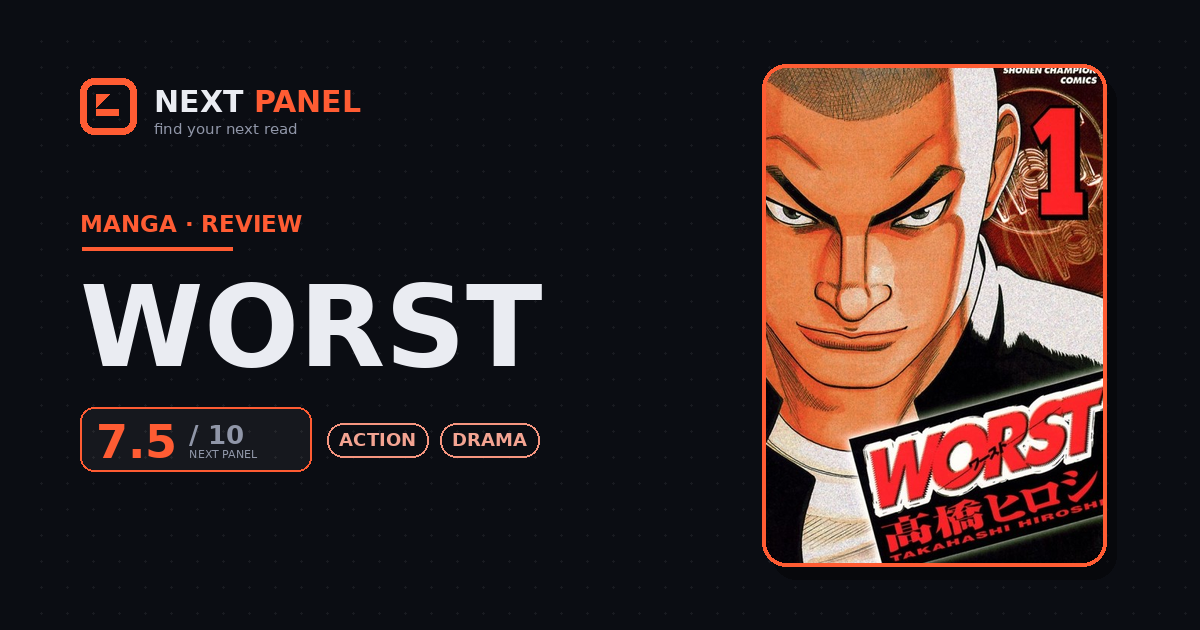
Thirty-three volumes of the same basic fight, told with just enough escalating stakes to keep it from feeling repetitive — a genre exercise done about as well as the genre allows.
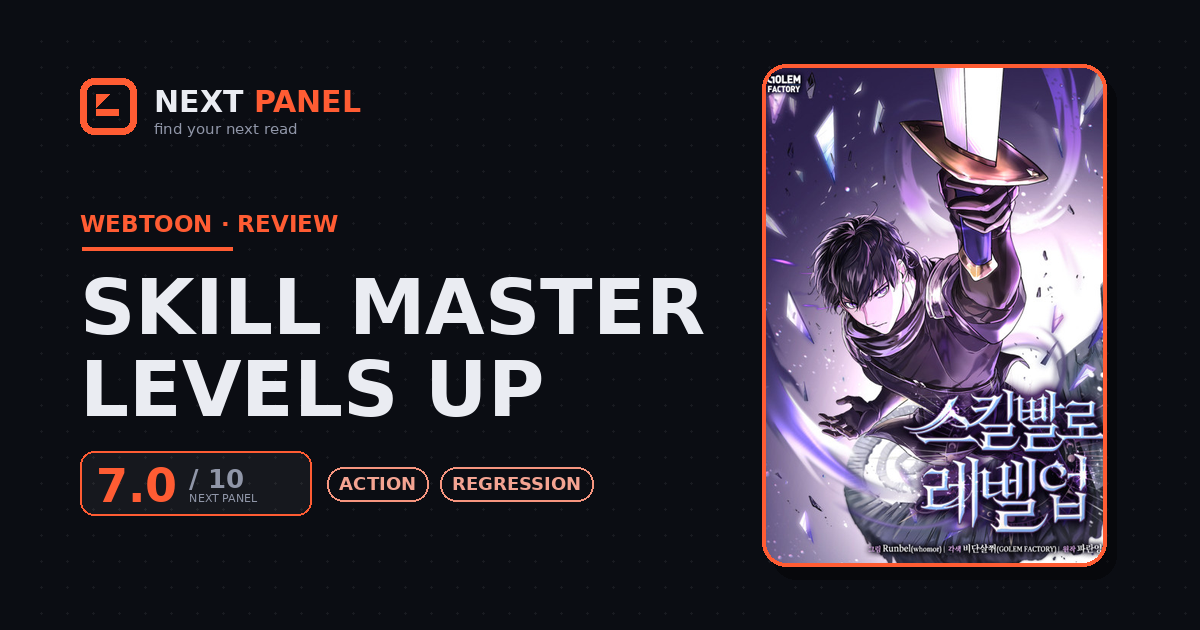
Starting from 'I already tried the easy way and it wasn't enough' gives this tower climb a sharper sense of purpose than most.

The broken-class gimmick actually stays interesting, because the lead has to think his way around it instead of just leveling past it.

Watching a legendary sword drag a spoiled brat's body into shape, one humiliating training montage at a time, is a lot more fun than it has any right to be.