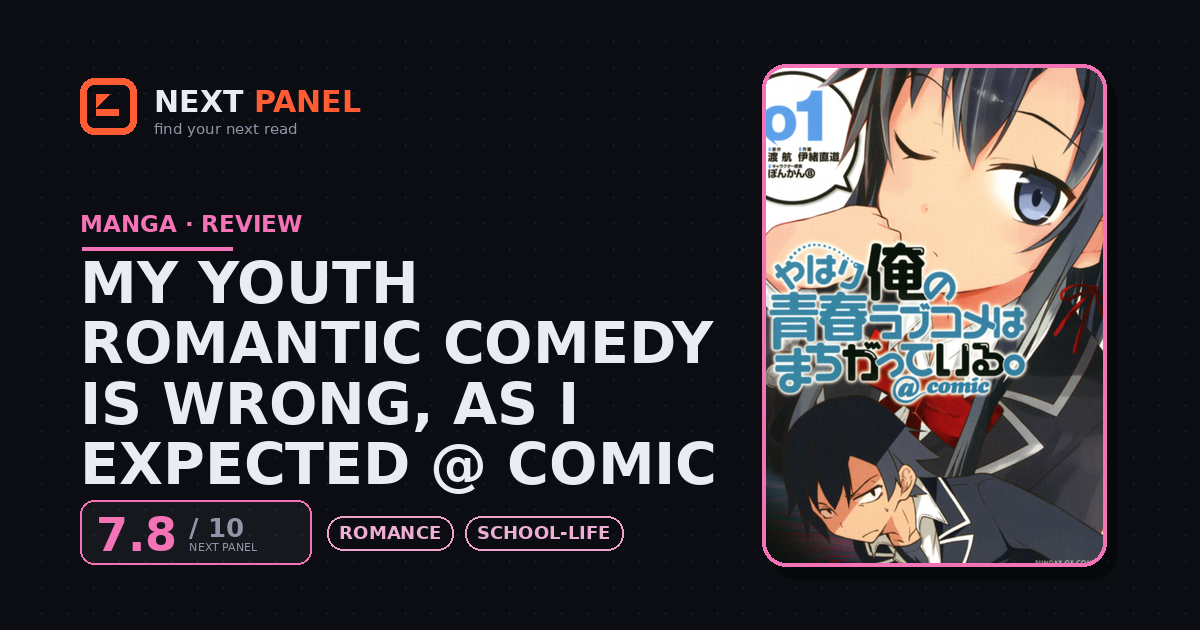
Is My Youth Romantic Comedy Is Wrong, As I Expected Worth Reading? Review & Where to Read
Starts as a cynic's rom-com and slowly turns into something sadder and more honest about what it costs to actually connect with people.
Spoiler-light · Honestly rated
Every review labels its spoiler level, separates art from writing, and ends with an official way to read.
We use the whole 1–10 scale and judge each title against the best version of what it is trying to be — a comedy on how funny it is, a thriller on its tension — not against some other genre. As a rough guide: 9+ is all-time great, 8 excellent, 7 a solid recommendation with caveats, 5–6 mixed or average. A 7 is a genuine yes, not a knock. The “Community score” in each review is the crowd rating from AniList, MAL, and MangaUpdates, shown next to ours for comparison.
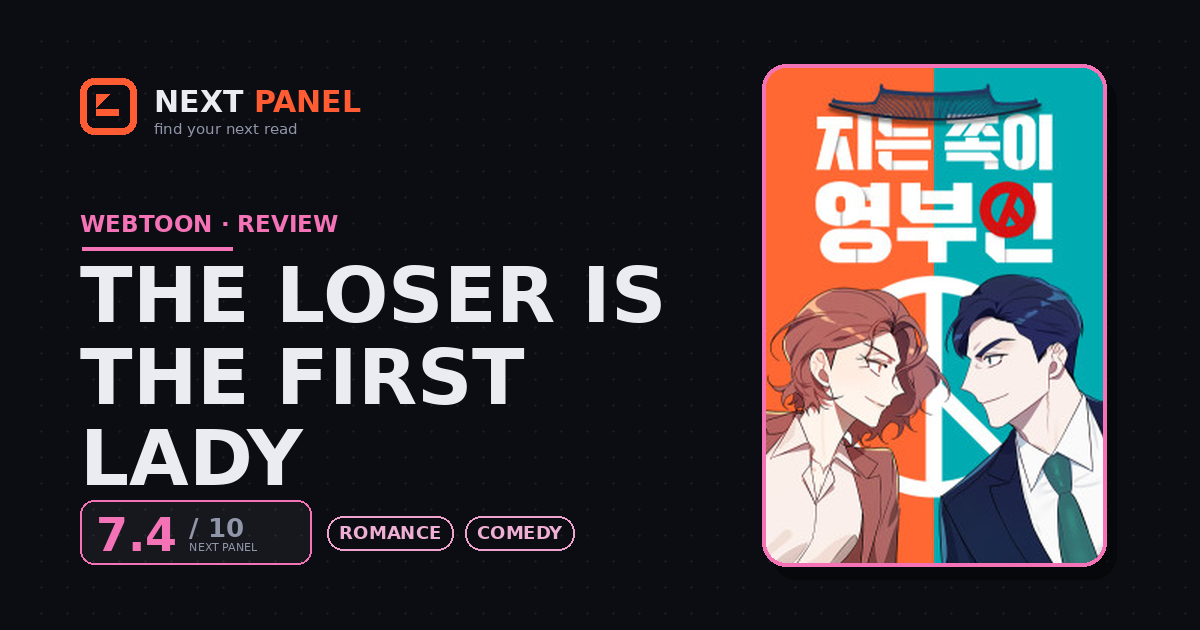
The premise is the whole pitch, and it mostly delivers — watching two people who know each other's worst habits campaign against one another is funnier and more tender than it has any right to be.

This ghost-bride revenge hook is sharp, but the romance built on top of it moves faster than the story earns.

Derek's job is fixing "problem" noble daughters one arc at a time — like the format or leave it, that's the whole show.

Lydia's second chance is the hook, but Lyrica is the reason to keep reading.

Konishi Asuka draws repressed feeling as literal insects crawling under the skin, and that image alone makes this worth a look before you even get to the romance.

Both leads are lying about who they are for real, sympathetic reasons, and watching those two performances slowly crack around each other is more grounded than the premise sounds on paper.

Ikezawa and Eguchi are both too awkward to just say what they mean, and watching that awkwardness slowly curdle into real feelings is the whole appeal.

Six volumes is exactly the right length for this story — long enough to earn the romance, short enough that the central mystery never overstays its welcome.

The time-loop structure does real work here instead of just padding chapters, and that's what separates it from the average time-loop isekai.

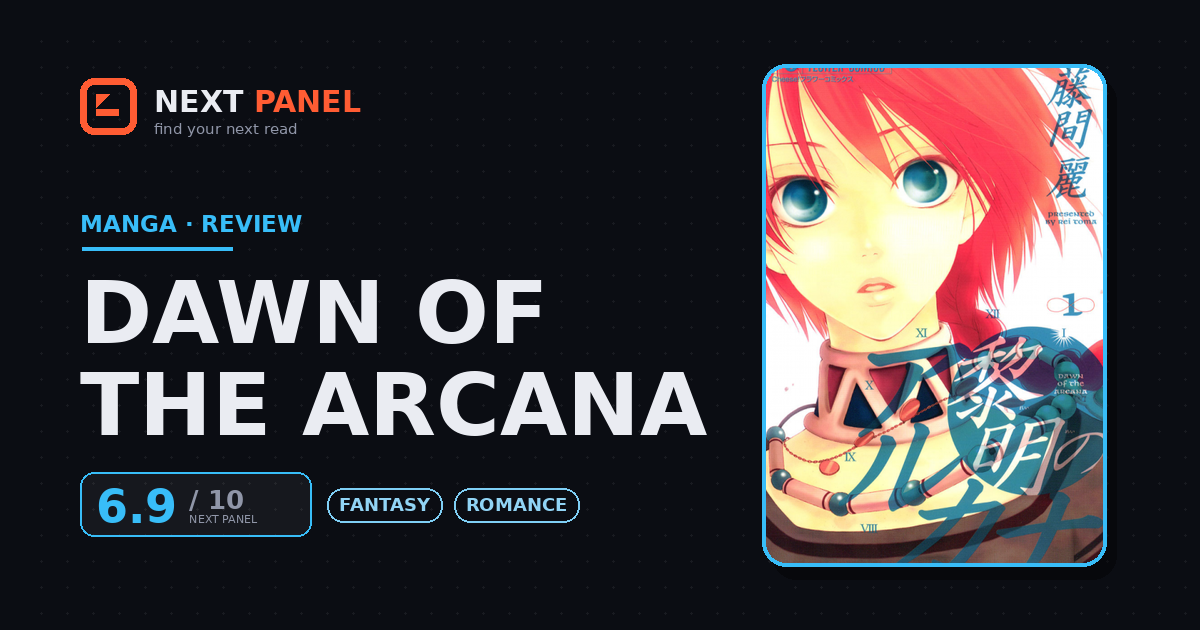
Nakaba's stubborn refusal to play the passive hostage is what carries this past its rocky start, and the fantasy politics around her give the romance actual stakes instead of just melodrama.

It's angrier and more pointed than the average campus romance — the surgery isn't a gimmick, it's the thing every character keeps circling back to judge her for, and the webtoon is honest about how ugly that gets.