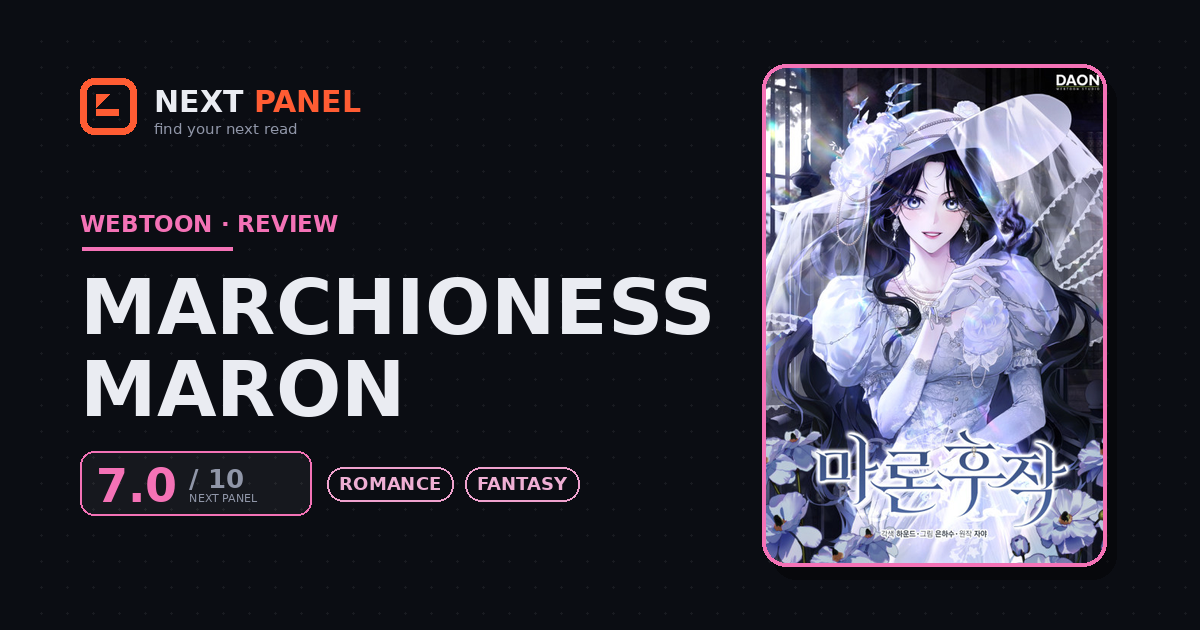
Webtoon7.0Minor SpoilersOngoing
Is Marchioness Maron Worth Reading? Review & Where to Read
More curious about what survival costs than about who to punish for it, which is a better hook than the average vengeance-romance premise.
Spoiler-light · Honestly rated
Every review labels its spoiler level, separates art from writing, and ends with an official way to read.
We use the whole 1–10 scale and judge each title against the best version of what it is trying to be — a comedy on how funny it is, a thriller on its tension — not against some other genre. As a rough guide: 9+ is all-time great, 8 excellent, 7 a solid recommendation with caveats, 5–6 mixed or average. A 7 is a genuine yes, not a knock. The “Community score” in each review is the crowd rating from AniList, MAL, and MangaUpdates, shown next to ours for comparison.
Looks like a stock boarding-house comedy on the cover, reads like a considerably more honest one about broke, lonely teenagers once you're a few chapters in.

Takes the most tired setup in the genre and swaps the love interest for the one character every other version of this story ignores.
Returning-legend power fantasy that actually commits to being a tournament arc instead of stalling one out for years.

The premise is standard-issue revenge romance; the execution — cursed blood, a family hiding real trauma, an actual mystery to solve — is what elevates it.
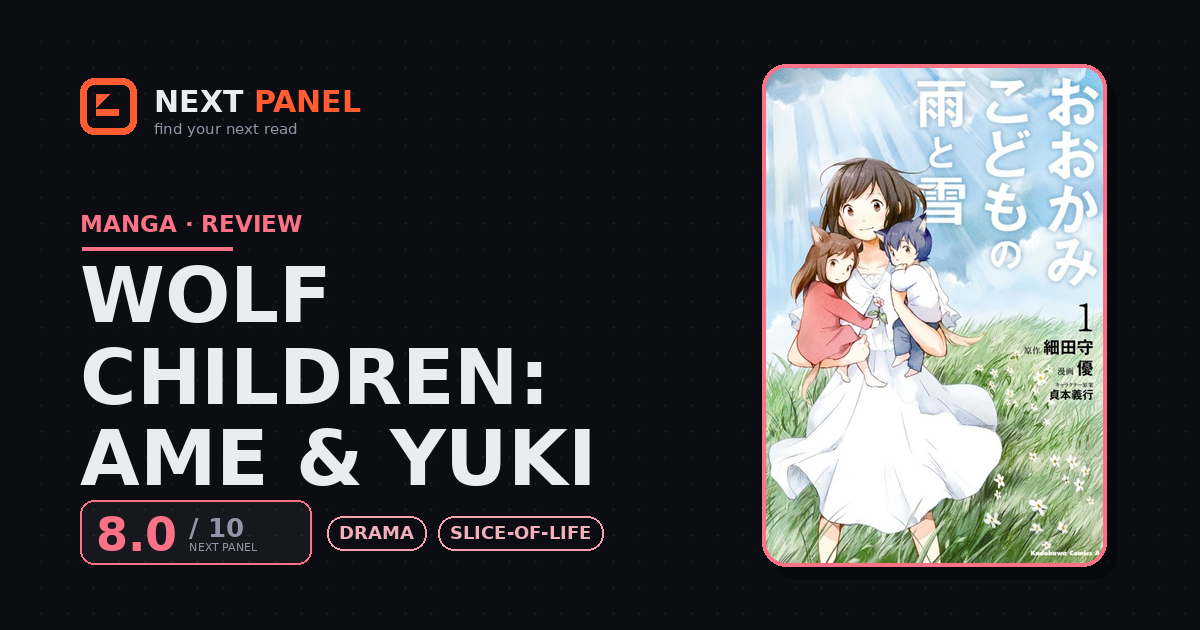
Quiet, unhurried, and more interested in the exhaustion of parenting than in spectacle — exactly what it needs to be.
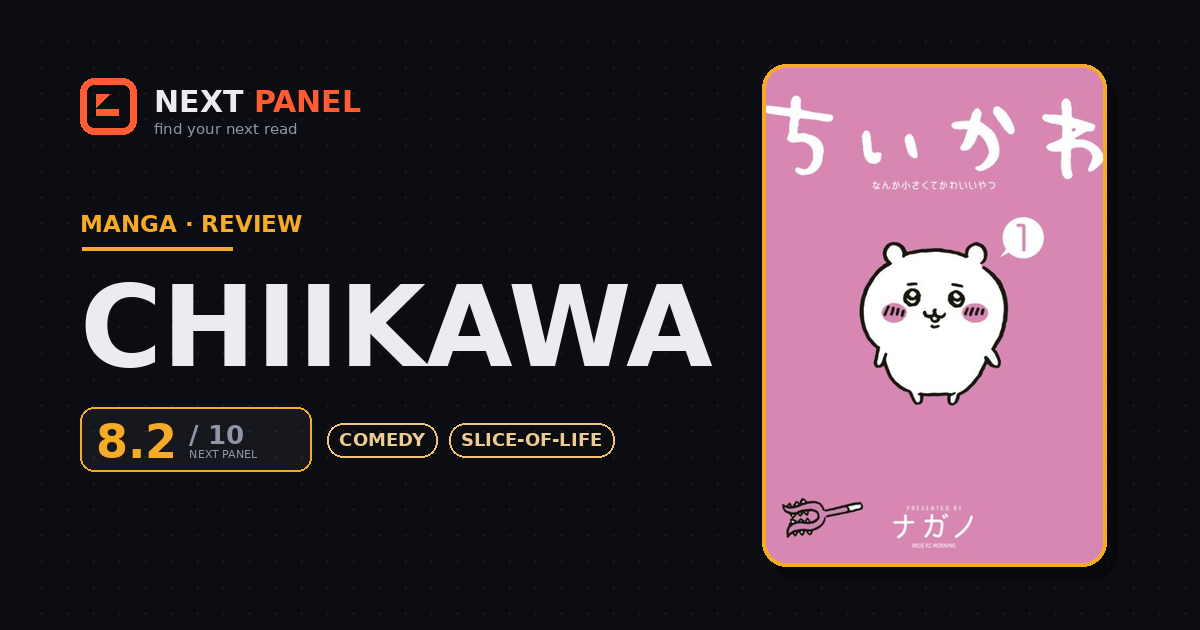
Looks like merchandise bait, reads like a small existential crisis wearing a hamster costume — and somehow both halves work.
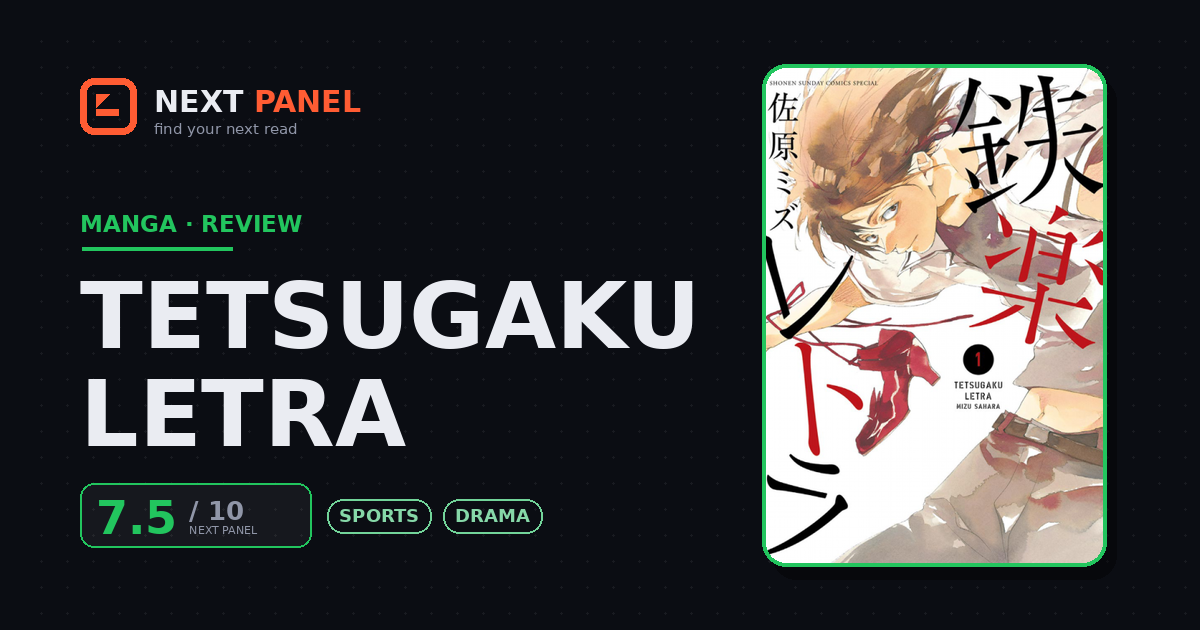
It takes two very different kinds of rejection — cruelty from friends, being physically wrong for a hobby you love — and finds a genuinely moving symmetry between them instead of treating either as a simple plot device.
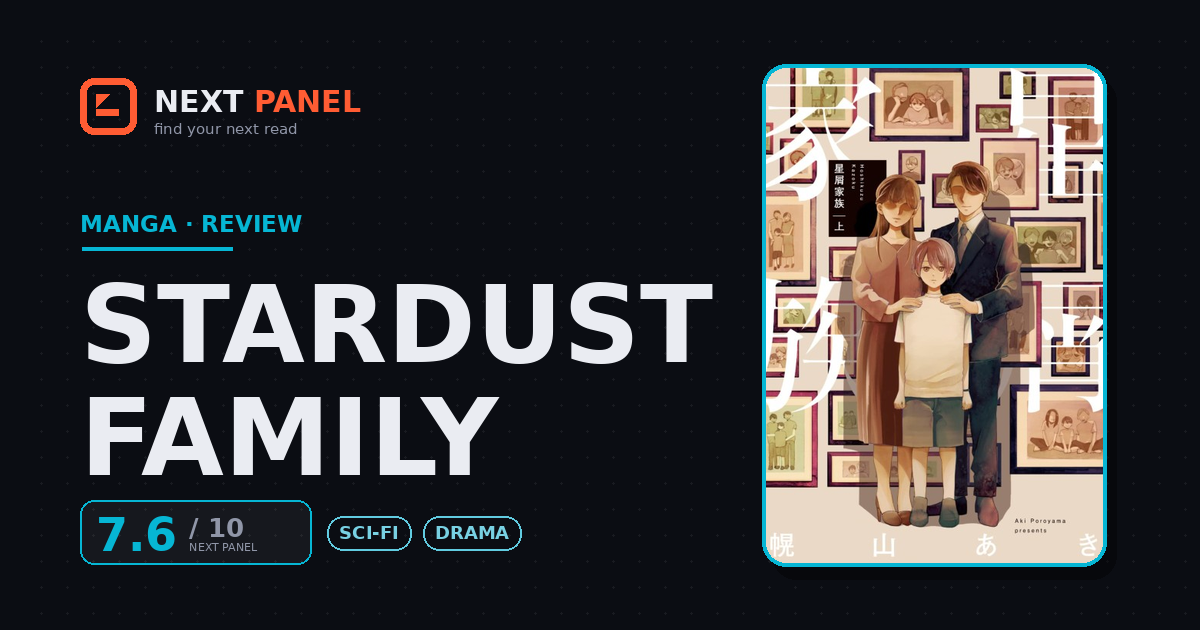
It builds a genuinely unsettling system — kids testing adults' fitness to parent by provoking them — and then asks what that system actually costs the children running it.
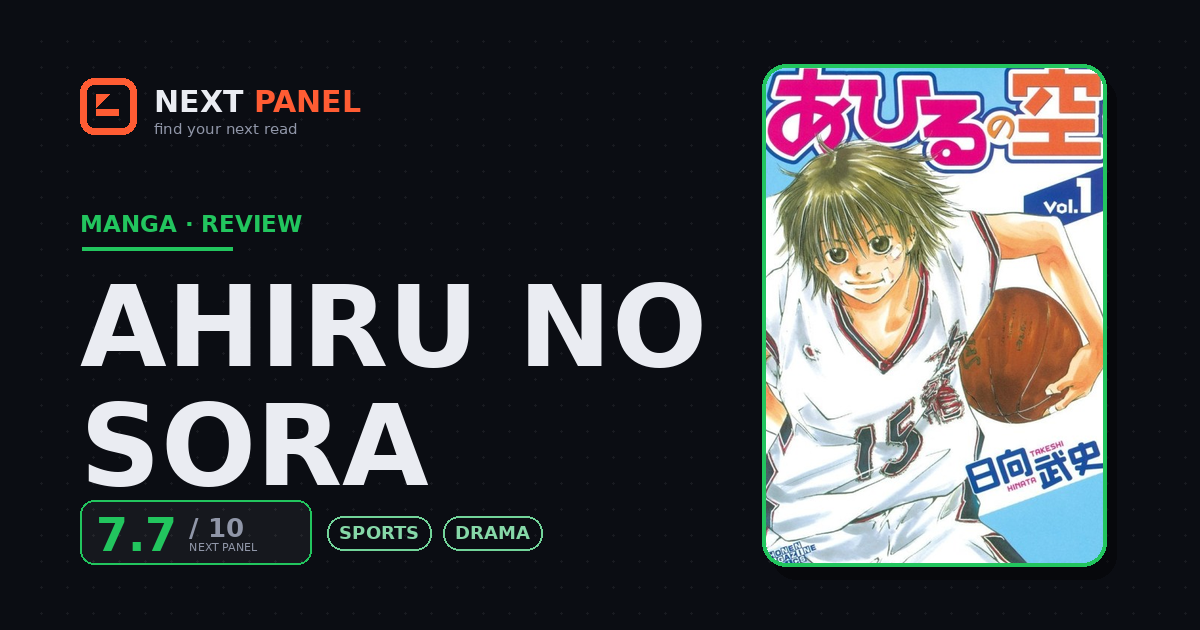
It treats rebuilding a broken team as seriously as the games themselves, which gives every eventual on-court win a lot more weight than a typical sports-manga victory.