Is Akagi Worth Reading? Review & Where to Read
Quick Answer
Yes, if you love high-stakes psychological gambling. Akagi is a classic about a fearless teenage genius who wins at mahjong by being utterly willing to die — and the mind games that flow from that. It's tense, philosophical, and gorgeously nerve-wracking. The catches: it's very long, the famous late arc crawls, mahjong knowledge helps, and there's no official English release. But as a gambling manga, it's legendary.
Quick Verdict
“Few gambling manga are this intense or this philosophical — Akagi bets his actual life and makes you feel every tile, even if the legendary blood-mahjong arc runs forever.”
Best for: Readers who want intense psychological gambling drama and a fearless, philosophical anti-hero who bets his life.
Not for: Readers who want fast pacing, a short commitment, or action-driven stakes.
- Type
- Manga
- Genres
- Drama, Thriller
- Status
- Completed
- This review
- Minor Spoilers
- Author
- Nobuyuki Fukumoto
- Publisher
- Takeshobo
- Platform
- Availability varies
| Quick facts | |
|---|---|
| Format | Manga (seinen), 306 chapters, 36 volumes |
| Run | 1991–2018 · completed |
| Community score | AniList 8.3 · MangaUpdates 8.0 |
| Content | Gambling, violence, and mature themes |
Overview
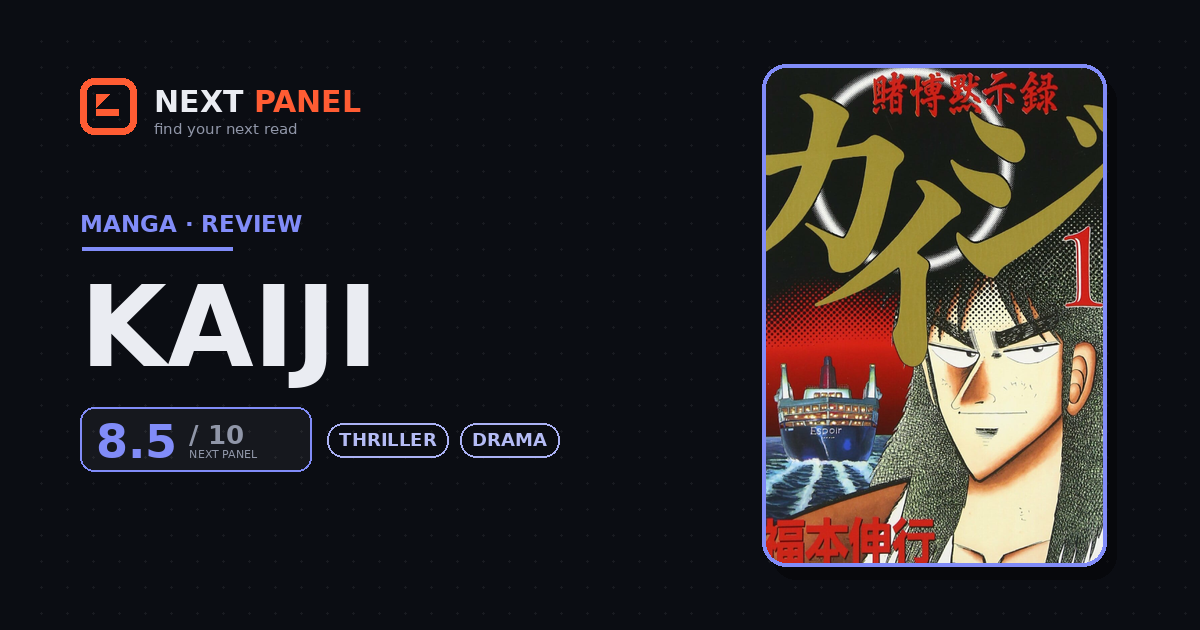
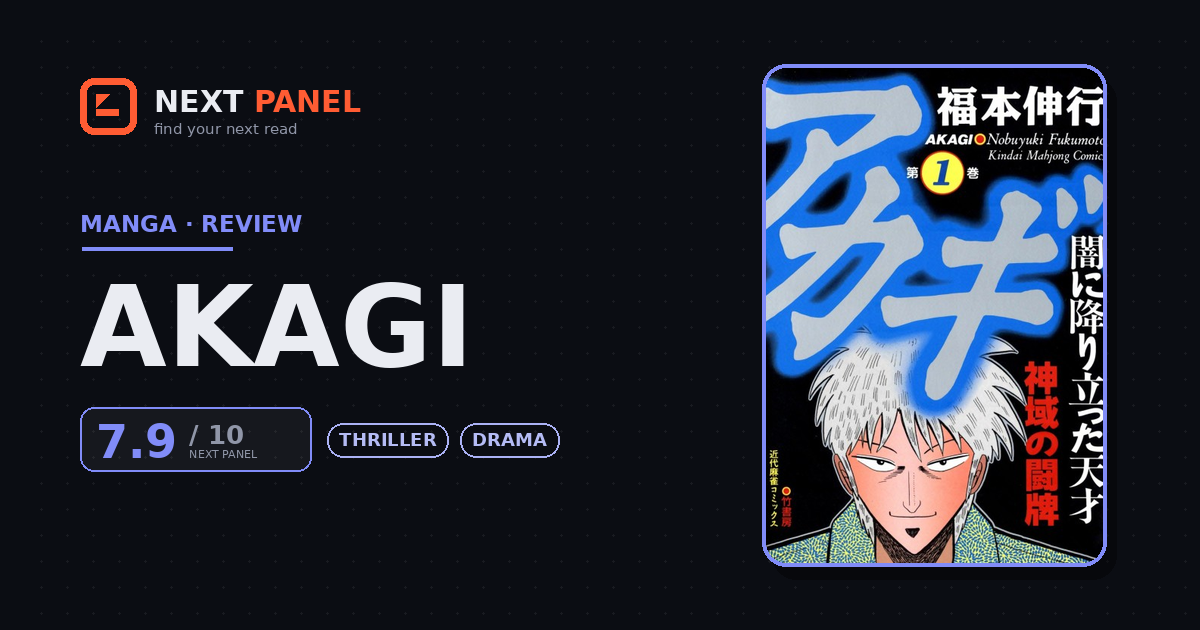
Akagi is a gambling manga about a boy who simply isn't afraid to die — and how terrifying that makes him at the table. One stormy night, a 13-year-old runaway named Shigeru Akagi wanders into an underground mahjong parlor where a desperate man is losing his life's savings to the yakuza. Akagi, who's never played seriously, takes over the game — and wins, through sheer nerve and an instinct for reading people that borders on supernatural. From there he becomes a legend of the gambling underworld, a player whose total willingness to bet his own life gives him an edge no sane opponent can match. It's by Nobuyuki Fukumoto, the master of the gambling-thriller genre (Kaiji, Ten), and it ran for decades in Japan.
What it does well
Akagi himself is the draw — one of manga's great cold, fearless protagonists. He's not a nice person and barely a knowable one; he's a force of pure nerve and logic who treats his own death as just another chip to bet, and watching opponents shatter against that fearlessness is endlessly compelling. The series turns "he might actually die" into unbearable tension.
The psychological warfare is extraordinary. Fukumoto isn't really interested in mahjong as a game so much as in what people do under maximum pressure — the bluffs, the cracks, the moments where someone's whole worldview collapses across a table. Even when you don't fully follow the tiles, the human chess match underneath is gripping, and the philosophical streak — about fear, death, and what it means to truly gamble — gives it real depth.
Fukumoto's style sells it all. The exaggerated, angular art, the sweat and shadow, the long silences and sudden declarations — it's instantly recognizable and brilliant at wringing dread out of small moments. Few artists make stillness this tense.
Where it falls short
It is enormously long, and the pacing is the stuff of legend — in a bad way. The famous late "Washizu mahjong" arc, where Akagi gambles with his own blood, stretches across many volumes and years of real time, drawing single games out to an almost absurd degree. It's hypnotic if you're locked in, an interminable slog if you're not.
The mahjong barrier is real, too. The deepest tension assumes you understand the plays, and while the psychology carries you, readers with zero mahjong knowledge will miss layers and may find stretches opaque. And there's no official English release, so getting it legally in English is a genuine obstacle.
Verdict
Akagi is a legendary gambling manga and a foundational text of the genre — intense, philosophical, and anchored by one of the most magnetically fearless protagonists in comics. Its glacial late pacing, mahjong learning curve, and lack of an official English release are real hurdles, and it's not a casual read. But if you want the purest distillation of the gambling thriller — the dread, the mind games, the thrill of a man who bets everything — Fukumoto's classic is essential.
Strengths & Weaknesses
Strengths
- Akagi himself is one of manga's great cold, fearless protagonists — a force of pure nerve who treats his own death as just another chip.
- The psychological warfare is extraordinary; Fukumoto cares less about mahjong than about what people do under maximum pressure.
- Even when you don't follow the tiles, the human chess match and the philosophical streak about fear and death are gripping.
- Fukumoto's angular, shadow-heavy art wrings unbearable dread out of stillness and silence.
Weaknesses
- It's enormously long, and the famous late 'Washizu' arc drags single games across many volumes and years — hypnotic or interminable depending on you.
- The mahjong barrier is real: the deepest tension assumes you understand the plays, so newcomers miss layers.
- There's no official English release, so reading it legally in English is a genuine obstacle.
Similar Titles
Frequently Asked Questions
Is Akagi finished?
Yes. It ran from the early 1990s to 2018 and is complete in 36 volumes. Note there's no official English release, so English readers rely on imports or fan translations.
Do I need to know mahjong?
It helps a lot. The manga explains some, but the deepest tension comes from understanding the plays; without any mahjong knowledge, parts will go over your head — though the psychological warfare still lands.
Is it connected to other Fukumoto works?
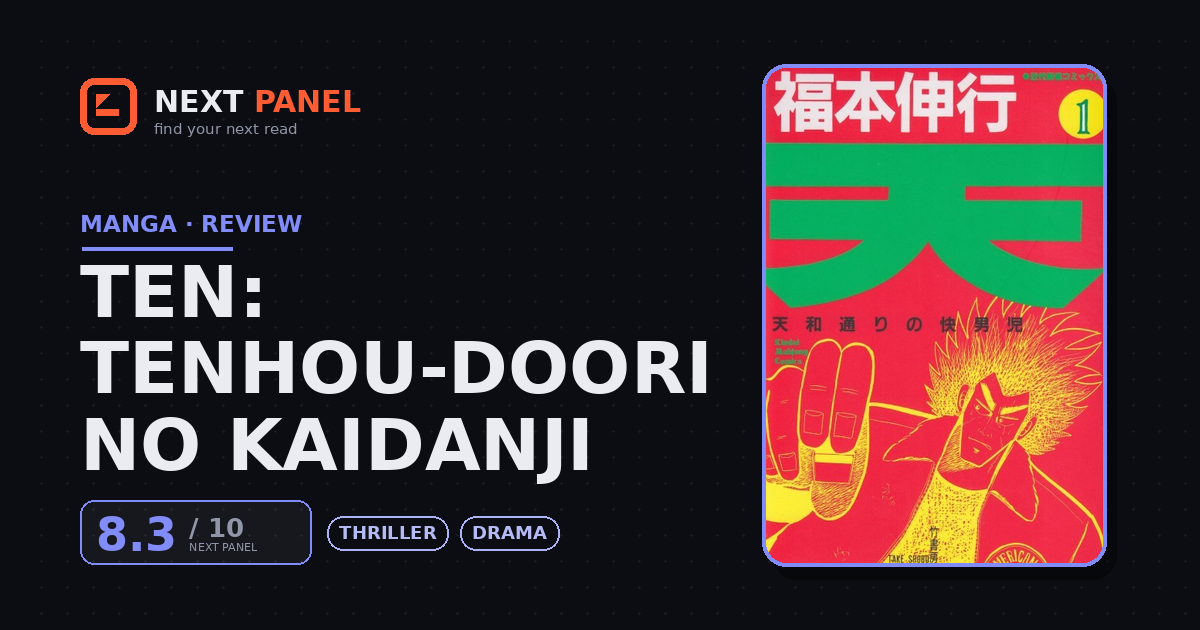
Yes. Akagi began as a spinoff of Ten, where an older Akagi appears, and it shares Fukumoto's signature gambling-thriller style with Kaiji.