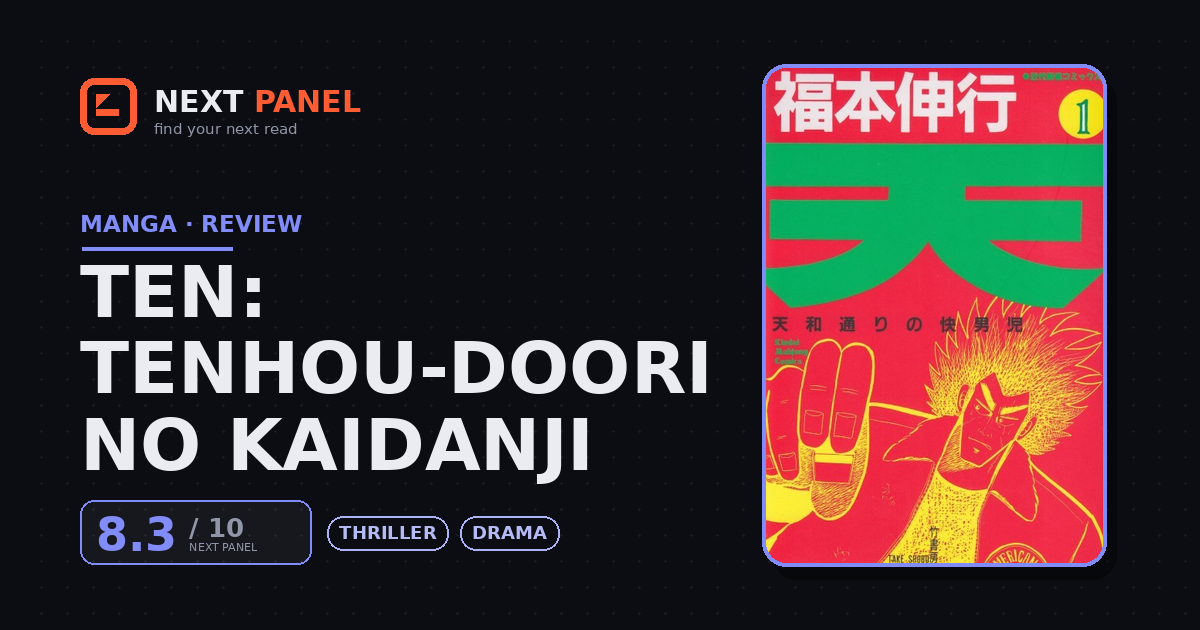
Is Ten: Tenhou-doori no Kaidanji Worth Reading? Review & Where to Read
Quick Answer
Worth reading if you want the psychological-gambling manga that started it all, especially if you've already read Akagi.
Quick Verdict
“Worth it as essential reading for Fukumoto fans, a slower burn than Kaiji but just as sharp underneath.”
Best for: Readers who want patient, psychological gambling drama, a morally complicated antihero lead, and connective tissue with Akagi.
Not for: Readers who want nonstop escalating stakes, an easy modern entry point, or an official English release.
- Type
- Manga
- Genres
- Drama, Thriller
- Status
- Completed
- Author
- Nobuyuki Fukumoto
- Publisher
- Takeshobo
| Quick facts | |
|---|---|
| Format | Manga, 164 chapters, 18 volumes |
| Run | 1989–2002 · completed |
| Community score | AniList 8.4 · MangaUpdates 7.7 |
Overview
Ten is a con man with one specialty: mahjong. When someone's in over their head in a high-stakes game, they call him in to cheat their way out of it, and he always delivers, then politely lets the people he just fleeced take a swing at him on the way out, because he understands exactly how it feels to lose. Set in the underground gambling dens of postwar Tokyo, the manga follows Ten and his circle, including a young, not-yet-legendary Akagi, as small-time cons give way to something with much higher stakes. This is Nobuyuki Fukumoto's early masterwork, made years before "Kaiji" and serving as a direct prequel to "Akagi," and it's where a lot of his signature obsessions, cheating, bluffing, the psychology of a man with nothing left to lose, first came into focus.
What it does well
The mahjong itself is rendered with an intensity most sports manga reserve for actual sports; every draw, every discard, every silent calculation is staged like a duel, and you don't need to understand the rules deeply to feel the tension. Ten as a character threads a difficult needle, he's a cheat and a manipulator, but Fukumoto makes his code of honor, give people a fair shot at revenge, never cheat someone who can't afford it, feel completely earned rather than sentimental. The supporting cast of hustlers and gangsters is full of small, memorable performances, and the connective tissue to "Akagi" rewards readers who've already spent time in that world without requiring it. The art has a rougher, more atypical style than Fukumoto's later work, and it gives the whole thing a scrappy, back-alley texture that suits the setting.
Where it falls short
This is a slower, more meditative read than "Kaiji," there's less pure adrenaline and more patient psychological maneuvering, so readers expecting nonstop escalating stakes may find the pacing an adjustment. The postwar setting and mahjong-specific terminology take a little upfront investment, and a couple of early arcs feel more like a loose anthology of cons before the story locks into its larger throughline. It's also never been licensed in English, so you're relying on scanlations of varying quality, and the reading order relative to "Akagi" isn't obvious unless you look it up first, since the two were serialized decades apart and marketed as separate, self-contained works.
Verdict
If you want to see where Fukumoto's whole obsession with high-stakes psychological gambling actually started, and you don't mind a slower burn than "Kaiji," this is essential and genuinely underrated. Fans of "Akagi" in particular should not skip it.
Strengths & Weaknesses
Strengths
- Mahjong scenes staged with real psychological tension
- A cheat protagonist with a code of honor that feels earned, not sentimental
- Direct prequel connection to Akagi rewards existing fans
- Rougher, scrappier art style that fits the postwar setting
Weaknesses
- Slower and more meditative than Kaiji's constant escalation
- Mahjong terminology and postwar setting take some upfront investment
- Early arcs feel more anthology-like before the throughline locks in
- No official English release, so quality depends on scanlations
Similar Titles
Frequently Asked Questions
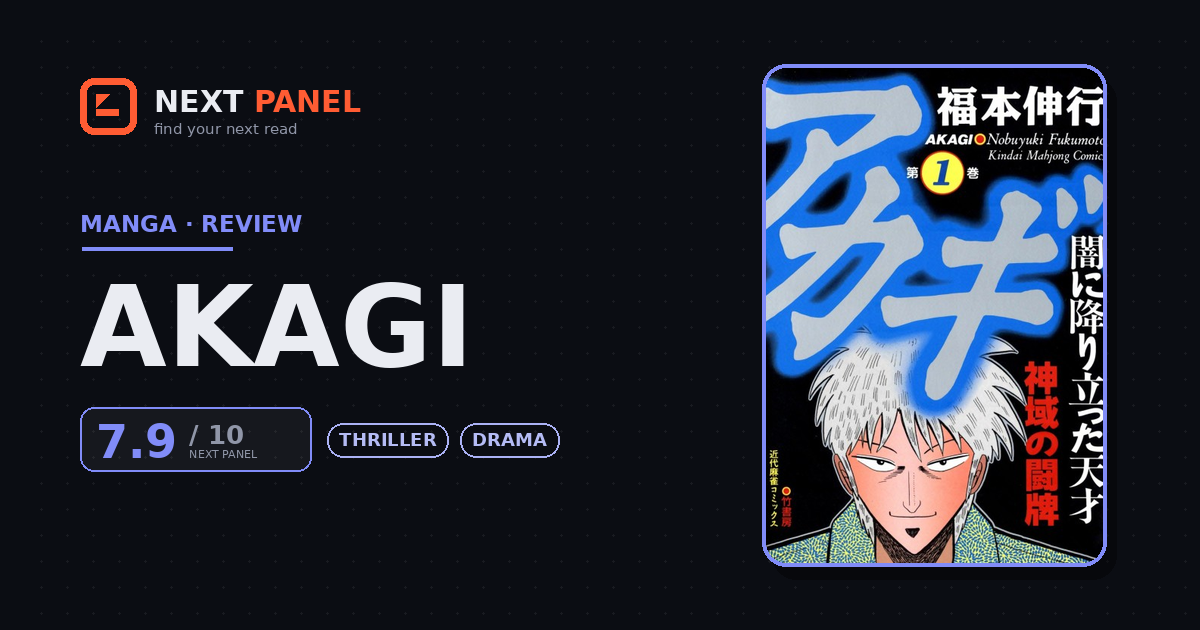
Do I need to read this before or after Akagi?
Either works, but many fans recommend reading Ten first since it's the earlier chronological story and introduces a young Akagi as a supporting character.
Is there an official English release?
No, as of this review it's never been licensed in English, so it's only available through scanlations.
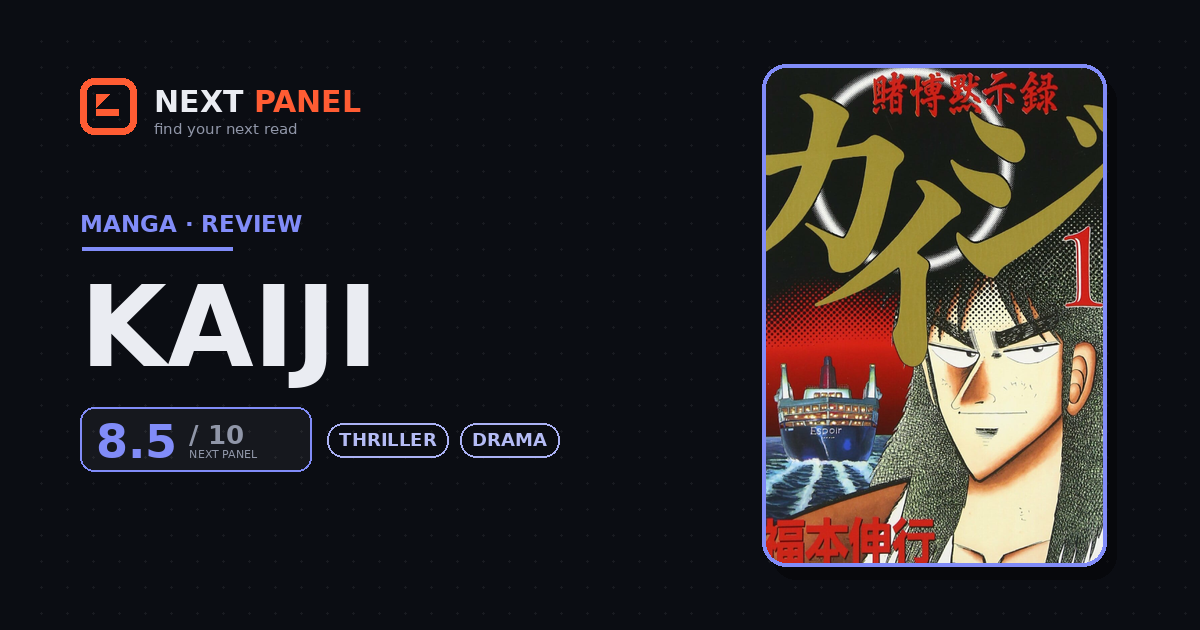
Is this connected to Kaiji?
Not directly in story, but it's by the same creator, Nobuyuki Fukumoto, and shares his signature focus on high-stakes gambling psychology.
Is the series complete?
Yes, it ran 164 chapters across 18 volumes and is fully finished.