Is Kaiji Worth Reading? Review & Where to Read
Quick Answer
Yes — if you can handle slow-burn tension and unusual art, Kaiji is one of the best gambling manga ever made. It follows a broke, aimless loser who gets roped into high-stakes games where losing can cost him everything. The thrills come from psychology and desperation, not action.
Quick Verdict
“Nobody wrings white-knuckle tension out of a coin flip like Fukumoto — this is the gold standard for gambling manga, warts and all.”
Best for: Readers who love psychological mind games, slow-building tension, and an underdog with everything on the line.
Not for: Readers who want fast action, conventional good-looking art, or quick games that wrap up in a chapter or two.
- Type
- Manga
- Genres
- Drama, Thriller
- Status
- Ongoing
- This review
- Minor Spoilers
- Author
- Nobuyuki Fukumoto
- Publisher
- Kodansha
- Platform
- Denpa
| Quick facts | |
|---|---|
| Format | Manga (seinen), 158 chapters, 13 volumes |
| Run | 1996–1999 · ongoing |
| Community score | AniList 8.3 · MAL 8.5 |
| Content | Gambling, violence, mature themes |
| Where to read | Denpa — official |
Overview
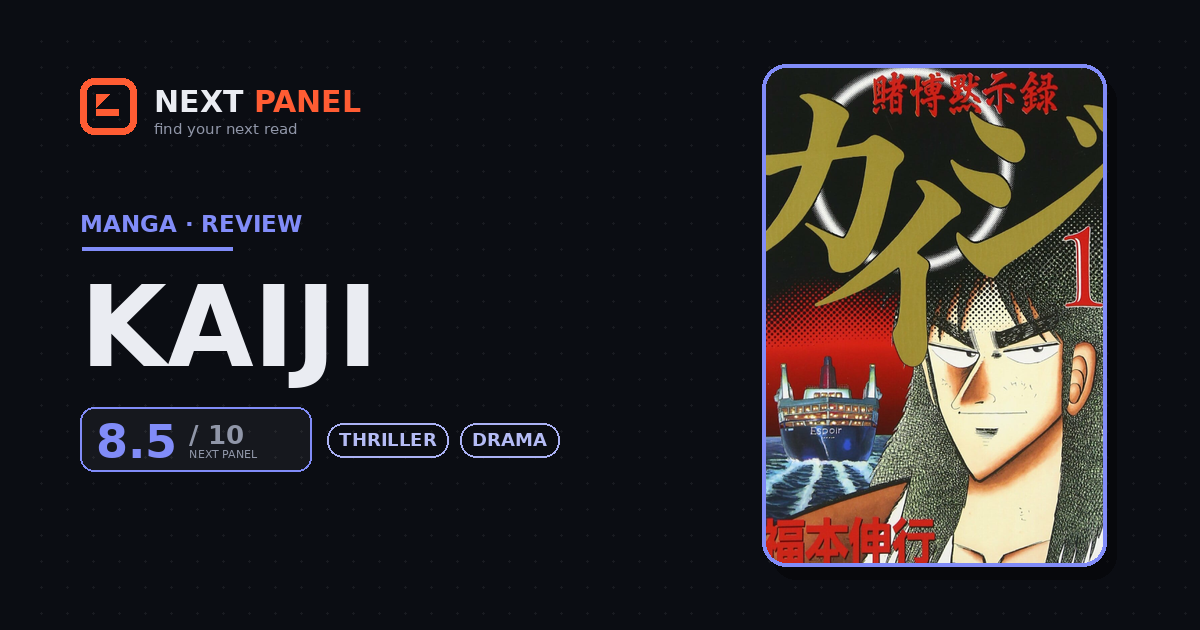
Kaiji — published in English by Denpa as Gambling Apocalypse: Kaiji — is Nobuyuki Fukumoto's landmark gambling manga, and one of the most influential the genre has ever produced. The hero, Kaiji Itou, is a broke, aimless young man drowning in debt when he's tricked into boarding a ship for a night of gambling that could clear his loans — or bury him far deeper. From there the series becomes a string of high-stakes games where losers pay with their bodies, their freedom, or their lives, and Kaiji has to out-think opponents who hold every advantage. It won the Kodansha Manga Award and inspired a hit anime, and it's widely treated as the genre's high-water mark.
What it does well
The tension is the whole point, and almost nobody does it better. Fukumoto can take a single coin flip or one round of a simple card game and wring chapters of genuine dread out of it. You're never quite sure Kaiji will win, because the odds are usually stacked against him and his opponents are ruthless. That uncertainty is addictive.
It helps that the games are smart and crystal clear. Fukumoto always lays out the rules, the stakes, and the trap, so when Kaiji spots a loophole or sets up a desperate gambit, you follow every step and feel the payoff. The "how is he going to get out of this?" engine never stops running.
Kaiji himself carries it. He's not a cool genius — he's a weak, weepy, often pathetic everyman who happens to be brilliant when his back is against the wall. That mix makes him deeply human and easy to root for. And underneath the games, the series has real bite about debt, class, and how far desperation pushes people, which gives the whole thing more weight than a simple thriller.
Where it falls short
The art is the first thing people bounce off. Fukumoto's style — sharp, pointy noses, wildly exaggerated faces, rivers of sweat — is distinctive and expressive once you're used to it, but it's an acquired taste, and plenty of readers quit before the story grabs them.
The bigger issue is pace. Kaiji is famously, almost defiantly slow. A single game can run for volumes, padded with long stretches of inner monologue and narration that hammer the same point home. When it's working, that slowness builds unbearable tension; when it isn't, it just drags. Over the long haul the structure also gets repetitive — Kaiji wins, ends up in debt again, gets pulled into the next game, on a loop. It's the kind of series that's easy to admire and occasionally exhausting to binge.
Verdict
Kaiji is essential reading for anyone who likes a psychological thriller, and the clear benchmark for gambling manga. If you can get past the unusual art and settle into its slow rhythm, you get tension and character work that very few series can match. If you want fast action, pretty pages, or tidy games that wrap up quickly, it will frustrate you. Go in for the mind games and the dread, give the art a few chapters to win you over, and don't try to rush it — Kaiji rewards patience more than almost anything else on the shelf.
Strengths & Weaknesses
Strengths
- The tension is unreal — Fukumoto can turn a single bet into chapters of pure dread, and the psychological back-and-forth keeps you genuinely unsure who will win.
- The games are clever and clearly explained, so you understand the rules, the odds, and exactly how Kaiji is trying to beat them, and every turn lands.
- Kaiji is a great lead: a weak, weepy everyman who's also weirdly brilliant under pressure, which makes him human and easy to root for.
- It has real things to say about debt, class, and desperation, giving the gambling weight beyond just the money on the table.
Weaknesses
- Fukumoto's art is an acquired taste — pointy noses, exaggerated faces, rivers of sweat — and it puts some readers off before the story can hook them.
- It's famously slow; single games can stretch across many volumes, with long detours into monologue and narration that test your patience.
- The structure gets repetitive over the long haul: win a game, fall back into debt, get pulled into the next one, again and again.
Similar Titles
Where to Read Officially
| Platform | Format | Pricing | Region notes | Link |
|---|---|---|---|---|
| Denpa | Print & digital volumes | Paid | Region availability varies | Open |
Frequently Asked Questions
Where do I start with Kaiji?
Start with the first arc, the cruise-ship gambling game — it's the famous one and the best on-ramp. Denpa publishes it in English as Gambling Apocalypse: Kaiji.
Is Kaiji finished?
No. The Japanese series has run across multiple arcs and isn't complete, and Denpa is still releasing the English volumes.
Do I need to like gambling to enjoy it?
Not at all. The games are explained as you go, and the real draw is the psychology and tension, not the gambling itself.