Is Astro Boy Worth Reading? Review & Where to Read
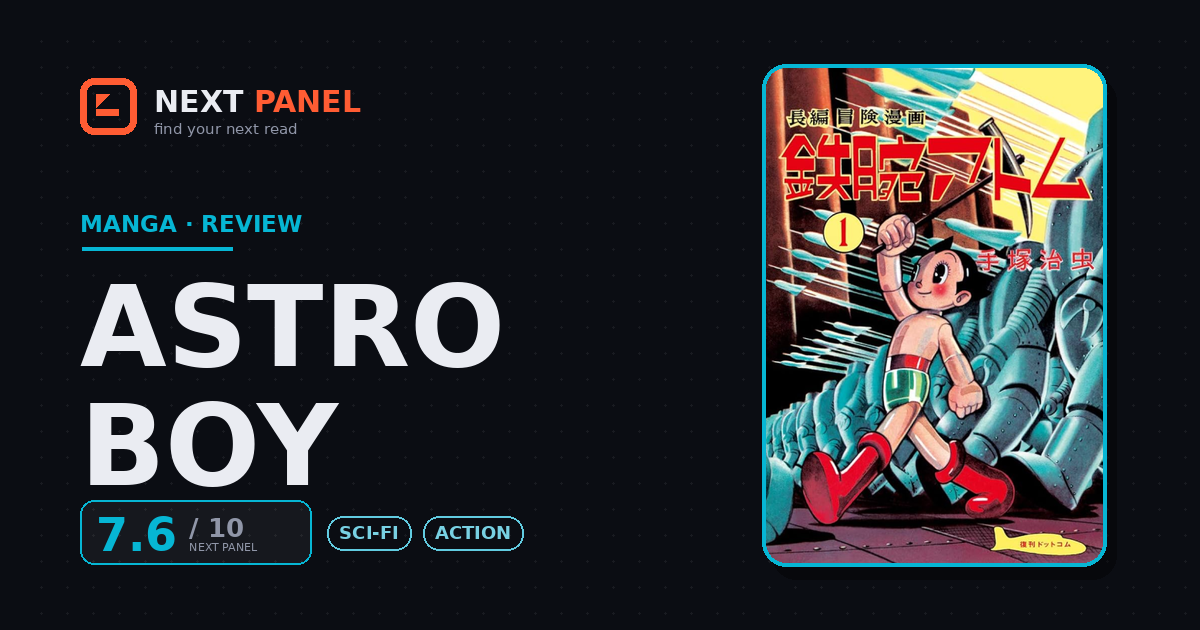
Quick Answer
Yes, if you're interested in where manga came from, or want gentle, smart retro sci-fi. Astro Boy is Osamu Tezuka's foundational classic about a robot boy with a human heart, fighting for a world where humans and robots can coexist. It's episodic and aimed at younger readers, and the 1950s-60s style is very dated, but it's charming, often surprisingly dark and thoughtful, and historically essential.
Quick Verdict
“The blueprint for modern manga and anime — a charming kids' robot adventure that keeps sneaking in real questions about prejudice and what makes us human.”
Best for: Readers curious about manga's roots who want charming, surprisingly thoughtful retro sci-fi about a robot boy.
Not for: Readers who want modern art, a single continuous plot, or mature, complex storytelling.
- Type
- Manga
- Genres
- Sci-Fi, Action
- Status
- Completed
- This review
- Minor Spoilers
- Author
- Osamu Tezuka
- Publisher
- Dark Horse Manga
- Platform
- Dark Horse
| Quick facts | |
|---|---|
| Format | Manga (shōnen), 233 chapters, 20 volumes |
| Run | 1952–1968 · completed |
| Community score | AniList 7.0 · MAL 7.4 |
| Content | Mild violence and some dark themes |
Overview
Astro Boy is where a huge amount of modern manga and anime begins. Created by Osamu Tezuka — the "God of Manga" — it stars Atom, a robot boy built by a grieving scientist to replace his dead son, then cast aside and later taken in by the kindly Professor Ochanomizu. Equipped with super strength, flight, and a genuinely human heart, Atom becomes a hero in a future where robots do humanity's work but are treated as second-class citizens. Across dozens of self-contained stories, he fights villains and disasters while the series quietly wrestles with prejudice, justice, and the line between human and machine. Tezuka worked on it across the 1950s and 60s, and Dark Horse publishes it in English.
What it does well
Its influence is impossible to overstate, but it holds up as more than a history lesson. Tezuka's storytelling is brisk, inventive, and warm, and Atom is a wonderful hero — kind, brave, and quietly sad, a child caught between two worlds who never quite belongs to either. The best stories are genuinely moving.
The surprising depth is the real reward. Under the bright, kid-friendly surface, Astro Boy is often startlingly dark and thoughtful — it takes on discrimination, war, environmental ruin, and the cruelty of a society that builds thinking beings only to treat them as tools. Tezuka uses a robot boy to ask what humanity actually is, and those questions still land decades later.
And the craft is a joy. Tezuka's clean, expressive, cartoony art is endlessly readable, his recurring cast of characters is charming, and his sheer storytelling fluency — the way he stages action, comedy, and pathos — shows exactly why he shaped the entire medium.
Where it falls short
It is very much of its time. The 1950s-60s art and sensibility, the simple cartooning, the old-fashioned pacing and humor — all take adjustment, and modern readers expecting slick contemporary manga will find it quaint. This is a historical artifact as much as a story.
It's also episodic and uneven. There's no single overarching plot; it's a collection of standalone adventures of wildly varying quality and tone, some brilliant, some slight or dated to the point of awkwardness. And because it was aimed largely at children, a lot of it is simpler and gentler than what serious manga readers may want. You take the great stories alongside plenty of minor ones.
Verdict
Astro Boy is a foundational classic that's still genuinely worth reading — charming, brisk, and far more thoughtful than its kid-friendly surface suggests, with a hero who's easy to love and themes that outlasted their era. Its dated style and episodic unevenness are real caveats, and it's more a delightful historical treasure than a modern page-turner. But if you want to understand where manga came from — and enjoy some lovely stories along the way — Tezuka's robot boy is essential.
Strengths & Weaknesses
Strengths
- Tezuka's storytelling is brisk, inventive, and warm, and Atom is a wonderful hero — kind, brave, and quietly sad, never quite belonging anywhere.
- Under the kid-friendly surface it's startlingly thoughtful, taking on prejudice, war, and what humanity actually is through a robot boy's eyes.
- The craft is a joy — clean, expressive cartooning and a storytelling fluency that shows why Tezuka shaped the whole medium.
- The best standalone stories are genuinely moving and still land decades later.
Weaknesses
- It's very much of its time — the 1950s-60s art, pacing, and humor take real adjustment for modern readers.
- It's episodic and uneven, a collection of standalone adventures of wildly varying quality with no single plot.
- Aimed largely at children, much of it is simpler and gentler than serious manga readers may want.
Similar Titles
Naoki Urasawa's brilliant, mature reimagining of a classic Astro Boy arc — the perfect companion piece.
Tezuka's sweeping life's-work masterpiece, far more ambitious and adult in scope.
Tezuka's episodic medical drama — same standalone-story craft with a sharper edge.
Frequently Asked Questions
Is Astro Boy finished?
Yes. Tezuka created it across the 1950s and 60s, and it's complete. Dark Horse publishes it in English, currently in a seven-volume omnibus edition.
Do I need to read it in order?
Not really. It's episodic, and Dark Horse's edition is arranged in the order Tezuka chose rather than original publication order, so you can dip in and out.
Is it just for kids?
It's all-ages on the surface, but Tezuka folds in surprisingly mature themes — prejudice, war, what it means to be human — that reward older readers too.