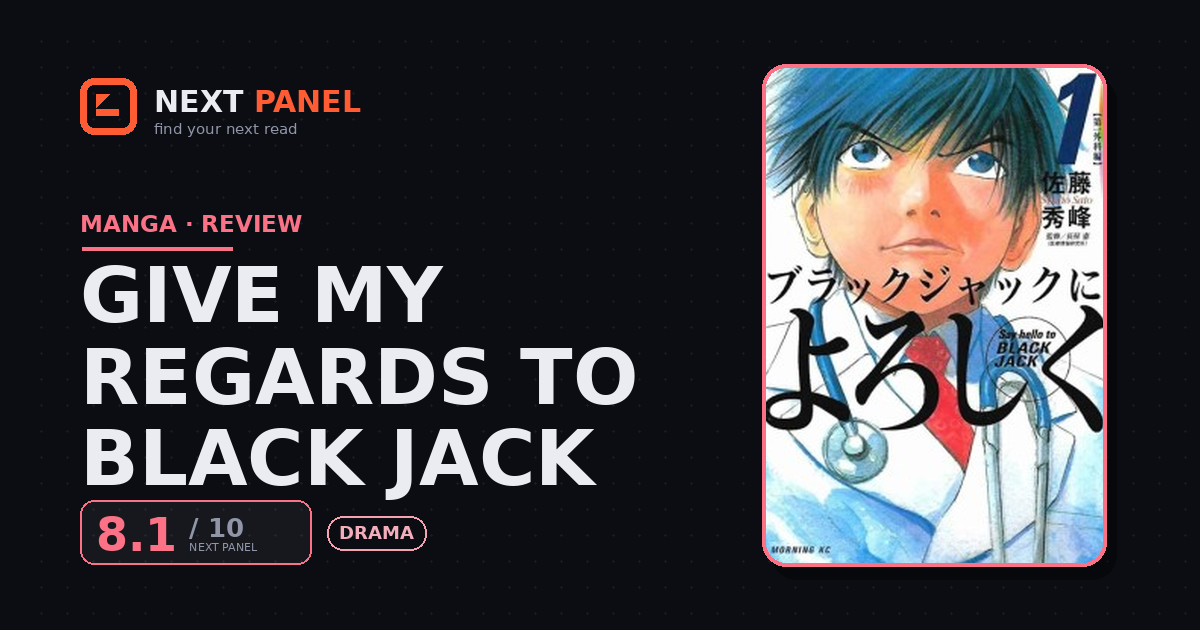
Is Give My Regards to Black Jack Worth Reading? Review & Where to Read
Quick Answer
Yes, especially if you want a medical drama that's actually about the system rather than miracle diagnoses. Eijiro Saito's disillusionment feels earned, and the manga is unusually willing to leave problems unsolved instead of wrapping them up neatly.
Quick Verdict
“This is angrier and bleaker than most medical manga get, and it's better for it — Saito's idealism gets ground down in a way that feels honest rather than manipulative.”
Best for: Readers who want a medical drama focused on institutional failure and moral compromise rather than triumphant diagnoses.
Not for: Readers who want a hopeful, case-of-the-week structure or a protagonist who mostly wins.
- Type
- Manga
- Genres
- Drama
- Status
- Completed
- Author
- Shuho Sato
- Publisher
- Kodansha (Morning)
- Platform
- OverDrive / Libby (library digital lending)
| Quick facts | |
|---|---|
| Format | Manga (seinen), 127 chapters, 13 volumes |
| Run | 2002–2006 · completed |
| Community score | AniList 8.0 |
| Content | Medical trauma, death, systemic abuse |
| Where to read | OverDrive / Libby (library digital lending) — official |
Overview
Eijiro Saito starts his medical internship with the kind of idealism every new doctor probably has, and Give My Regards to Black Jack spends its run grinding that idealism down against the reality of Japan's hospital system: unpaid overtime, understaffed wards, and a chain of compromises nobody in charge wants examined too closely. Shuho Sato's manga ran from 2002 to 2006, won the Japan Media Arts Festival's Excellence Award, and later got a TV drama adaptation. In an unusual move, Sato eventually broke with his original publisher and made the series free for secondary distribution, so it's had a strange, patchwork path to English readers since.
What it does well
The anger driving this manga is specific, not vague. Sato clearly did real reporting into how Japanese hospitals actually function, and it shows in the details: how residents get scheduled, how hospital politics override patient care, how a single understaffed night can cascade into a death nobody wants to take responsibility for. That specificity is what separates this from a generic 'medical system is broken' story — it names the actual mechanisms.
Saito's arc is paced honestly, too. His disillusionment doesn't happen in one dramatic breakdown; it erodes case by case, so that by the point he stops being surprised by the system's failures, the shift feels earned rather than abrupt. And the manga is genuinely willing to let a case end badly or leave a systemic problem unresolved, which gives every arc real stakes in a genre that usually reaches for a tidy diagnosis-and-recovery structure instead.
Where it falls short
That commitment to bleakness comes at a cost: the tone stays heavy for long stretches, with little levity to break up the string of institutional failures. If you need some hope or humor between cases, this doesn't offer much. The romance subplot with Saito's girlfriend also never really develops into anything — it's present, but it reads like an afterthought next to how much attention the medical plot gets. And because of the author's unusual publishing history, actually finding an official English copy takes more digging than a normal licensed release would.
Verdict
Give My Regards to Black Jack is a genuinely angry, well-researched medical drama that earns its reputation by refusing to let its protagonist — or its readers — off easy. If you want a medical manga that treats systemic failure as the actual subject rather than a backdrop for miracle diagnoses, this delivers. If you need hope woven through the bleakness, it's a heavier read than most of the genre.
Strengths & Weaknesses
Strengths
- The anger at Japan's medical system is specific and well-researched, not vague — understaffing, resident exploitation, and hospital politics are drawn with the kind of detail that comes from real reporting, not just dramatic license.
- Eijiro Saito's disillusionment is paced honestly: his idealism doesn't collapse in one big scene, it erodes case by case, which makes the shift feel earned instead of abrupt.
- It's genuinely willing to end an arc badly, or leave a systemic problem unresolved, which gives the stakes real weight in a genre that often defaults to a tidy diagnosis-and-recovery structure.
- It won the 2002 Japan Media Arts Festival Excellence Award, and the craft behind that recognition still holds up — the pacing of each medical case is tight and the art clearly communicates procedures without over-explaining them.
Weaknesses
- The relentless focus on systemic failure means the tone stays heavy for long stretches — if you want any real levity or hope between cases, this doesn't offer much.
- The romance subplot with Saito's girlfriend is present but underdeveloped; it doesn't go anywhere significant and can feel like an afterthought next to the medical plot.
- Because the author's dispute with his original publisher led to an unusual free-distribution arrangement, official access outside library lending is limited and can be harder to track down than a typical licensed release.
Similar Titles
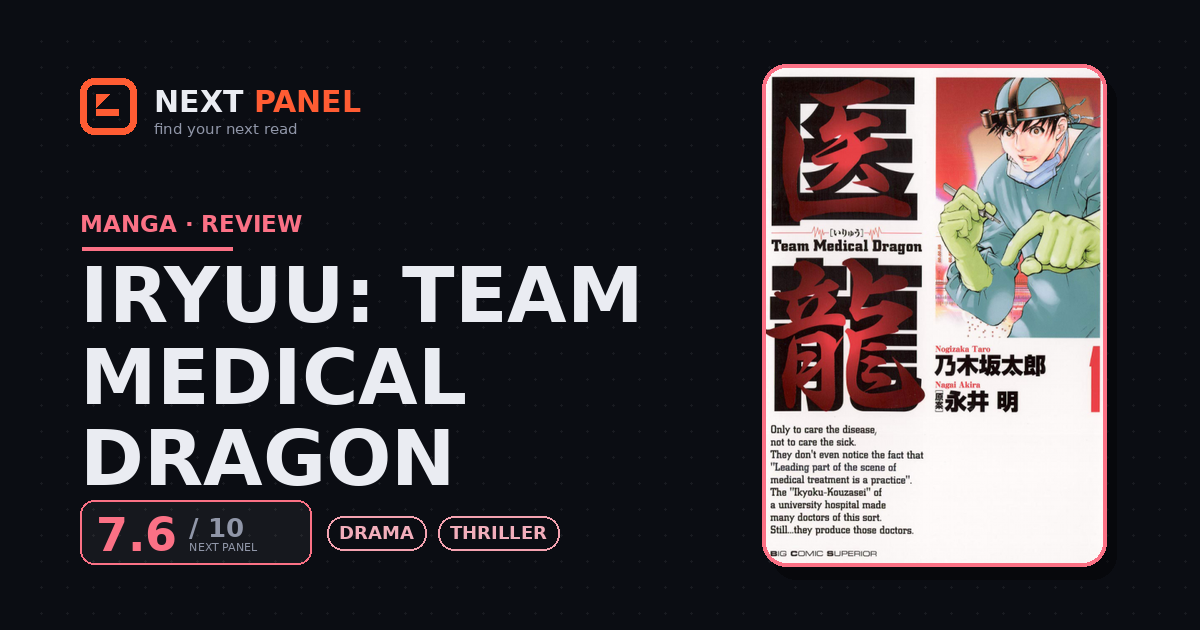
Another medical drama that treats the hospital itself, not just individual cases, as the real subject.
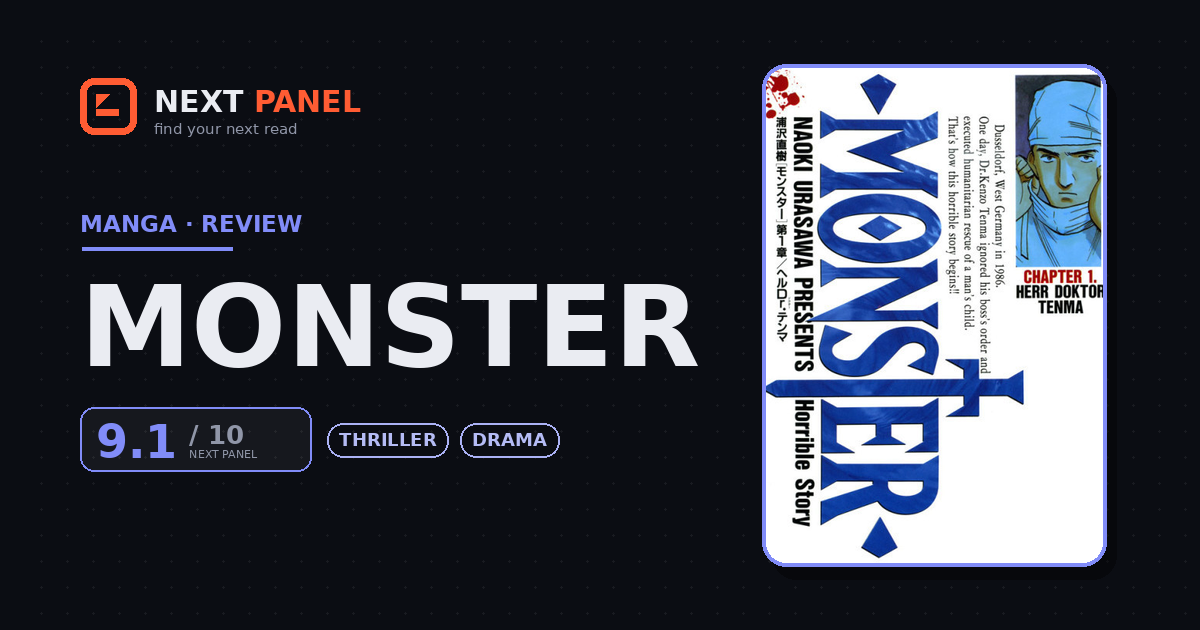
Different genre, same interest in institutional dysfunction and moral compromise as a slow-building horror.
Different plot entirely, but a similarly serious, unglamorous take on what being a doctor actually costs.
Where to Read Officially
| Platform | Format | Pricing | Region notes | Link |
|---|---|---|---|---|
| OverDrive / Libby (library digital lending) | Digital (free via library lending) | Free | Region availability varies | Open |
Frequently Asked Questions
Is Give My Regards to Black Jack related to Osamu Tezuka's Black Jack?
Only in title, as a reference. It's an unrelated, modern story about a young intern doctor, not a sequel or adaptation of Tezuka's classic.
Is the manga finished?
Yes, the original series is complete at 13 volumes.
Where can I legally read it in English?
The author made the work free for secondary use in 2012, and it's available for free digital library lending through OverDrive/Libby, in addition to a TV drama adaptation.