Is Drifters Worth Reading? Review & Where to Read
Quick Answer
Yes, if you can handle the wait. Drifters is some of the best-looking action on the shelf, with a wild cast of historical killers and a sharp sense of humor. The catch is a glacial release schedule and a story that, years in, still hasn't paid off.
Quick Verdict
“Gorgeous, funny, and ultra-violent, released at a crawl — if you can live with the wait, almost nothing reads like it.”
Best for: Readers who want stylish, brutal action and a wild what-if cast of history's deadliest fighters.
Not for: Readers who want a steady release schedule and a story that's anywhere near its ending.
- Type
- Manga
- Genres
- Fantasy, Action
- Status
- Ongoing
- This review
- Minor Spoilers
- Author
- Kouta Hirano
- Publisher
- Shōnen Gahōsha
- Platform
- Dark Horse
| Quick facts | |
|---|---|
| Format | Manga (seinen), 7 volumes |
| Run | 2009–present · ongoing |
| Community score | AniList 7.5 · MAL 7.8 · MangaUpdates 8.1 |
| Content | Graphic violence, war |
| Where to read | Dark Horse — official |
Overview
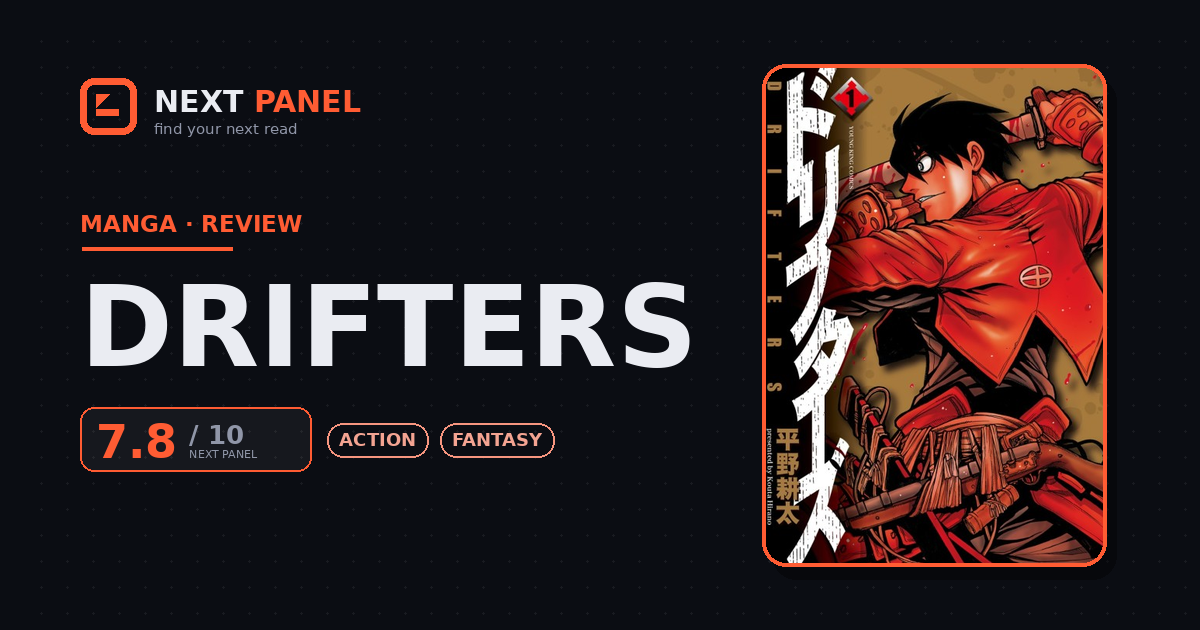
Drifters is Kouta Hirano's follow-up to Hellsing, and it runs on a great premise: famous warriors from across human history die in their own time and wake up in a fantasy world that's gearing up for war. The lead is Shimazu Toyohisa, a real sixteenth-century samurai, who quickly falls in with a wildly out-of-period crew — Oda Nobunaga, the archer Nasu no Yoichi, and a growing roster that includes everyone from Hannibal to Joan of Arc. They're called Drifters, and they're pointed at a war against the Ends, another group of historical figures on the other side.
It's pulpy, loud, and exactly as ridiculous as that sounds, in the best way.
What it does well
The art is the reason to read this. Hirano draws some of the most striking action in manga — heavy, detailed linework, splash pages that stop you cold, and fights that actually feel like they have force and momentum. When Drifters wants to show off, it really shows off, and it does it constantly. If you liked the way Hellsing looked, this is that, sharpened.
The concept delivers, too. Throwing real warriors into a fantasy meat-grinder could be a cheap gimmick, but Hirano writes them as big, specific personalities and lets them bounce off each other. Toyohisa is a blunt instrument, Nobunaga is a scheming strategist enjoying his second shot at conquest, and Yoichi is the wild card. Their banter carries long stretches between battles.
And it's funny. Hirano knows the setup is absurd and plays into it, cutting the gore with comedy and sheer attitude. The tone keeps the whole thing from sinking into self-serious grimdark, which is a real risk for a story this violent.
Where it falls short
The big problem is outside the pages: the release schedule. Drifters comes out in fits and starts, with hiatuses long enough that fans lose the thread. Years into its run, the larger story still hasn't built to a satisfying turning point, and reading it means accepting you may be waiting a long, long time for more.
The writing also leans on spectacle over structure. The world-building is thin, the war's stakes stay vague, and the plot is more a sequence of great scenes than a tight, escalating story. And Hirano's humor and content are deliberately crude and edgy — some of it is sharp, some of it will just put certain readers off.
Verdict
Drifters is a feast for the eyes and a good time on a chapter-to-chapter level, held back by a story that won't sit still long enough to finish. If you read it for the art, the cast, and the spectacle — and you make your peace with the wait — it's an easy recommendation. If you need a complete, tightly plotted story, come back when it's done, whenever that is.
Strengths & Weaknesses
Strengths
- Hirano's art is the main event. The linework is dense and showy, the two-page spreads land like a punch, and the fights have real weight and motion behind them.
- The hook is just plain fun. Real historical warriors get pulled into a fantasy world and turned loose, and the central trio of Toyohisa, Nobunaga, and Yoichi plays off each other really well.
- It's genuinely funny. Hirano cuts the carnage with sharp comedy and big, loud personalities, so it never collapses into grimdark despite the body count.
Weaknesses
- The release schedule is rough. Long hiatuses mean the story moves at a crawl, and years in it still hasn't built to a real payoff.
- The plot and world-building stay thin next to the spectacle. It's more a string of cool moments than a tight, driving story.
- The humor and content lean crude and deliberately edgy, which won't sit right with every reader.
Similar Titles
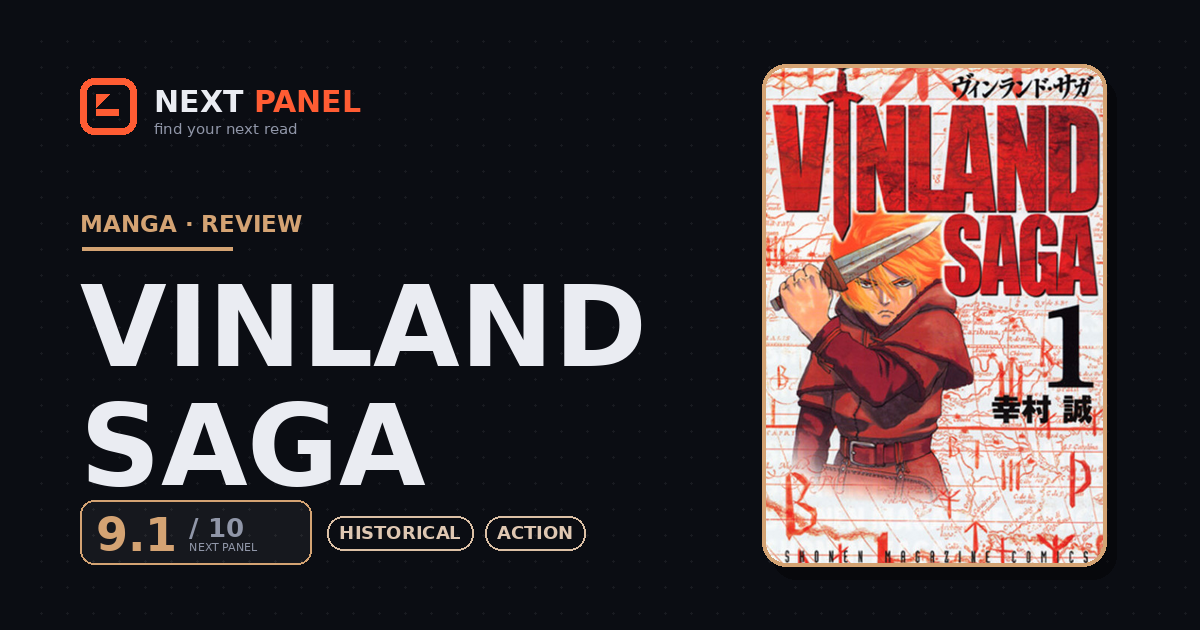
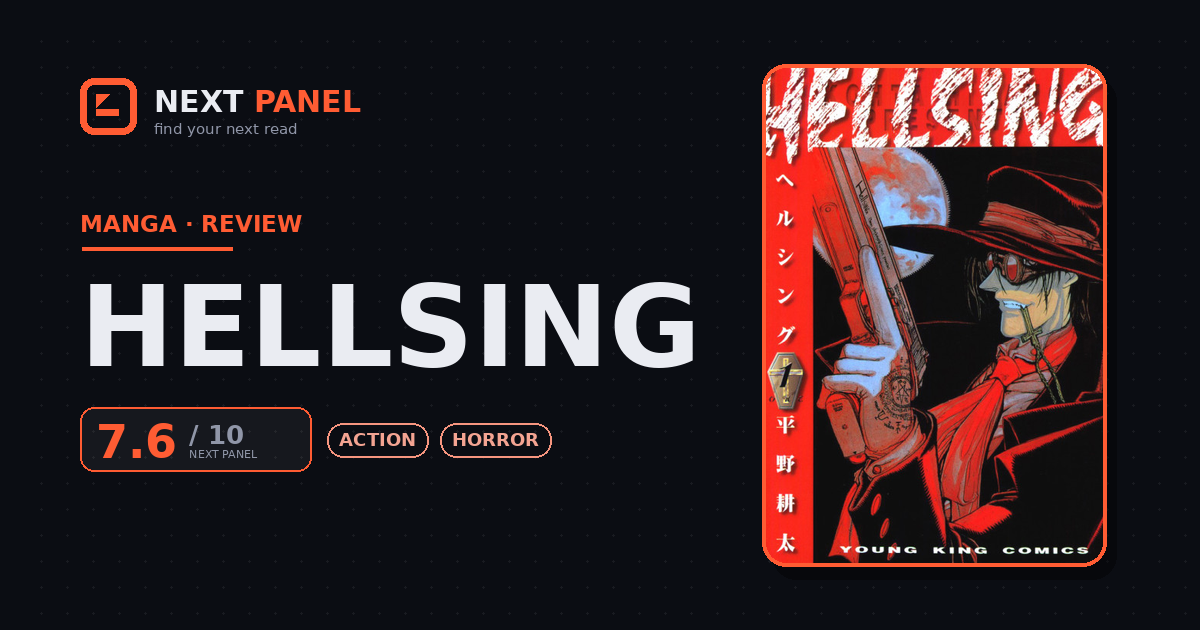
Hirano's earlier series — same showy art and over-the-top action.
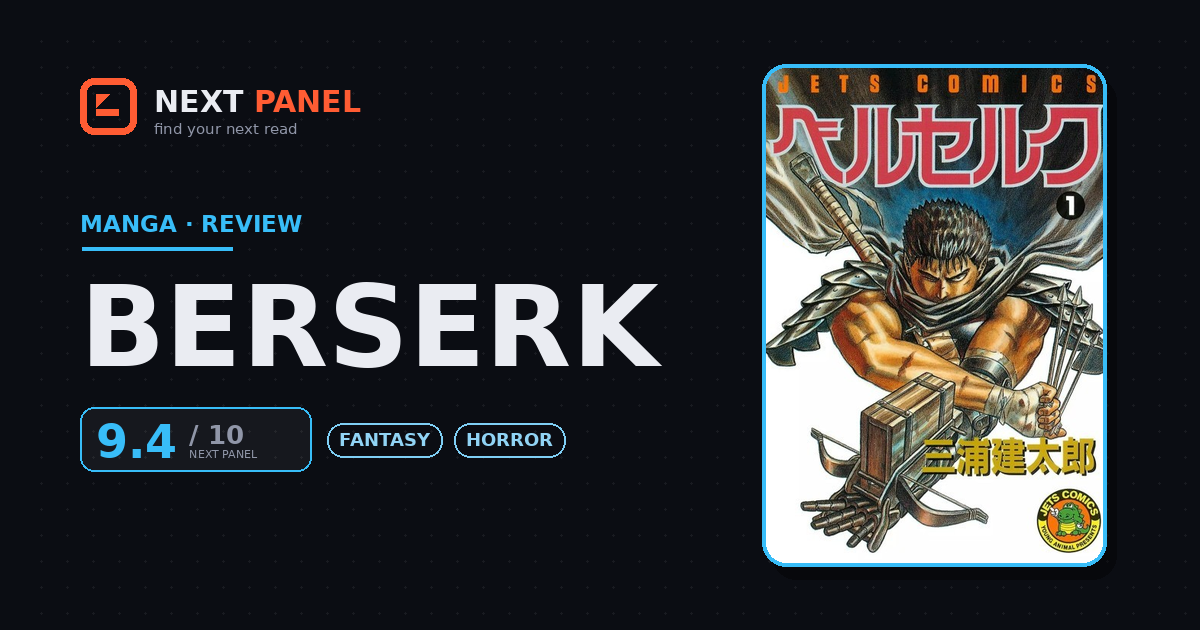
Dark fantasy with brutal, gorgeously drawn combat.
A historical war epic with real warriors, if you want more story with your battles.
Where to Read Officially
| Platform | Format | Pricing | Region notes | Link |
|---|---|---|---|---|
| Dark Horse | Print & digital volumes | Paid | Region availability varies | Open |
Frequently Asked Questions
Is Drifters finished?
No. It's still ongoing in Japan but updates very slowly, with long gaps between chapters, so don't go in expecting a conclusion any time soon.
Do I need to know the history?
It helps but isn't required. Recognizing Nobunaga or Hannibal adds flavor, but the manga reintroduces everyone as larger-than-life characters in their own right.
Where can I read Drifters in English?
Dark Horse publishes it in English, now in omnibus editions that collect the early volumes.