Is Knights of Sidonia Worth Reading? Review & Where to Read
Quick Answer
Yes, especially if you want hard-sci-fi worldbuilding paired with giant-robot combat. It's dense and demands attention, but the payoff is one of the more distinct mecha stories out there.
Quick Verdict
“Nihei builds one of the strangest, most fully-realized sci-fi settings in manga and then has the guts to keep changing the rules on you.”
Best for: Readers who want dense sci-fi worldbuilding alongside their giant-robot fights and don't mind doing some mental work to keep up.
Not for: Readers who want a simple, easy-to-follow plot with a small cast and clear stakes from chapter one.
- Type
- Manga
- Genres
- Sci-Fi, Action
- Status
- Completed
- This review
- Minor Spoilers
- Author
- Tsutomu Nihei
- Publisher
- Kodansha (Vertical Comics, English)
- Platform
- Kodansha
| Quick facts | |
|---|---|
| Format | Manga, 78 chapters, 15 volumes |
| Run | 2009–2015 · completed |
| Community score | AniList 7.4 · MangaUpdates 7.3 |
| Where to read | Kodansha — official |
Overview
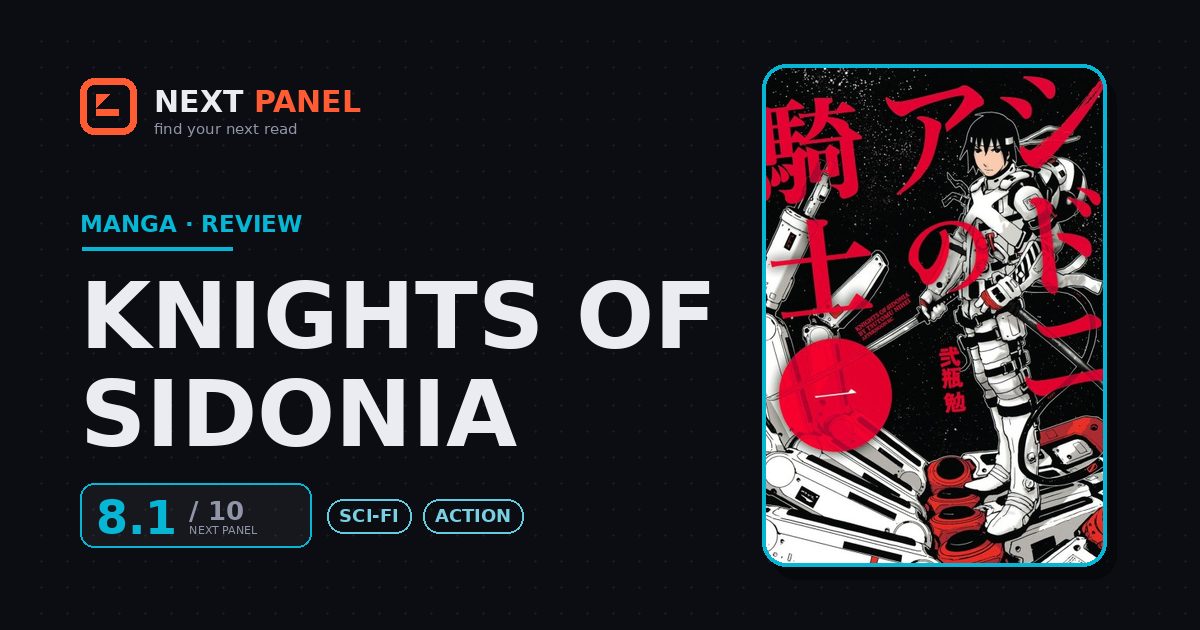
A thousand years after the Gauna, an incomprehensible alien threat, destroyed the solar system, the last surviving humans live aboard Sidonia, a massive seed ship still searching for a new home. Nagate Tanikaze, raised alone in the ship's lower levels, gets pulled into the pilot corps almost by accident and turns out to have a natural talent for the mecha that are humanity's only real defense. From there, Knights of Sidonia builds outward into one of the more distinct sci-fi settings in manga — part survival story, part evolving-biology thought experiment, part giant-robot war.
What it does well
Tsutomu Nihei treats the setting itself as a main character. Sidonia isn't just a backdrop — its architecture, its engineered food supply, the photosynthetic humans who've adapted to live on less, all of it gets worked into the plot instead of sitting in the margins as flavor text. The Gauna are the other standout: instead of staying a static enemy type, they keep mutating and adapting in ways that force both the cast and the reader to throw out assumptions about how a fight is supposed to go. That unpredictability is what keeps the combat from feeling like the same beat repeated across a hundred chapters.
Nagate himself is a solid anchor — not a chosen-one archetype so much as someone who happens to be good at a very specific, very violent job, and the story is honest about what that does to him over time. The cast around him grows substantially as the series goes on, and Nihei is willing to actually change the status quo — losing characters, shifting the ship's politics, letting consequences stick — rather than resetting everything to a safe baseline every arc. Visually, the mecha battles have a genuine sense of scale; the ship, the enemies, and the weapons all feel enormous in a way that a cleaner, brighter art style usually can't pull off.
Where it falls short
The density that makes the worldbuilding interesting is also the biggest barrier to entry. Nihei doesn't slow down to explain things, and the first several volumes ask you to hold a lot of unexplained terminology and technology in your head while trusting it'll click into place later — which it does, but not everyone will want to put in that work upfront. The cast also grows fast enough that some characters, especially ones introduced in the later volumes, don't get as much development as their screen time would suggest they deserve. And Nihei's shadowy, heavily-inked art style, while distinctive, can occasionally make fast action sequences harder to read than a more open, high-contrast style would.
Verdict
Knights of Sidonia rewards patience with one of the more genuinely strange and well-thought-out sci-fi settings in manga, backed by mecha combat that keeps finding new ways to surprise you. It's not the easiest entry point into the genre, but for readers willing to meet it halfway, it's one of the better ones.
Strengths & Weaknesses
Strengths
- The setting is genuinely inventive — a generation ship a thousand years removed from Earth, with photosynthetic humans and cloned soldiers, that feels lived-in rather than explained in an info dump.
- The Gauna, the alien threat, keep evolving in ways that force the cast (and the reader) to rethink the rules of the fights instead of repeating the same trick every arc.
- Nihei's art gives the mecha and the ship's architecture a scale and weight that a lot of sci-fi manga don't bother with — the sense of size is part of the storytelling.
- It's not afraid to actually change its cast and status quo instead of resetting to a safe baseline every arc.
Weaknesses
- The worldbuilding comes fast and the manga doesn't slow down much to explain it, so the first few volumes ask a lot of trust from the reader.
- Some side characters get less development than the scale of the cast would suggest, especially later once the roster grows.
- Nihei's dense, shadowy art style can make some action sequences harder to parse than a cleaner house style would.
Similar Titles
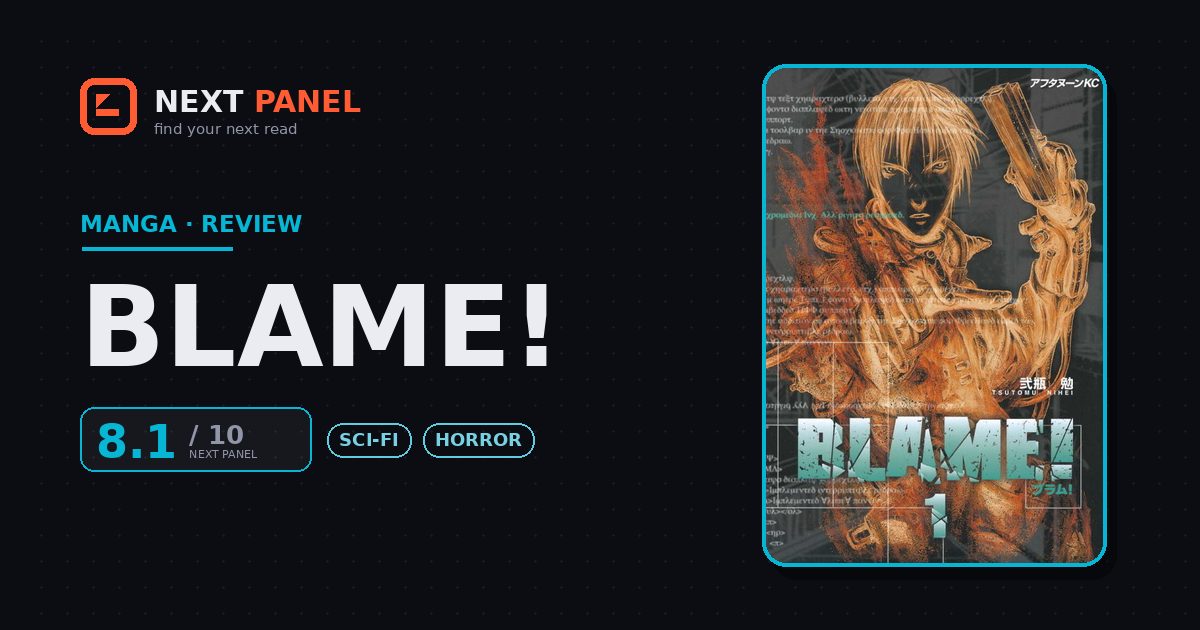
Nihei's earlier work, similar dense sci-fi atmosphere if you want more of his style
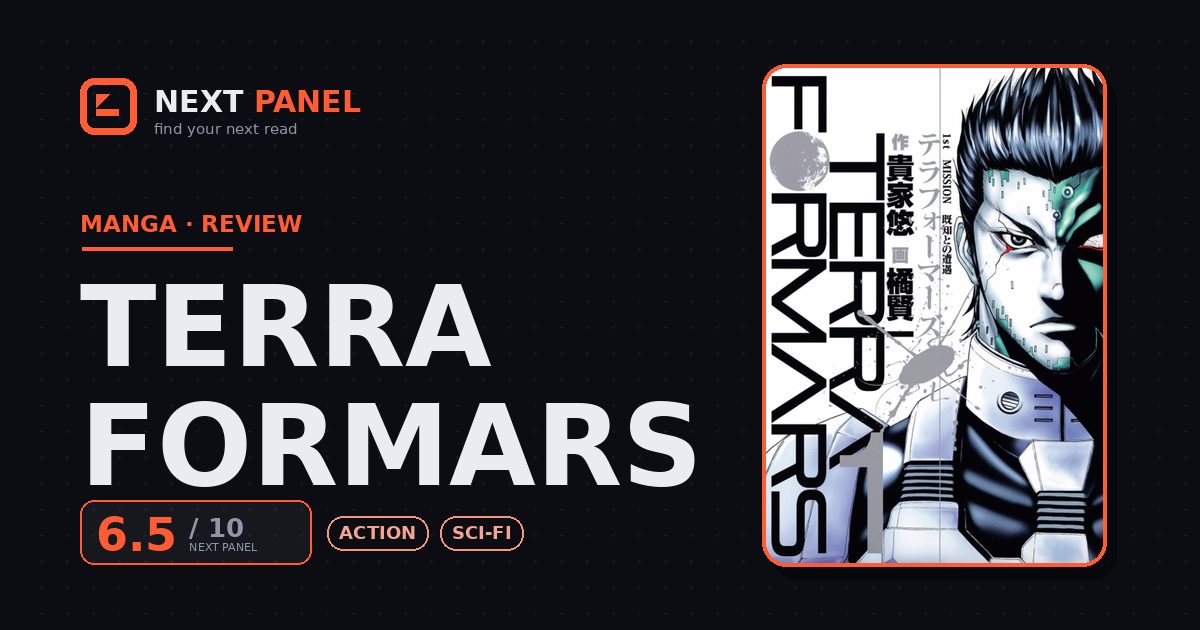
another hard-edged sci-fi survival story with a large ensemble cast
Knights of Sidonia: Battle for Planet Nine
a spinoff for readers who want more of the same combat and universe
Where to Read Officially
| Platform | Format | Pricing | Region notes | Link |
|---|---|---|---|---|
| Kodansha | Digital chapters | Print volumes | Free + Paid | Region availability varies | Open |
Frequently Asked Questions
Do I need to have seen the anime first?
No — the manga is the original source, and it goes further than the Netflix anime adaptation, which stops partway through the story.
Is Knights of Sidonia finished?
Yes, the original series is complete, and Kodansha has both the standard and Master Edition English releases.
How much sci-fi explanation should I expect?
A fair amount, and it's delivered through the story rather than lecture-style — expect to piece some of the setting together as you go.