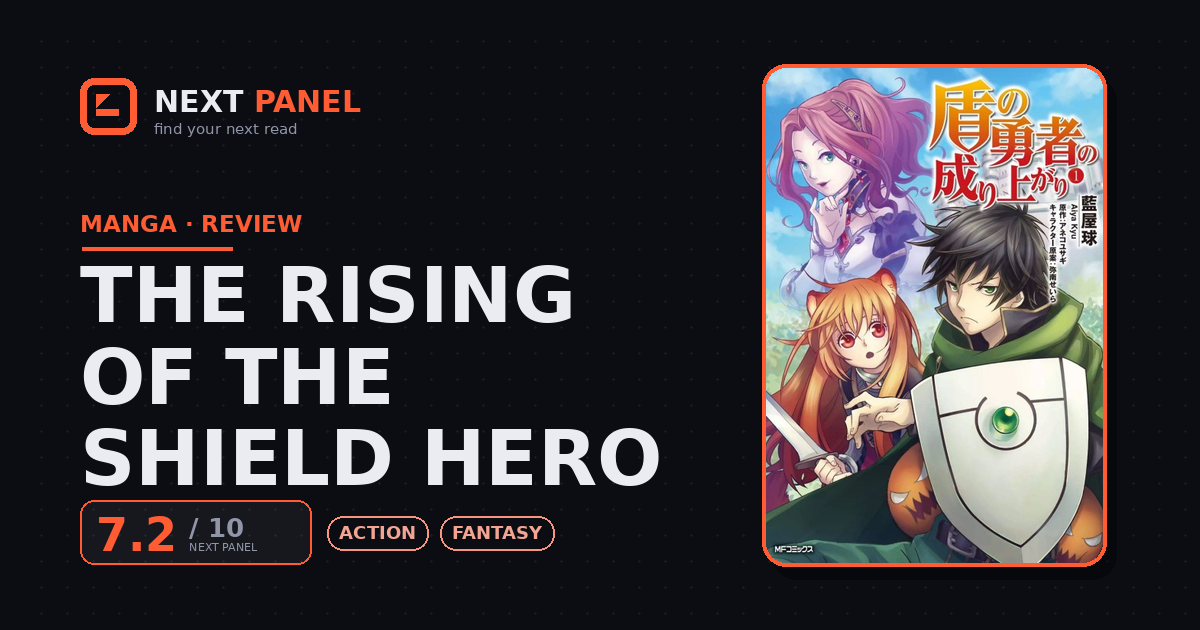
Is The Rising of the Shield Hero Worth Reading?
Quick Answer
Worth reading if you can engage with its false-accusation and slavery plot elements as the story's actual foundation: Naofumi's slow rebuild of trust and the shield-based combat system are genuinely well done, but those controversial elements are structural, not incidental, and aren't going away.
Quick Verdict
“Well-crafted revenge-to-redemption isekai that earns a lot of its reputation, both the praise for its slow-burn arc and the criticism for how it gets there.”
Best for: Readers who want a revenge-to-redemption isekai built around a defense-focused power system rather than straightforward power fantasy.
Not for: Readers for whom a false-assault-accusation plotline or a slavery-based power system are hard dealbreakers.
- Type
- Manga
- Genres
- Fantasy, Action, Isekai
- Status
- Ongoing
- Author
- Aneko Yusagi
- Artist
- Aiya Kyu
- Publisher
- One Peace Books
- Platform
- One Peace Books
| Quick facts | |
|---|---|
| Format | Manga, 30 volumes |
| Run | 2014–present · ongoing |
| Community score | AniList 7.2 · MangaUpdates 7.8 |
| Content | false sexual-assault accusation plotline and a slavery-based power system, both central to the story |
| Where to read | One Peace Books — official |
Overview
Naofumi Iwatani gets summoned to another world as one of four Cardinal Heroes, alongside three other Japanese men who all pull swords, spears, and bows. He's stuck with the shield: pure defense, no offensive power of its own, and within days of arriving he's publicly and falsely accused of assault by his own party member, stripped of his reputation, and left to survive as the most distrusted of the four heroes. Aiya Kyu's manga adaptation of Aneko Yusagi's light novel has been running since 2014, past 30 volumes in Japan and still going, tracking Naofumi's slow climb back from that low point with the help of Raphtalia, a demi-human he buys and trains specifically because he no longer trusts anyone human.
That opening premise is also the reason this series has stayed a lightning rod since its 2019 anime brought it to a much wider audience. The false-accusation plot and the slavery mechanic built into its power system aren't incidental, they're structural to how the story works, and how you feel about that going in will shape a lot of your read.
What it does well
Naofumi's arc from someone who's had every reason to stop trusting people to someone slowly, believably rebuilding that trust is genuinely well handled, paced across enough volumes that it never feels rushed or forced. Raphtalia specifically gets more interiority than the "loyal companion" premise suggests on paper. Her own trauma and growth run parallel to Naofumi's rather than existing only in service of his arc.
The shield-based combat system is also a smart structural hook. Naofumi can't just win fights by hitting harder, so the manga has to get creative with defense, support, and strategy instead of falling back on the power-scaling escalation a lot of isekai action leans on. It makes the fights feel like puzzles as much as battles, which is a genuinely different rhythm than most of the genre offers.
Where it falls short
The controversial elements are real, not overstated by critics. The false-accusation subplot that kicks the story off is played completely straight as a wrong done to Naofumi, and it's paired with a slavery system the story treats as a normal, even sympathetic, part of its world, which some readers will find impossible to get past regardless of how the rest of the writing holds up.
The manga's pacing relative to the light novel also means some arcs get compressed to keep up, and more than thirty volumes in, the power-creep and rotating cast of new threats common to long-running isekai starts to show. This is a series that asks for real investment before it pays off.
Verdict
Well-crafted revenge-to-redemption isekai that earns a lot of its reputation, both the praise for Naofumi's slow-burn arc and the criticism for how it gets him there. Worth reading if you can engage with the false-accusation and slavery elements as the story's actual foundation rather than dealbreakers. Skip it if either of those is a hard line for you, because they aren't going away partway through.
Strengths & Weaknesses
Strengths
- Naofumi's slow, believable rebuild of trust is well-paced across the long run rather than rushed
- Raphtalia gets real interiority and her own arc instead of existing only to support the lead
- Shield-based defense system forces creative, strategic combat instead of simple power-scaling
- Distinctive premise within isekai: a hero defined by what he can't do rather than overwhelming strength
Weaknesses
- False-accusation and slavery plot elements are structural to the story, not easily set aside
- Manga pacing compresses some arcs relative to the source light novel
- Long-running power creep and rotating cast of new threats show after 30-plus volumes
Similar Titles
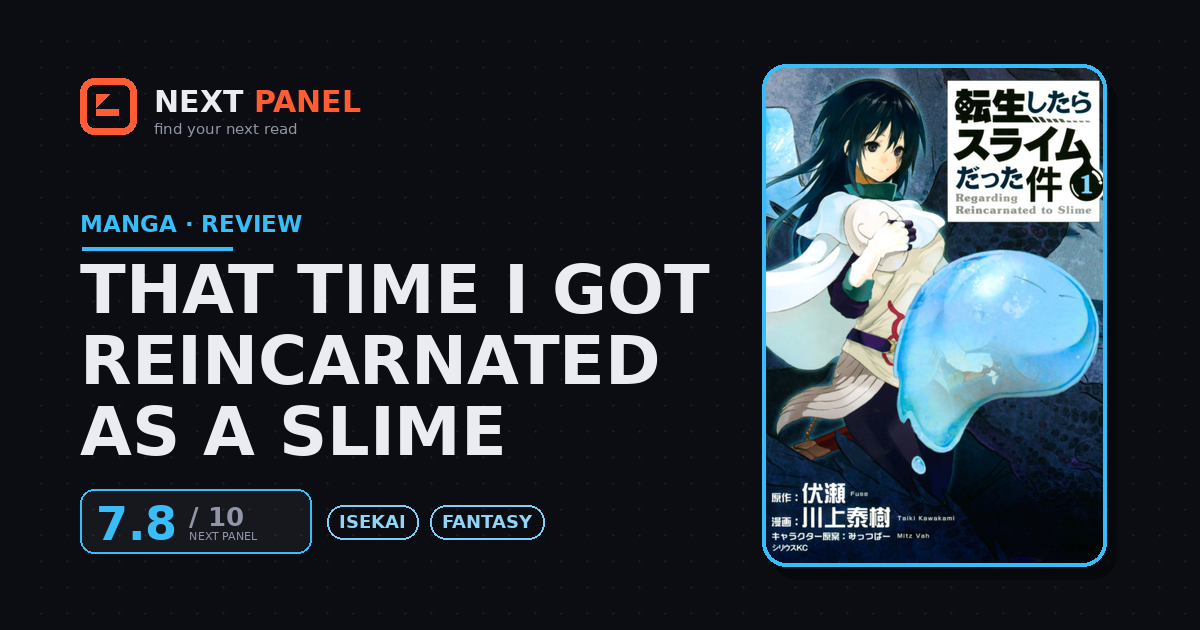
That Time I Got Reincarnated as a Slime
A lighter, less controversial isekai power fantasy if the darker elements here aren't for you.
A comedic counterpoint that plays isekai tropes for laughs instead of grim redemption.
Another isekai willing to put its protagonist through genuine suffering before any payoff.
Where to Read Officially
| Platform | Format | Pricing | Region notes | Link |
|---|---|---|---|---|
| One Peace Books | Print & Digital | Paid | Region availability varies | Open |
Frequently Asked Questions
Is The Rising of the Shield Hero manga finished?
No, it's ongoing. The Japanese release has passed 30 volumes as of 2026, with One Peace Books continuing the English translation.
Is there an anime adaptation?
Yes, a popular anime adaptation has run for multiple seasons since 2019.
Where can I read it in English?
One Peace Books publishes the manga in English, in print and digitally.