Is Toriko Worth Reading? Review & Where to Read
Quick Answer
Yes, if you want a battle shonen with a genuinely different hook. Toriko turns hunting ingredients into full monster fights, and the two leads carry it even when the formula gets repetitive.
Quick Verdict
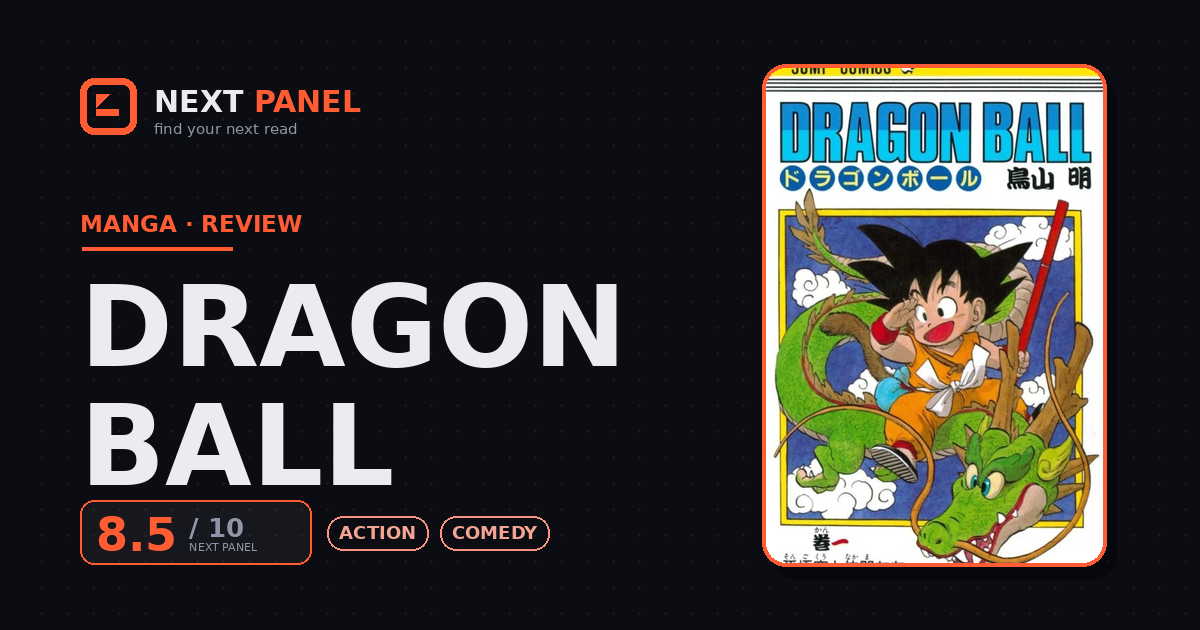
“Picture Dragon Ball's power escalation applied to hunting ingredients instead of villains, and you've got the idea — ridiculous, likable, and a little too long for its own good.”
Best for: Readers who love pure shonen spectacle and want a battle series that doesn't take itself too seriously.
Not for: Readers who want tight pacing and a full ensemble cast that keeps developing past the leads.
- Type
- Manga
- Genres
- Action, Comedy
- Status
- Completed
- This review
- Minor Spoilers
- Author
- Mitsutoshi Shimabukuro
- Publisher
- Shueisha
- Platform
- VIZ
| Quick facts | |
|---|---|
| Format | Manga (shōnen), 396 chapters, 43 volumes |
| Run | 2008–2016 · completed |
| Community score | AniList 7.5 · MangaUpdates 7.7 |
| Where to read | VIZ — official |
Overview
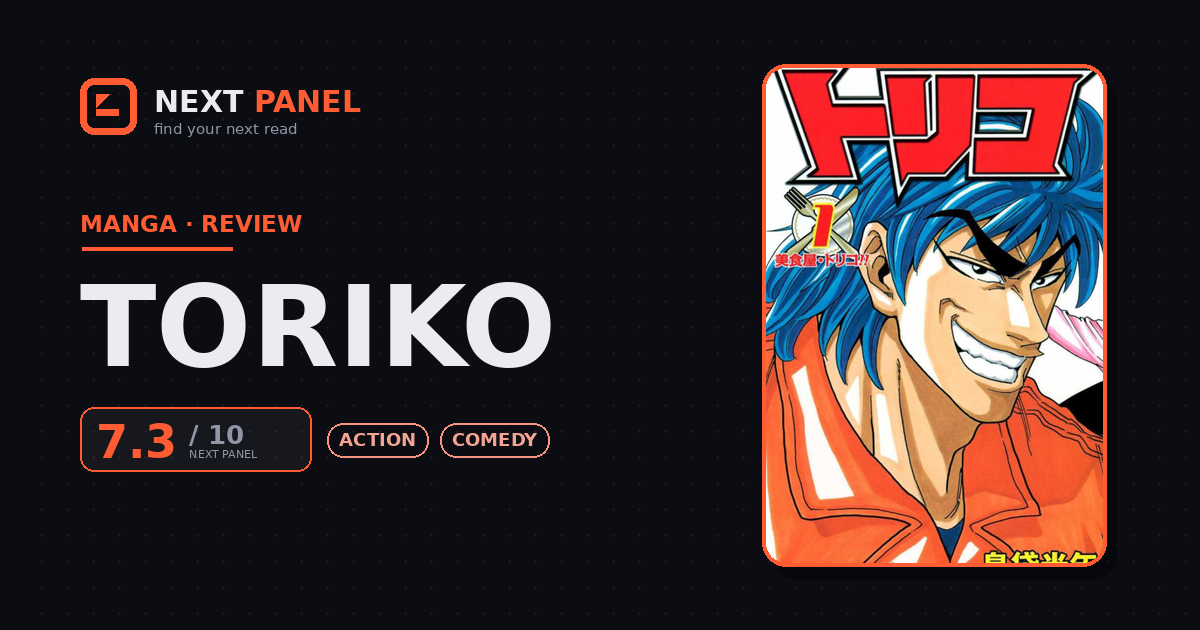
Toriko ran in Weekly Shonen Jump from 2008 to 2016, and its pitch is stranger than most Jump series: a world has entered the "Gourmet Age," where monstrous, often delicious creatures roam and a class of elite Gourmet Hunters track down the rarest ingredients on the planet. Toriko is one of the best of them, chasing rare foods to complete his own personal "full course menu." Early on he teams up with Komatsu, a talented but very human hotel chef, and the two spend the rest of the series hunting together -- Toriko doing the fighting, Komatsu doing the cooking, both of them somehow making it work.
What it does well
The premise sounds like a gimmick, but it holds up because the food and the combat are the same system, not two separate ideas bolted together. Ingredients have their own ecosystems, defense mechanisms, and food chains, so a hunt plays out like a cross between a heist and a boss fight -- you have to figure out how a creature protects itself before you can even think about beating it. That gives fights a structure beyond "hit until it's dead," and the bestiary design stays creative for a very long time, with new ingredients and habitats that make the world feel like it keeps growing instead of repeating itself.
The other reason it works is Toriko and Komatsu themselves. Toriko is a wall of muscle who solves most problems by eating them, but the manga is careful to keep Komatsu useful -- his palate and cooking skill matter just as much as Toriko's strength, and their partnership reads as a genuine friendship rather than a hero-and-sidekick arrangement. When the series wants an emotional beat, it usually goes through that relationship, and it earns it more often than not.
And when Toriko wants to just be a battle shonen, it commits fully. The fights are loud, huge in scale, and drawn with total confidence in their own absurdity -- this is a series happy to have its hero punch a beast the size of a mountain and never once ask you to take that anything less than seriously within its own logic.
Where it falls short
The biggest issue is one Toriko shares with a lot of long-running Jump battle series: power creep. Every arc needs a bigger threat than the last one, and after a while that makes earlier fights and ingredients feel small in retrospect, even ones that were genuinely exciting at the time. The story doesn't really have an answer for this beyond "go bigger," and by the later arcs the scale starts to outpace the character work that made the early volumes fun.
That character work also doesn't extend very far past Toriko and Komatsu. The supporting cast -- fellow hunters, rival chefs, various allies -- get color and gimmicks, but not much growth; most of them are there to react to the leads or fill out a fight rather than carry their own arcs. And the art, while distinctive, leans hard into exaggerated muscle and expression work that can look more dated than deliberate next to newer shonen.
Verdict
Toriko is a fun, generous, occasionally exhausting battle shonen that never runs out of ideas for what counts as food. If you want a series that treats its own absurd premise completely seriously and pairs it with a genuinely warm central friendship, it delivers -- just don't expect the escalation or the side cast to hold together as tightly as the core concept does.
Strengths & Weaknesses
Strengths
- The core hook is genuinely fun: ingredients that fight back, a food chain with its own internal logic, and hunts that play out like heist missions as much as brawls.
- Toriko and Komatsu's partnership is the emotional glue of the series -- an overpowered hunter and an ordinary chef who never stops pulling his own weight.
- The bestiary design keeps inventing new creatures and ingredients, so the world feels like it's still expanding even hundreds of chapters in.
- The fights are big, loud, and confident about being pure shonen spectacle instead of apologizing for it.
Weaknesses
- It runs into the standard Jump escalation problem -- each arc raises the stakes until earlier threats stop feeling like they mattered.
- Characters outside the main duo get thin development; a lot of the cast exists to react to Toriko rather than grow on their own.
- The exaggerated muscle-and-expression art style is an acquired taste and reads as dated next to more polished modern shonen.
Similar Titles
an earlier, calmer cooking-battle classic if the food-as-combat idea is the draw
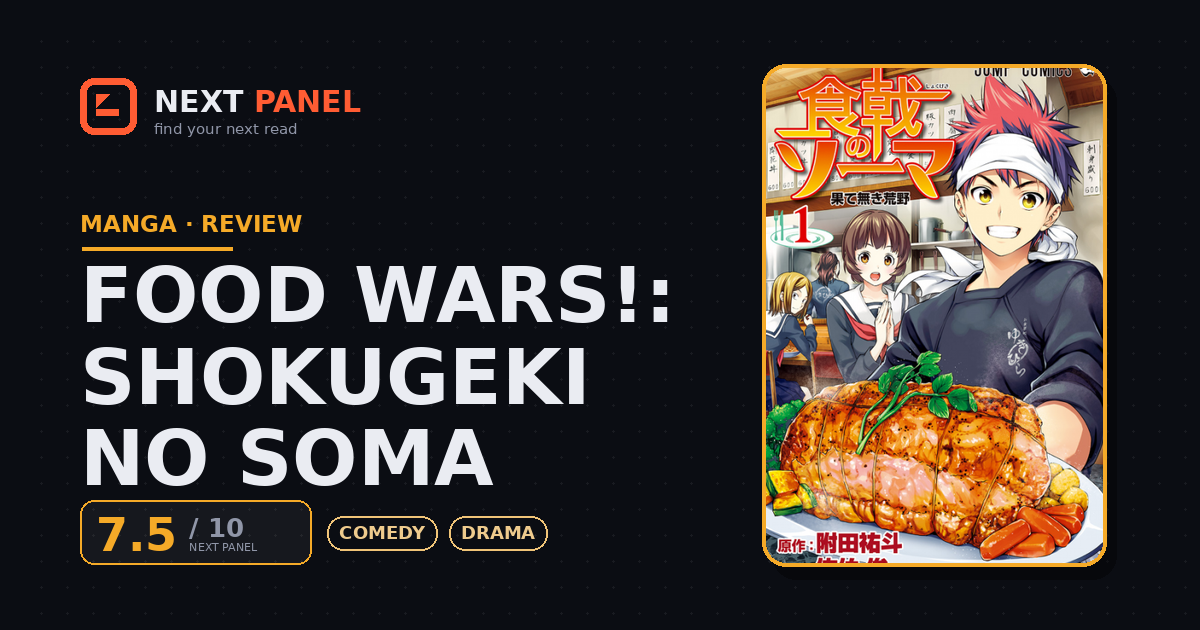
another food-battle shonen, more culinary-focused and less monster-hunting
the power-escalation formula Toriko is clearly built on, minus the food gimmick
Where to Read Officially
| Platform | Format | Pricing | Region notes | Link |
|---|---|---|---|---|
| VIZ | Digital chapters | Free + Paid | Region availability varies | Open |
Frequently Asked Questions
Is Toriko finished?
Yes. It ran in Weekly Shonen Jump from 2008 to 2016 and wrapped at 396 chapters across 43 volumes.
Do I need to know One Piece or Dragon Ball first?
No, Toriko stands on its own. It does have a well-known crossover arc with One Piece and Dragon Ball later in its run, which lands better if you already know those series, but it's not required.
Is Toriko more comedy or action?
Both, in roughly equal measure -- expect broad gag humor alongside genuinely over-the-top fight choreography in nearly every arc.