Is Twin Spica Worth Reading? Review & Where to Read
Quick Answer
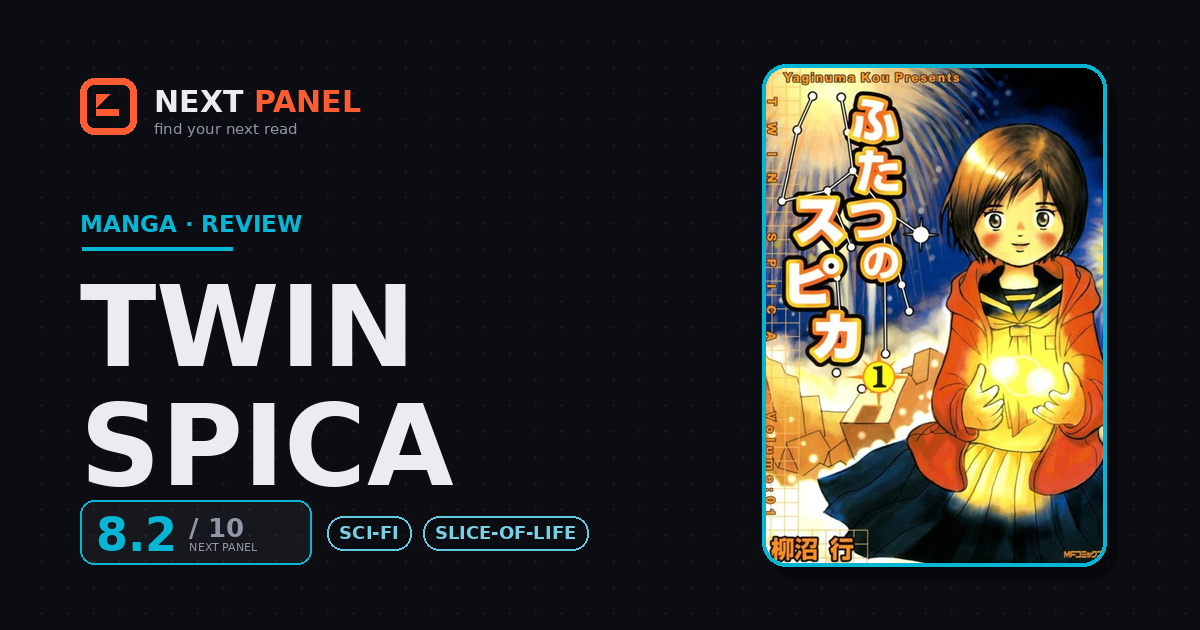
Yes, if you like quiet, heartfelt coming-of-age stories. Twin Spica follows a tiny, determined girl training to become an astronaut in a near-future Japan still healing from a rocket disaster. It's gentle, melancholic, and genuinely moving — just don't expect fast plotting or hard sci-fi spectacle. The English edition (Vertical) is out of print, so it's hard to find officially.
Quick Verdict
“Quiet, sad, and quietly hopeful — a story about reaching for space that earns every tear.”
Best for: Readers who love tender, melancholic coming-of-age stories about chasing a dream.
Not for: Readers who want fast pacing, hard-science spectacle, and a consistently upbeat tone.
- Type
- Manga
- Genres
- Sci-Fi, Slice of Life
- Status
- Completed
- This review
- Minor Spoilers
- Author
- Kou Yaginuma
- Publisher
- Media Factory
| Quick facts | |
|---|---|
| Format | Manga (seinen), 116 chapters, 16 volumes |
| Run | 2001–2009 · completed |
| Community score | AniList 7.8 · MAL 8.1 |
| Content | Themes of grief and loss |
Overview
Twin Spica is a coming-of-age manga by Kou Yaginuma, set in a near-future Japan that's still grieving its first crewed rocket launch — a mission that ended in a crash over a town, killing many civilians. Years later, Asumi Kamogawa, a tiny girl whose own life was shaped by that tragedy, enrolls in a new space-academy high school to chase an impossible-sounding dream: becoming an astronaut. Alongside a small group of fellow hopefuls, she trains, struggles, and grows, watched over by "Mr. Lion," a gentle, ghostly figure in a lion mask tied to her past. It's soft science fiction on the surface and a quiet story about grief and perseverance underneath.
What it does well
The feelings are the point, and they land. This is a story about loss, longing, and reaching for something far bigger than yourself, and it handles all of that with a light, unforced touch. It rarely reaches for big dramatic speeches; instead it earns its emotion through small moments, and the cumulative effect is genuinely moving. Plenty of readers end up in tears, and not in a cheap way.
Asumi makes it work. She's tiny, soft-spoken, and almost impossibly earnest, but never annoying — her determination is quiet and steady, and you end up wholly in her corner. The friendships and rivalries she builds at the academy are tender and believable, and Mr. Lion adds a thread of melancholy and warmth that ties the whole thing to her past.
The tone is the real draw. Twin Spica is gentle, bittersweet, and meditative, the kind of story you sink into rather than race through. Yaginuma's art is understated and a little rough, but it suits the mood perfectly, all soft skies and quiet faces.
Where it falls short
That same gentleness is the catch. The pace is slow and contemplative, and stretches can feel meandering if you're looking for momentum. There's very little action, and the sci-fi is soft — don't come for rockets and hard space science, because this is a character drama that happens to be set around a space program.
It also leans into its sadness. The melancholy and the tearjerker beats are core to the experience, and if that's not your mood, it can feel heavy. And the simple, dated art won't grab readers who want polish or spectacle.
Verdict
Twin Spica is a quiet gem, and a strong recommendation if you love tender, melancholic coming-of-age stories and don't need speed or spectacle. It's the kind of book that sneaks up on you and stays. One practical note: the English edition from Vertical is out of print, so it's hard to find officially right now — we'll flag it here if it ever gets a reissue.
Strengths & Weaknesses
Strengths
- It's genuinely moving — a story of grief and chasing a huge dream that earns its emotion through small, quiet moments rather than big speeches.
- Asumi is a wonderful lead: tiny, earnest, and quietly determined without ever being saccharine.
- The gentle, bittersweet, meditative tone is special — the kind of story you sink into.
- Mr. Lion and Asumi's past give the whole thing a thread of melancholy and warmth.
Weaknesses
- The pace is slow and contemplative, and it can feel meandering if you want momentum.
- The sci-fi is soft and there's little action — it's a character drama set around a space program, not a space adventure.
- It leans hard into melancholy, and the simple, dated art won't grab readers who want polish.
Similar Titles
Grounded, humane sci-fi about people working in space, with the same emotional focus.
Another quiet, emotional coming-of-age manga about guilt, growth, and connection.
If you want more thoughtful, melancholic space manga, this hard-SF classic fits.
Frequently Asked Questions
Where can I read Twin Spica officially in English?
It's tricky — Vertical published a 12-volume English edition (2010-2012), but it's out of print. There's no current official digital release, so you'd be hunting used copies. We'll update this if it's reissued.
Is it sad?
Yes, in a gentle, bittersweet way. It deals with grief and loss, and it's a quiet tearjerker more than a dark or heavy one.
Is it hard sci-fi?
No. The space-academy setting is realistic but soft on the science; it's really a character-driven coming-of-age story.