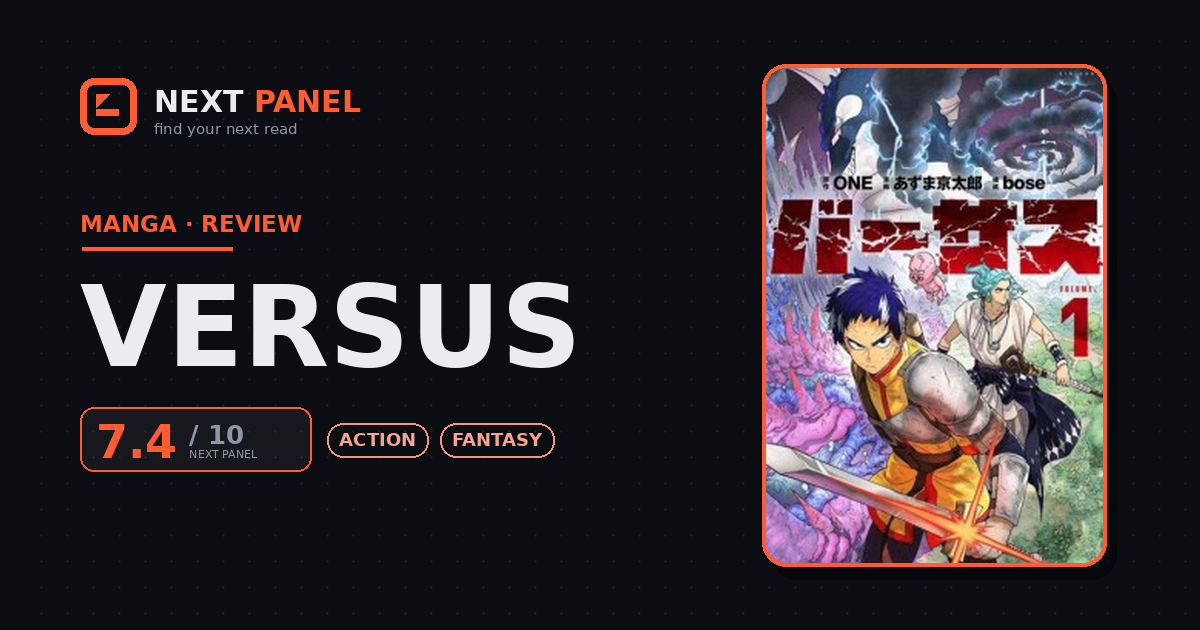
Is Versus Worth Reading? Review & Where to Read
Quick Answer
Worth reading if you want a big-cast strategy shonen with a genuinely clever hook. The premise is sharper than the early execution, but it's improved with each arc.
Quick Verdict
“Ambitious in a way most shonen isn't, held back only by a first act that introduces more characters than it has time to make you care about.”
Best for: Readers who want a strategy-driven battle shonen with a big, genre-blending cast and a premise built on turning threats against each other.
Not for: Readers who want a tight, small cast they can attach to quickly rather than a sprawling ensemble.
- Type
- Manga
- Genres
- Fantasy, Action
- Status
- Ongoing
- This review
- Minor Spoilers
- Author
- ONE
- Artist
- Kyotaro Azuma
- Publisher
- Kodansha
- Platform
- K Manga
| Quick facts | |
|---|---|
| Format | Manga (shōnen), 6 volumes |
| Run | 2022–present · ongoing |
| Community score | AniList 7.4 · MangaUpdates 7.3 |
| Content | Violence, large-scale destruction |
| Where to read | K Manga — official |
Overview
Versus starts from a genuinely strong premise: centuries after demons conquered humanity, the last-ditch plan to summon 47 heroes from a parallel timeline goes sideways when eleven other timelines try the exact same thing at once. The result is one world suddenly stuffed with every apocalypse imaginable at the same time, demons, kaiju, robots, aliens, rival magic systems, all colliding together with no single dominant threat left standing. Humanity's only real strategy left is to stop trying to fight everything directly and start making the monsters destroy each other instead. It's written by ONE, of One-Punch Man and Mob Psycho 100 fame, with Kyotaro Azuma on art, and that pedigree shows in how confidently the story treats its own absurd scale.
What it does well
The strategic angle is what sets Versus apart from a standard battle shonen. Instead of the usual escalating power levels where the hero just gets stronger than the next threat, the story's engine is the two lead strategists, Hallow and his brother Zaybi, figuring out how to pit apocalyptic forces against one another so humans don't have to win every fight outright. That's a smarter, more interesting shape for a story with this much raw carnage on the page, and it means the plotting rewards paying attention rather than just waiting for the next power-up.
Azuma's art carries the scale well. Battles here involve dozens of factions and city-leveling stakes, and the paneling stays readable even when there's a lot happening at once, which is not a small feat for a series this ambitious. ONE's humor also does real work tonally, undercutting what could be a relentlessly bleak apocalypse setting with the same dry absurdism that made One-Punch Man's world bearable to spend time in.
Where it falls short
The opening stretch is the weakest part, and it's a real hurdle. A large cast of heroes and factions gets introduced fast, and a chunk of them exist mainly to die and raise the stakes rather than to become characters worth remembering. That makes the first arc feel more like set dressing for the eventual strategy plot than a story you're invested in yet. Some later turns also lean on suspiciously convenient timing to make the turn-the-threats-against-each-other strategy click into place, which can undercut the tension the premise is supposed to generate. If you go in wanting the tighter, more personal character focus of ONE's other work, the sprawling ensemble here spreads that out thinner than some readers will want.
Verdict
Versus is a shonen with a genuinely clever hook, twelve apocalypses forced to cannibalize each other, and it plays that hook smarter than most series in the genre would. The early chapters ask you to push through a crowded, disposable-feeling cast before the strategic plotting really locks in, but once it does, it's a rewarding read for anyone who wants their battle manga to think as much as it fights.
Strengths & Weaknesses
Strengths
- The core premise, twelve apocalypses colliding into one world, gives it a genuinely fresh angle on the 'heroes vs. demon lords' setup instead of just another power-fantasy retread.
- The strategy of turning invading threats against each other, rather than a single hero punching through all of them, makes the plotting feel smarter than typical shonen escalation.
- The action art is dynamic and legible even with huge-scale battles and a crowded cast on screen at once.
- ONE's dry, dark sense of humor cuts through what could otherwise be a very grim apocalypse setting.
Weaknesses
- The opening arc introduces a large number of characters quickly, and several exist mainly to raise the stakes by dying, which makes it hard to get attached early on.
- Some later plot turns lean on convenient timing to keep the strategy angle working, which can undercut the tension.
- Readers expecting the tighter character focus of ONE's other work may find the ensemble cast here spreads the emotional weight too thin.
Similar Titles
Same writer's dry humor and genre-savvy approach to the battle shonen formula.
Similar apocalyptic-scale action with a large cast and inventive power systems.
Where to Read Officially
| Platform | Format | Pricing | Region notes | Link |
|---|---|---|---|---|
| K Manga | Digital chapters | Print & digital volumes | Free + Paid | Region availability varies | Open |
Frequently Asked Questions
Is Versus by the same creator as One-Punch Man?
Yes. ONE writes the story, with Kyotaro Azuma on art; it's ONE's first work serialized in Kodansha's Monthly Shonen Sirius.
Is Versus finished?
No, it's ongoing in Japan with new chapters still releasing.
Where can I read Versus in English?
Kodansha publishes it officially through K Manga for digital chapters and through Kodansha USA for print and digital volumes.