Is The Walking Man Worth Reading? Review & Where to Read
Quick Answer
Yes, if you're in the mood for something slow. The Walking Man has almost no dialogue and no story to speak of, just gorgeous, patient art of one guy noticing his surroundings. It's a mood piece, not a page-turner.
Quick Verdict
“This isn't really a story — it's an exercise in noticing things, and Taniguchi's linework makes that exercise worth your time.”
Best for: Readers who enjoy slow, observational slice-of-life and want to see manga art used almost like a photography book.
Not for: Readers who want dialogue, a plot, or characters they get to know over time.
- Type
- Manga
- Genres
- Slice of Life
- Status
- Completed
- Author
- Jiro Taniguchi
- Publisher
- Kodansha (Japan) / Fanfare-Ponent Mon (English)
- Platform
- Fanfare/Ponent Mon
| Quick facts | |
|---|---|
| Format | Manga (seinen), 18 chapters, 1 volumes |
| Run | 1990–1998 · completed |
| Community score | AniList 7.0 |
| Where to read | Fanfare/Ponent Mon — official |
Overview
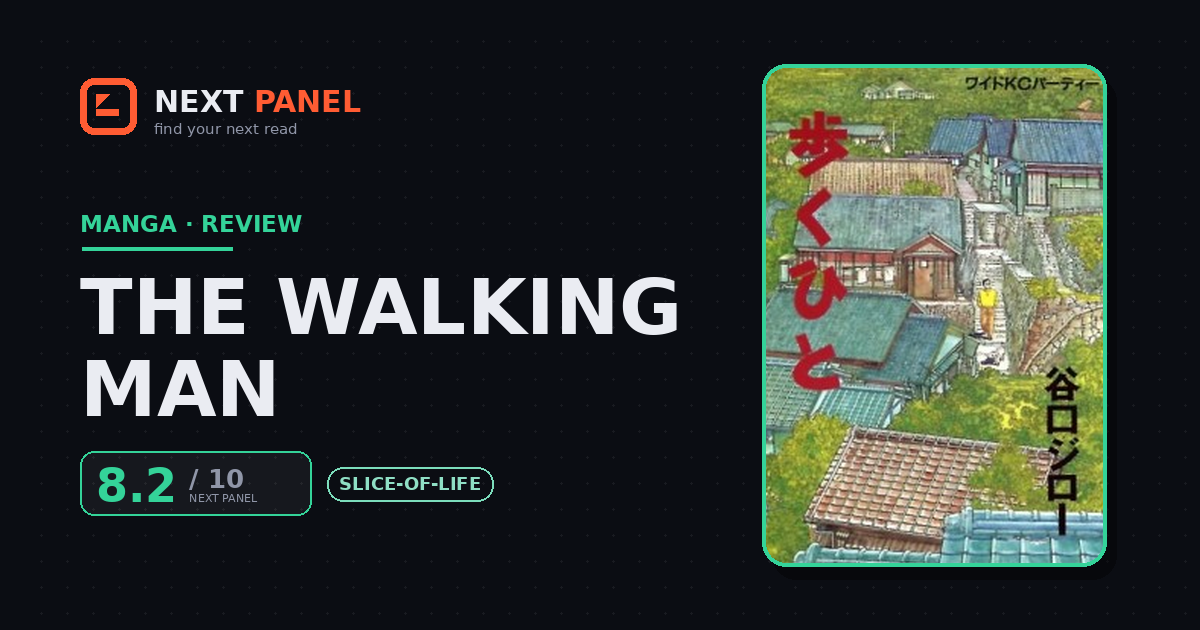
The Walking Man doesn't really have a plot. A middle-aged man moves into a new house in a quiet Japanese suburb, and over eighteen short chapters, he goes for walks. He looks at flowers, climbs a tree, wades through a river, gets caught in the rain, watches a kid play with a toy boat. That's the whole book. Jiro Taniguchi, better known for A Distant Neighborhood and A Journal of My Father, drew this in the early '90s as something closer to a photography collection than a conventional manga, and it's stayed in print in various editions ever since, including an Expanded Edition that adds a few more stories.
What it does well
The art is the whole point, and it's genuinely stunning. Taniguchi draws ordinary suburban Japan — power lines, drainage ditches, a corner store — with the same care other artists reserve for a big fight scene. There's almost no dialogue, so every page lives or dies on how well the panels are paced, and Taniguchi is really good at knowing exactly how long to hold on an image before cutting away. A chapter about wading through a river in his suit, or one where he just watches rain fall on a roof, ends up more absorbing than a lot of manga's actual plot twists manage to be.
It also rewards slow reading in a way most manga don't ask for. Because there's no story to follow, you end up actually looking at the backgrounds — a bike leaning against a wall, weeds growing through pavement — instead of skimming past them to get to the next panel. Read it in one sitting on a busy day and it does almost nothing for you. Read it on a quiet afternoon with nowhere to be, and it's the kind of book that changes how you look out the window afterward.
Where it falls short
There's no getting around this: if you need a plot, a cast, or stakes, this book has none of those things, and it's not going to sneak any in on you later. It's an extended mood exercise, not a story, and a couple of the chapters added for the Expanded Edition feel like leftover sketches rather than fully realized pieces — noticeably weaker than the original run. It's also short. Even with the extra material, you're looking at maybe 45 minutes of reading, so anyone expecting a substantial single volume for their money should adjust expectations before buying.
Verdict
The Walking Man isn't for everyone, and it isn't trying to be. If the idea of an entire manga about a guy noticing his surroundings sounds tedious, it will be. If it sounds appealing, this is one of the best examples of that idea ever put on paper — patient, gorgeously drawn, and genuinely meditative in a way manga rarely even attempts. Read it slow, on a day you're not in a hurry, and it delivers exactly what it promises.
Strengths & Weaknesses
Strengths
- The art carries the entire book — ordinary suburban scenery like power lines, drainage ditches, and a parked bike gets the kind of careful drawing most manga save for a big splash page.
- There's almost no dialogue, so the pacing comes entirely from how long each panel holds, and Taniguchi is genuinely skilled at knowing exactly when to cut away.
- It rewards slow, unhurried reading — you end up actually looking at the backgrounds instead of skimming past them to get to the next plot beat.
- The Expanded Edition adds a few more stories in the same vein plus some color pages, so there's a bit more here than the original slim printing.
Weaknesses
- There's no plot, no cast, and no stakes, and the book never pretends otherwise — if you need a reason to keep reading beyond 'what does he notice next,' it won't give you one.
- A couple of the extra stories added for the Expanded Edition feel like leftover sketches next to the strength of the original chapters.
- It's short even with the additions — you can finish the whole thing in under an hour, so it reads more like a mood than a full book.
Similar Titles
Same artist and the same patient pacing, but built around an actual story.
Different tone but the same trust in quiet, observational moments over plot.
A different subject entirely, but similarly lets the art carry a fairly simple story.
Where to Read Officially
| Platform | Format | Pricing | Region notes | Link |
|---|---|---|---|---|
| Fanfare/Ponent Mon | Print volumes (English) | Paid | Region availability varies | Open |
Frequently Asked Questions
Is there much dialogue in The Walking Man?
Barely any. Most pages have no text at all, and when characters do talk it's small talk, not anything plot-related.
Do the chapters need to be read in order?
No. Each one is its own short walk with no continuity between them, so you can read it out of order or dip in and out.
Is the Expanded Edition worth getting over the original?
Generally yes — it has all the original stories plus three more and some color pages, for a similar price to the original printing.