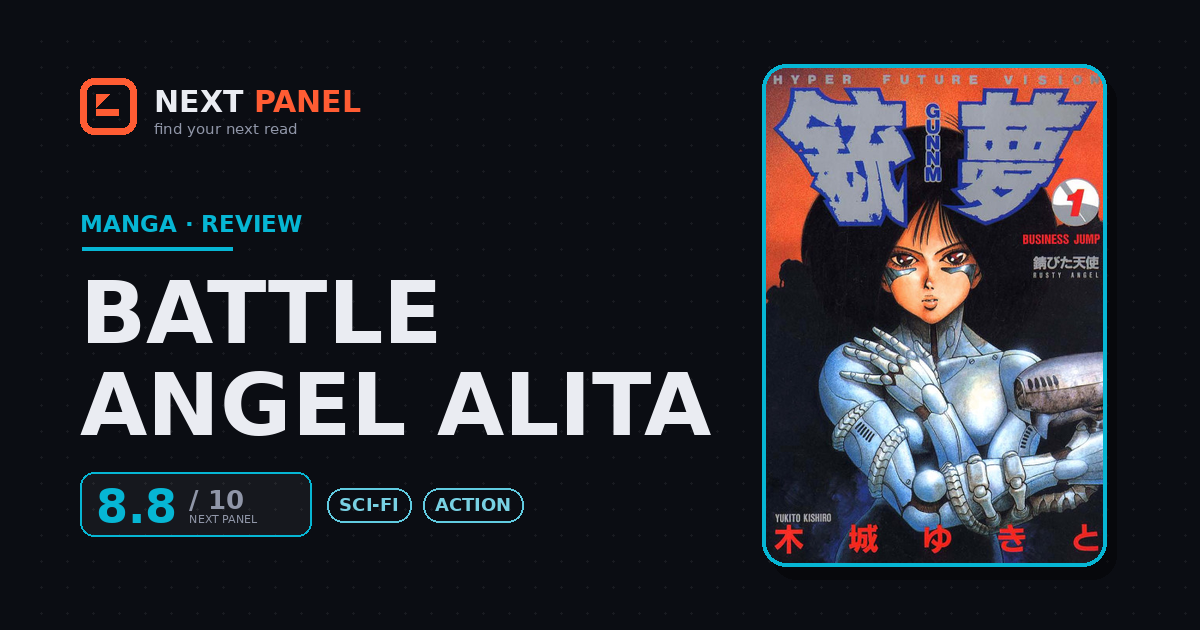
Is Battle Angel Alita Worth Reading? Review & Where to Read
Quick Answer
Yes — Battle Angel Alita is a genuine cyberpunk landmark with real ideas behind its violence. The pacing is choppier than modern manga and a few characters are thin, but the world-building and action are worth the read.
Quick Verdict
“Gorgeous, brutal, and decades ahead of its influence on cyberpunk anime — the early pacing is uneven, but the ideas still land.”
Best for: Readers who want dense cyberpunk world-building and don't mind a moody, philosophical streak.
Not for: Readers who want tight modern pacing or a story that never stops to think about itself.
- Type
- Manga
- Genres
- Sci-Fi, Action
- Status
- Completed
- This review
- Minor Spoilers
- Author
- Yukito Kishiro
- Publisher
- Kodansha
- Platform
- Kodansha
| Quick facts | |
|---|---|
| Format | Manga (seinen), 54 chapters, 9 volumes |
| Run | 1990–1995 · completed |
| Community score | AniList 8.1 |
| Content | Violence, body horror |
| Where to read | Kodansha — official |
Overview
Battle Angel Alita (the original Japanese title is Gunnm) is Yukito Kishiro's early-90s cyberpunk classic, and it's a big part of the reason "cyborg girl with no memory" is such a familiar setup now. Dr. Daisuke Ido finds a discarded cyborg brain in a scrapheap under the floating city of Zalem, rebuilds her, and names her Alita. She doesn't remember who she was, just muscle memory for a forgotten martial art that turns out to be extremely good at killing people. She becomes a bounty hunter, gets pulled into the brutal cyborg sport of motorball, falls for a local kid named Hugo who dreams of buying his way up to Zalem, and slowly starts piecing together what she used to be — and it's much bigger and darker than "amnesiac girl finds herself."
What it does well
The world-building is the main event here. Scrapyard isn't just a backdrop, it's a functioning economy built entirely around cybernetics: bounty hunters get paid in salvaged parts, junk dealers run the black market, and everyone looks up at Zalem knowing they'll never actually get there. Kishiro draws mechanical design like it's a language he's fluent in — every cyborg body reads as an object with real weight and moving parts, not just a cool silhouette. The fights are vicious and inventive, especially once Alita starts fighting with a stolen Panzer Kunst body, and the story keeps circling one real question: if you can swap your whole body and even parts of your memory, what's actually you? That idea isn't just talked about in asides, it's the plot.
Where it falls short
The first few volumes read like a string of self-contained arcs — bounty of the week, a motorball tournament, a big rival fight — before the larger conspiracy plot properly kicks in, and that structure can feel disjointed if you're used to tighter modern serialization. Hugo, Alita's main emotional anchor early on, is thin as a character outside of what he represents to her, and a couple of the supporting cyborg villains mostly exist to lose a fight and move the plot along. The art is genuinely excellent for mechanical design but rougher on faces and expressions in the earliest chapters, before Kishiro's style fully locks in.
Verdict
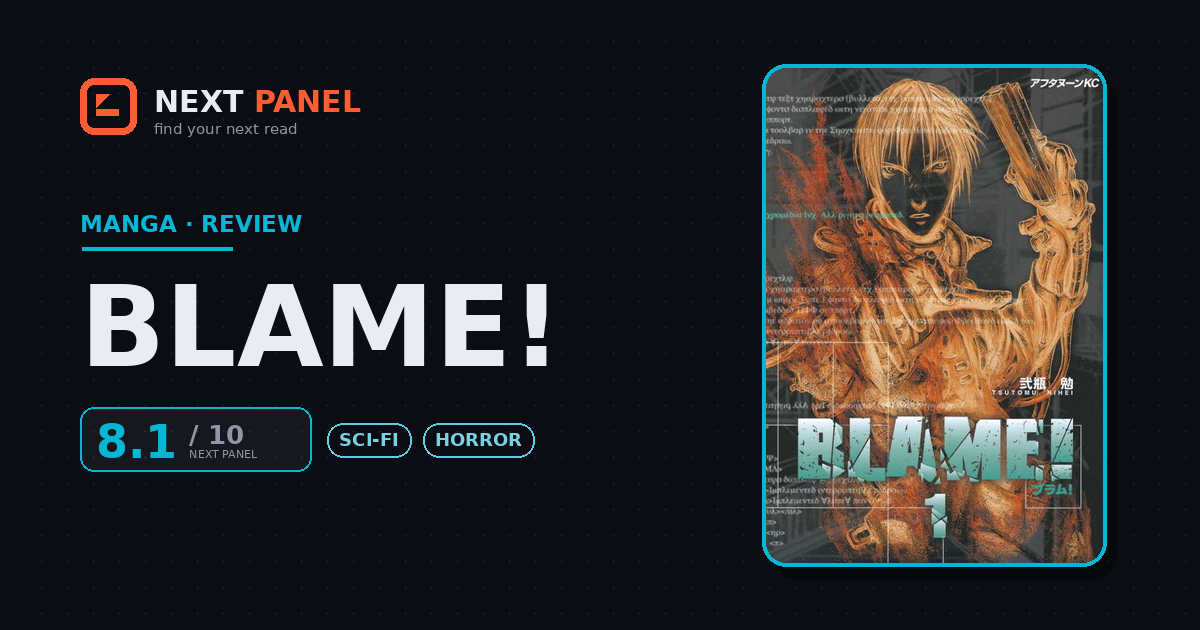
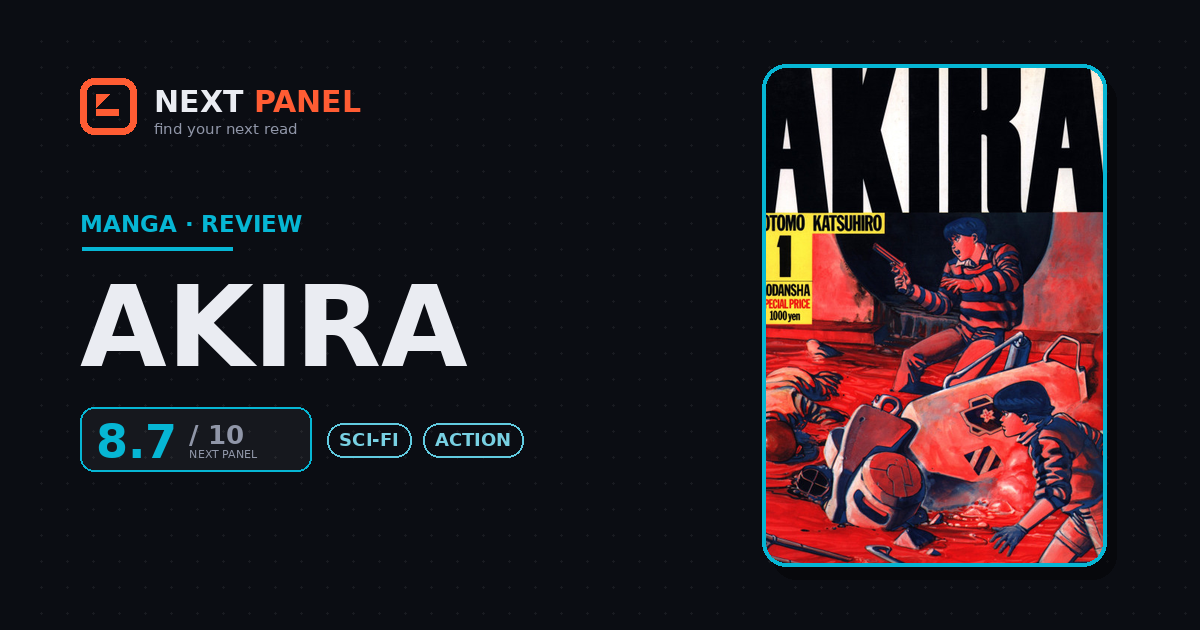
This is a foundational cyberpunk manga, not just an old series that happens to still be in print. If you liked Ghost in the Shell or Akira for the ideas as much as the action, Alita is doing similar work with a more personal, character-driven story underneath it. It asks big questions about identity and never pretends they're easy, and it backs that up with some of the best cyborg action art in the medium. It's not a quick read and it won't hold your hand through the world-building, but if you go in patient, it's one of the genre's real landmarks.
Strengths & Weaknesses
Strengths
- The cybernetic world-building is airtight — bounty hunting, motorball, and the black market for body parts all fit together into one believable economy.
- Alita's identity crisis isn't just a theme, it drives every major plot turn, from her fighting style to who she chooses to trust.
- The mechanical art design is some of the best in the genre; every cyborg body looks like it actually works.
- The action is genuinely brutal and inventive, especially the motorball chapters.
Weaknesses
- The early arcs are episodic and take a while to connect into a bigger story.
- Hugo and a few other supporting characters are thin outside of their function in Alita's arc.
- Character faces are inconsistent in the earliest volumes, before the art fully settles.
Similar Titles
Another dense, atmosphere-heavy cyberpunk manga from the same era, with even less exposition.
Similar questions about identity and bodies, from a more procedural, detective-thriller angle.
Same generation of manga, similar scale of world-building and body-horror-adjacent violence.
Where to Read Officially
| Platform | Format | Pricing | Region notes | Link |
|---|---|---|---|---|
| Kodansha | Print & digital volumes | Free + Paid | Region availability varies | Open |
Frequently Asked Questions
Is Battle Angel Alita finished?
The original saga (sometimes called by its Japanese title, Gunnm) is complete at nine volumes. Kishiro continued the story in Battle Angel Alita: Last Order and is currently working on a prequel, Mars Chronicle, but the core story reviewed here has a real ending.
Do I need to watch the 2019 movie first?
No. The film adapts roughly the first half of the manga with some changes, and the manga goes further and darker. Either order works, but the manga is the fuller version of the story.
Is this the same as the 1993 anime OVA?
The OVA only covers the earliest chapters and stops well before the story opens up, so it plays more like a preview than a full adaptation.