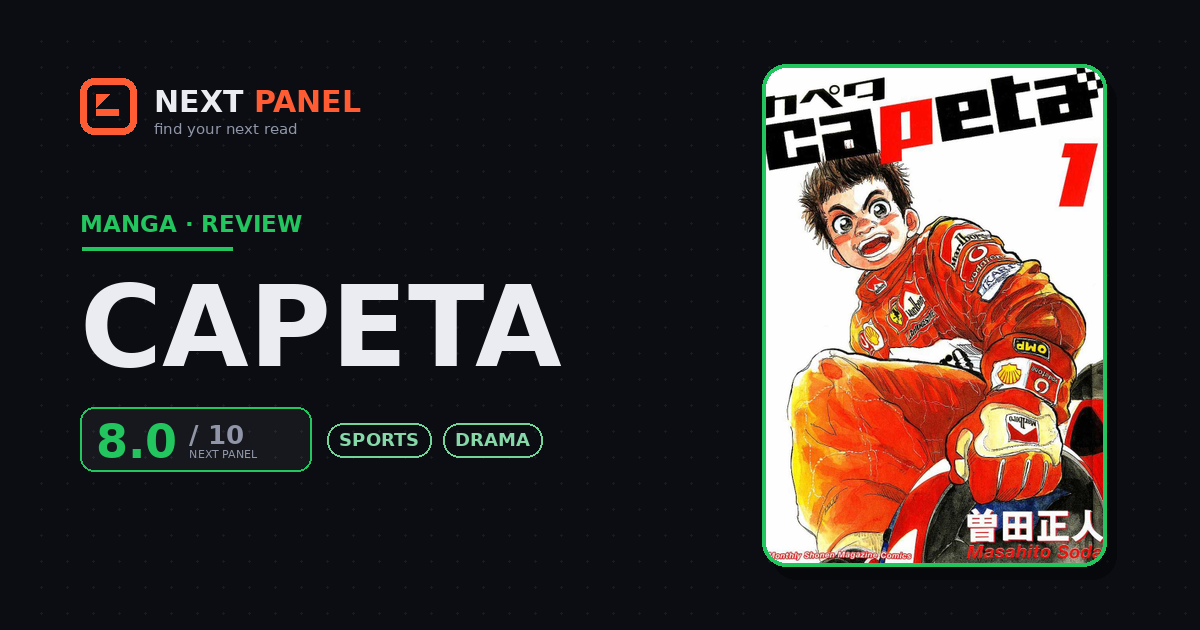
Manga8.0Minor SpoilersCompleted
Is Capeta Worth Reading? Review & Where to Read
Most racing manga treat the cars as an afterthought to the drama. Capeta treats the cars like they matter, and the drama is better for it.
Spoiler-light · Honestly rated
Every review labels its spoiler level, separates art from writing, and ends with an official way to read.
We use the whole 1–10 scale and judge each title against the best version of what it is trying to be — a comedy on how funny it is, a thriller on its tension — not against some other genre. As a rough guide: 9+ is all-time great, 8 excellent, 7 a solid recommendation with caveats, 5–6 mixed or average. A 7 is a genuine yes, not a knock. The “Community score” in each review is the crowd rating from AniList, MAL, and MangaUpdates, shown next to ours for comparison.
It treats a single half-inning with the same care most sports manga save for a series finale, and that patience is exactly why it works.

Builds its hook out of a lie that can't hold much longer, and then earns the payoff by actually taking the soccer seriously.

It never reinvents the school-romance formula, but the two leads' chemistry is strong enough to carry 23 volumes without going stale.

Takes its sport seriously enough that the fights read like real matches, not just excuses for a cool panel.
It trades the shock value of the author's earlier work for something quieter and more grounded, and that trade pays off.

It trades instant power spikes for something better: a fighter who actually has to learn how to fight, surrounded by a cast worth remembering.
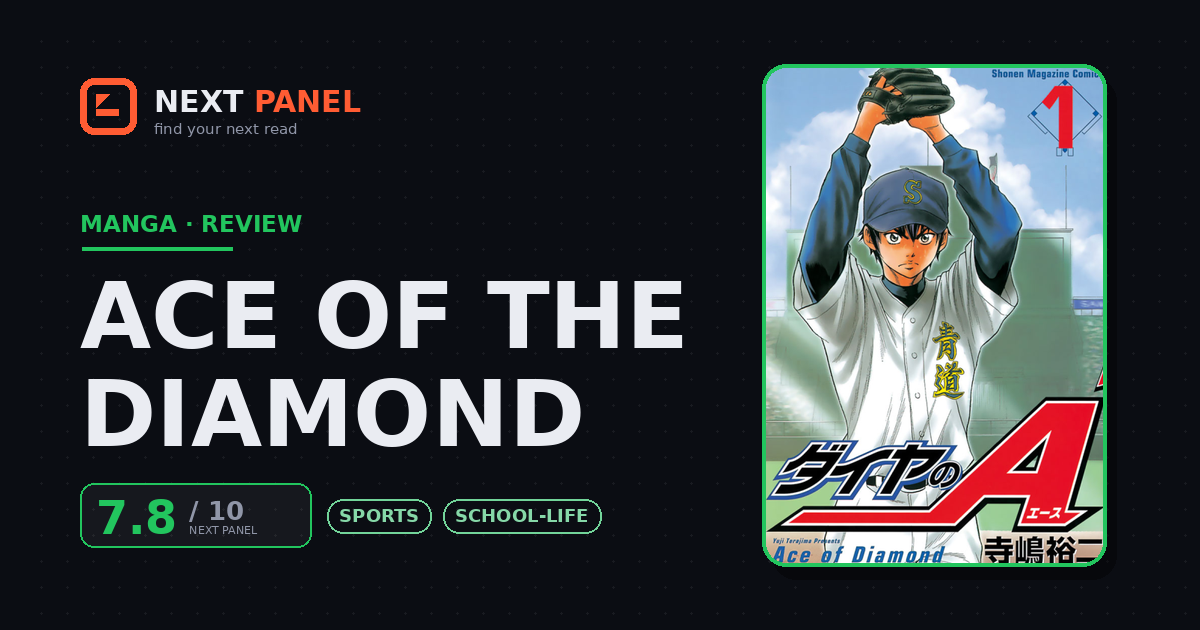
Eijun spends more time fighting for a spot on his own bench than pitching against rivals, and somehow that's the more compelling story.

Yataro decides that if honest effort hasn't gotten him scouted, he'll win by whatever means the rules allow, and that shift in mindset is what makes this worth watching.

Sanghyun plays like a total beginner and fights like a decade of real archery training, and the gap between those two things is the whole appeal.