Is Concubine Walkthrough Worth Reading? Review & Where to Read
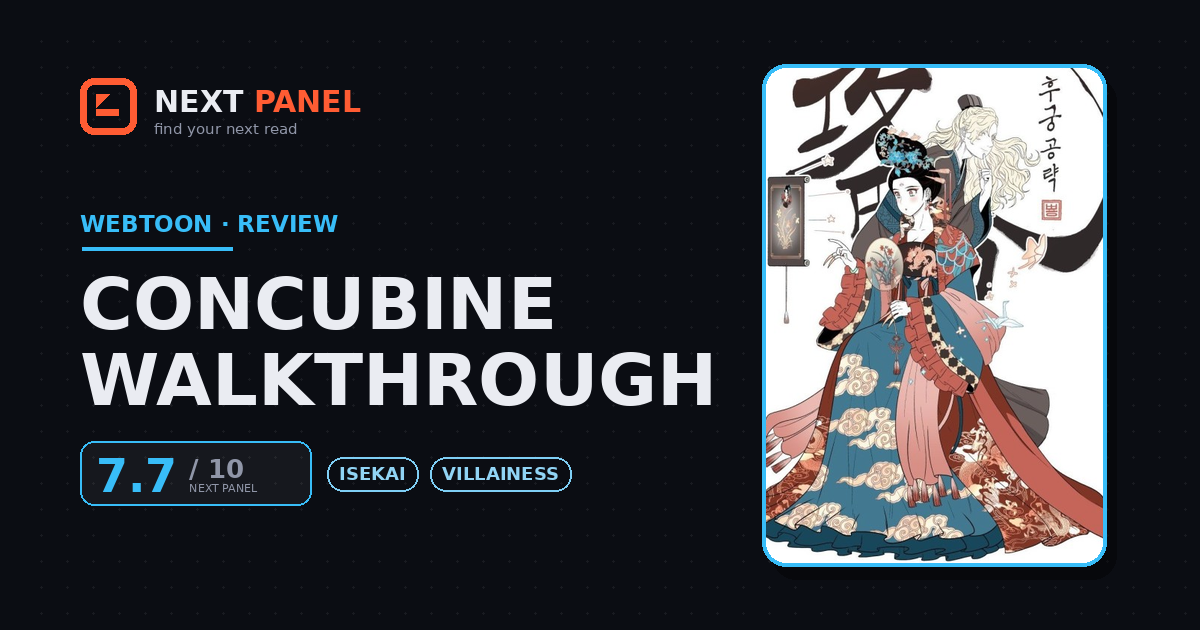
This one actually thinks through what it would mean to be stuck playing a game with your own life on the line, instead of just wearing the premise as a costume.
Spoiler-light · Honestly rated
Every review labels its spoiler level, separates art from writing, and ends with an official way to read.
We use the whole 1–10 scale and judge each title against the best version of what it is trying to be — a comedy on how funny it is, a thriller on its tension — not against some other genre. As a rough guide: 9+ is all-time great, 8 excellent, 7 a solid recommendation with caveats, 5–6 mixed or average. A 7 is a genuine yes, not a knock. The “Community score” in each review is the crowd rating from AniList, MAL, and MangaUpdates, shown next to ours for comparison.
This is a tight, bittersweet what-would-you-trade story that earns its ending instead of just aiming for one.

Few manga sell raw, obsessive ambition as convincingly as this one does — the tragedy is that you may finish every available chapter without ever finding out how it ends.

Every operation plays like a heist with a scalpel, and the hospital politics around them are just as sharp as the surgery itself.

Tezuka points his most beloved-cartoonist instincts at genocide, propaganda, and the lies people tell to survive them, and it hits harder than almost anything else with his name on it.

This is exactly as much brainless harem revenge as the title promises — which is either the appeal or the dealbreaker.

Nobody's in danger here, and that's exactly the point — this is slow-life comfort reading done well.

If you want crime-underworld action with a genuine moral hook instead of just power escalation, this delivers.

Two volumes in, this is already better at quiet, believable teenage awkwardness than most rom-coms manage in twenty.

Brutal dragon fights and a genuine revenge hook carry this past its repetitive opening stretch.

The monster-cuisine gimmick is funnier than it has any right to be, though the hiatus means you're reading an unfinished meal.